
Part I
STARTING UP: FRAMES OF REFERENCE
1 Part 1 Provides a big picture vision of change in and initiatives conceived.
23Perspective is more important than IQ.
4—Nicholas Negroponte
5Change your perspective and you change the world.
6 6
7What Do we want? what Does the worlD want?
8 Design science begins with first principles. At its most basic level, that means three things:
- 100% of humans have their basic human needs and • rights met. They flourish as they continue their development as a successful species on Earth.
- All natural systems are recognized and respected as the basis for human and all life’s well-being. Life flourishes.
- Humans can intervene in human and natural systems and design outcomes in ways that benefit nature and humanity.
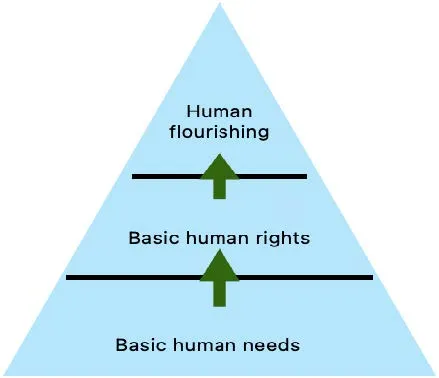
10 Basic human rights:
11 Life, liberty, security of person; recognition before, and equal protection of, the law; privacy; freedom from discrimination, torture, slavery, arbitrary arrest; freedom of thought, religion, expression, movement, nationality, marriage, family, ownership of property, peaceful assembly; access to government participation, voting, public service, elections, security, work, equal pay, leisure, arts, social services and free education and health care.
12 Basic human needs:
13 Food, water, sanitation, shelter, health care, education, energy, transportation, communication, a clean and healthy environment, water, food, & all natural systems thriving.
14For humanity to flourish, the basic needs of all humanity need to be met and the basic human rights need to be
15 guaranteed and delivered. Over 700 million people live in extreme poverty in the world,1 4 billion lack access to essential health services,2 and over 2.3 billion people live where they do not have their basic human rights fulfilled.3
1617natural systems flourishing
18 Human flourishing is not possible without the flourishing of our environment within which we live. In a deteriorating environment it will be difficult to impossible to meet basic human needs for clean air, water, food, and safety. Human life is dependent on natural systems, including the climate, the
19 hydrogeological cycle, and biological systems. Given
20 this, design science works with nature to meet human and natural system’s needs so they both thrive. Given the importance of nature to human survival and flourishing, the mandate for the rights of nature—to protection from harm—becomes compelling.
2122gloBal
23goals for
24gloBal
25flourishing
26Figure 2 United Nations’ Sustainable Development Goals
271
282
29UN, Sustainable Development Goals. https://www.un.org/en/exhibits/page/sustainable-development-goals#sdg1
30World Health Organization, https://www.who.int/news/item/13-12-2017-world-bank-and-who-half-the-world-lacks-access-to-essential-health-services-100-million-still-pushed-into-extreme-poverty-because-of-health-expenses
31Our World in Data. Basic human rights defined as ‘‘the extent to which people are free from government torture, political killings, and forced labor; they have property rights; and enjoy the freedoms of movement, religion, expression, and association.’’ Between 63% and 71% of all the people in the world have their human rights met (29% to 37% do not). https://ourworldindata.org/human-rights
323
338
35There is a good deal of work on what it means
36 for humans and our environment to ‘flourish’ as
37 well as ways to measure it. The UN’s Sustainable
38 Development Goals are one very useful and well-
39 thought-out definition of what is needed for achieving
40 basic human and environmental needs.4
4142where is the worlD going?
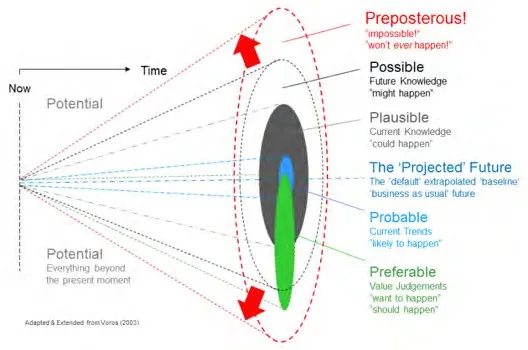
43 ‘possible’ and ‘preposterous.5 Although design
44 science does not ignore these considerations, it’s primary focus is on the preferable and the possible. Or said a bit differently, it focusses on making the preferable—what we want and need—possible. Design science is the art and science of transforming what we want and need into what we have. It is where vision, hope, experience, and design meet the future.
45 Earth and the natural and human systems within it
46 are constantly changing. Some of these changes can
47 be anticipated, some are
48 Different disciplines and approaches to planning have different ways of attempting to deal with these changes. A common view is that we just need to predict the future, perhaps based on historical trends. In the very near term, this may be reasonable, but as the time horizon is extended, there is increased uncertainty about what will happen. Some analysts have represented this as a cone, with uncertainty represented by terms such as ‘plausible’, ‘probable,
49 completely
50 unexpected.
5152Figure 3 The Future Cone: how might the future develop?
- 4.
- United Nations Department of Economic and Social Affairs, ‘‘The 17 Goals,’’ United Nations, 2023, https://sdgs.un.org/goals.
- 5.
- Joseph Voros, ‘‘The Futures Cone, Use and History,’’ The Voroscope: Exploring the Totality of Human Knowledge (blog), 2017, https://thevoroscope. com/2017/02/24/the-futures-cone-use-and-history/.
53549
55‘‘The best way to predict the future is to plan it.’’
56—John Platt
57moDels of change/changing the worlD
58 do we understand it? How does change happen? How
59 do we bring it about?’’ The following five pages show how we think change happens. This book is about how we bring it about.
60 Everything that is shaping the world is brought about by various processes of change and their interactions. Processes, such as globalization,
61 decentralization,
62 democratization,
63 technological
64 This book is about change.
65 Behind every change is a theory of change. The theory answers the questions, ‘‘What is change? How
66 innovation, economic development, evolution, design
67 and planning are drivers of change.
6869Big picture change
70 Change is not a stand-alone event or singularity. It is plural. Something always changes in relation to something else. It gets bigger, smaller, closer, older, better, easier, more complex, more numerous relative to a reference point. We measure ourselves, our society, and most everything else, by how it and we change.
71 Change is what happens when the relationship between two or more entities shifts or transforms. Some forms of change are the result of large-scale natural and human generated processes. Some change is human generated.
72 Some aspects of change are seen as systematic and predictable, and others as random or coincidental. One form of the non-predictable changes are those that emerge from the accumulated interactions of parts. These emergent properties arise from the increasingly complex interactions of relatively simple parts. For example, the examination of a water
73 molecule does not disclose a ‘‘surface’’ of the water.
74 It is only when many water molecules are added together does a surface emerge.
75 Societal change is a highly complex process, involving many factors, such as demography, technology, availability of resources, politics, culture, needs, expectations, economics, and the interaction of these factors. Geography, access to resources, trade, and openness to outside influences can have an impact on how a society changes, develops, or disintegrates.
76 Living systems--social, economic, and political systems--change over time so they can maintain stability. The parts of all living systems are born, grow, reproduce, and eventually die. In this process, they change various aspects of themselves and the bigger systems of which they are a part. In turn, these larger systems change as they maintain the stability necessary for growth and evolution.
777810
79‘‘In times of change, learners inherit the Earth while the learned find themselves beautifully equipped to deal with a world that no longer exists.’’
80—Eric Hoffer
81Human systems change because human beings
82 change: they learn. Because it is difficult to impossible to learn less as we experience our lives (although many dogmas seek, at minimum, to freeze our learning at some convenient, understandable, or exploitable level), we learn more and more. And as we do so,
83 we learn how to improve our surroundings and our
84 lives. We learn how to do more with the resources we have access to. We learn how to improve our tools and organization so that they do more for us with the same or fewer resources. In short, we change. The purpose of which is to improve, while maintaining stability.
8586our picture: change we initiate
87 The change we are most interested in here is the
88 change that we bring about by our actions. Controlled or designed change is how we systematically change the world for the better. It is this type of change that this book if focused on. How do we bring about the changes we want? Or accelerate the ones we think are going in the right direction? How do we avoid the ones we don’t want? Or reverse the ones going in the wrong direction? The science of design is the systematic process of changing something in a preferred direction. Like other sciences, it formulates hypothesizes (Is it possible to provide clean abundant energy supplies in rural villages in the developing world ?), tests these hypotheses (Will this solar panel provide enough energy in an affordable manner to meet the village’s needs in a sustainable way?), and maximize what we can learn from our failures (Why didn’t this configuration work as desired?)
89 The important thing about designed change is
90 that it can be used by anyone to improve their world.
9192you can change the worlD
93 You can change the world. In fact, you already have. Your mere existence has impacted the world in many ways: as a generator of carbon dioxide and other by-products of your metabolism, as a consumer in the global and local economy, as a producer of some
94 good or service for those same economies, as a parent,
95 child, brother, sister, husband, wife—we have all impacted our homes, communities and by extension through the interconnections of globalization, we have impacted the world. That was the easy part.
969711
98‘‘Some people change the world by imposing their will on it. Some people change the world by discovering a truth. Some people change the world by changing people’s minds. Some people change the world by creating things of great beauty. Some people change the world by making new tools for change.’’
99—Danny Hillis
100seven techniques for changing the worlD
101 But the above, ‘‘You can change the world’’ has a
102 more dramatic, and important, meaning. You can also change the world volitionally. Not just through your passive presence in the world as a biological entity or part of an economic or family unit—you can, with intelligence, persistence, hard work, courage, initiative, and the synergy of ‘‘luck’’ that the previous qualities lay the groundwork for, change the world. That is, you can do something so innovative, so original, or so audacious, or so obviously right, or so sensible, or so perfectly matched to the needs of the time, that the world beats a path to your door and what you have done gets implemented at a local and then global level, it gets replicated around the planet, and becomes part of the global culture.
103 You can change the world. There are ways that people have been doing exactly this for millennia. There are seven major techniques:
104 profound change in all aspects of human life
105 and well-being.
106 Violent political or ideological revolutions, based on ideology and the use of weapons to overthrow or change political leadership, such as the American, French, Russian and Cuban revolutions brought about rapid political change.
107 b.
1081093.
110Non-violent social action: Mahatma Gandhi
111 and Martin Luther King, Jr. are examples of leaders of non-violent social movements of this kind. Whether passive resistance, economic boycotts, or massive marches on political seats of power, this change mechanism has brought about huge changes in political and social realms. Another example of this form of change is the non-violent, orderly change that comes about in political structures, usually democracies, through voting and political decision-making processes.
112Scientific research: Who has more impact on the world, Karl Marx or the inventor of the telephone? Richard Nixon or Albert Einstein? Our increased understandings of how nature works, the scientific breakthroughs over time, have changed the world in more profound ways, and more rapidly and universally than almost any other technique.
113Business and markets: In an age when everything is interconnected, the meeting of a need through a product innovation has the potential to change the world more rapidly than
1141151.
116Evolution: The first and, up to now, the technique
117 responsible for the most change, is evolution. Evolution is the slow change brought about by the long-term processes of nature selecting out the organisms and techniques and tools that lead to the most success over time of surviving.
118Revolution: There are two major revolutionary pathways. One is relatively slow, lasting, and takes place in social, technological, and economic spheres. The other is faster, not necessarily long- lived, and takes place in the political arena.
119 a. Non-violent, knowledge-based revolutions, and their application as technology, such as the agricultural, industrial, and information revolutions, brought about widespread and
1201214.
1222.
1235.
124 almost
125 spread ethical
126 anything else in the past. Business can
127128the advances of science as well as the sensibilities of enlightened self-interest
12912
130 and concern and compassion for all the citizens
131 of the world. It also has the option of ignoring these latter considerations, focusing on just short- term gain, and harming environmental and social systems in which it is embedded.
132Personal initiative: This, and perhaps the most important, technique incorporates elements from all the other techniques and leverages them to change the world. With the exception of evolution, none of the above happen without individual initiative. Innovation is the key to nearly all of the change agents described above. Whether it is biological initiative brought about through natural evolution, or technological innovation brought about through industrial design processes, market pressures, or curiosity, innovation is the key.
133Design science: It couples the principles and findings of science with a moral vision of what should be and then takes the personal initiative to develop solutions to real-world problems that can be implemented in markets and by governments, corporations, organizations, and individuals. It
134135is based on individual initiative and uses market
136economies wherever appropriate. It shares a concern for peace and social justice with those like Martin Luther King and Mahatma Gandhi but uses technological and social innovation as change agents.
137 Innovation is the cause of change. New technology, new decisions, new ideas, new combinations of old systems bring about change. Whether it is the agricultural, industrial, information, communication or artificial intelligence (AI) revolution, innovation was at the core of the changes. Someone found a new, and better, way of doing something that was previously being done, or they came up with a way of doing something brand new that no one was doing. Innovation can be a variation of something already existing or a modification that improves quality or efficiency. It can be the invention of something new. It can be a borrowing from another field, or diffusion from another geographical area. Many problems can be innovated out of existence. This is what design
1381396.
1407.
141science is all about—innovating
142problems out of existence.
143basic
144human
145need
146Design science is …
14713
148‘‘How can we use science to help solve the daunting catalogue of trans-border health, energy and quality-of-life challenges confronting our globalized, ‘flattened’ world? By developing scientific and technological techniques that transcend disciplinary boundaries, reflect diverse perspectives, and incorporate the contributions of traditionally underrepresented groups.’’
149 —Shirley Ann Jackson,
150 former President of Rensselaer Polytechnic Institute
151152Design science is a methodology for changing the
153 world. It involves the application of the principles and latest findings of science to the creative design and implementation of solutions to the problems of society. And to do this in as short a time as possible. That is what this book is about.
154155As mentioned in the Introduction, there are four major parts to this book. Part 1—Frames of Reference, Part 2—Tools Part 3—Methodology is a step-by-step process for doing design and strategic planning for the improvement of the world. Part 4—Implementation is how we make our designs real at scale so they impact the world.
156 Design science is a way of recognizing, defining, and solving complex problems that is based on innovation and thrives on transparency. It takes a whole system, global, and anticipatory approach that fosters creative collaboration and synergy in the
157 development of comprehensive solutions to both
158 global and local problems. It was inspired by the work of Buckminster Fuller and other planners, scientists, and visionaries.
159160how is Design science Different
161planning processes?
162from
163other
164 Unlike many planning and political processes that
165 compartmentalize issues and seek to develop solutions in a vacuum, design science stresses comprehensive thinking based on a clear understanding of the state of the world, available resources, appropriate technology, culture, environmental constraints, and the interconnections between world problems and opportunities. The design science planning process provides a framework for devising solutions to current problems as well as anticipating future needs.
166Design science is different from other problem- solving and planning methodologies in its
167 comprehensive,
168 anticipatory, inclusive,
169 and
170 transparent approaches to the development of
171 solutions. It takes a ‘whole to particular’ approach that is both global in perspective and in its examination of options. It seeks to build capacity rather than merely solve problems, and to develop solutions that are transformative rather than merely the reforming of already inadequate systems. It is informed by a moral vision that places a priority on designing ways of meeting unmet basic human needs in ways that are environmentally sustainable and socially just.
17217314
174Design science is . . .
175‘‘the effective application of the principles of science to the conscious design of our total environment in order to help make the Earth’s finite resources meet the needs of all of humanity without disrupting the ecological processes of the planet.’’
176—Buckminster Fuller
177The core of this approach to problem solving
178 and planning is both a concern with whole systems of the whole Earth, the entire history of the planet, the global economy, all of technology, and all of humanity; both those living now and those yet to be born as well as a recognition that everything is implemented locally, and that the ‘‘whole’’ is merely the context for the local. Design science has both a global perspective and a local focus. It is the local upon which the success or failure of a particular design solution will thrive or die.
179 Design science is comprehensive, in that it starts from the whole system and works back to the special case. It deals with all facets of a problem including the larger system of which the problem is a part; in this sense, design science seeks to build capacity, not just solve problems.
180 It is anticipatory, in that it seeks to recognize the threats coming down the pike before they arrive full blown on an unsuspecting or ill-prepared society; and
181 it deals with the way things are going to be when the
182 solution is going to be implemented, not just the way things are in the present.
183 It is a design strategy, in contradistinction to a political or ‘let’s pass-a-law-and-change-human- behavior’ approach; it seeks to change the larger system of which the specific problem is a part through the introduction of innovative artifacts or policies. It is a science in that it seeks to use evidence-based solutions rather that politics, ideology, or wishful thinking to solve problems.
184 Its definitions of problems and their solutions is science based and relies more on synthesis than reductionistic thinking. (Describing design science through the paradigm of science, you can say that design science seeks to formulate its designs and problem solutions as testable hypothesis. A design prototype is an experiment to test the hypothesis. If the hypothesis, after testing is ‘‘true’’, the prototype can be scaled up and go into mass production.)
185186Table 1. Traditional Science and Design Science
18715
188Traditional science
189Design science
190Method
191Thesis, testable hypothesis, experiment, validation/rejection of thesis
192Thesis, testable hypothesis (design pro- totype), experiment [building prototype], validation/rejection of thesis
193Goal
194Increased basic understanding of some facet of the universe
195Increased understanding of a human need, and strategies and actions needed to meet that need
196Objective
197Seeks the most economical description of universe (the most explanation with the least verbiage)
198Seeks trim tab—the solution with the great- est positive impact to a problem for least cost
199Strategy
200Analysis
201Synthesis and taking action
202Results
203Once validated, they are published and
204become part of the scientific canon
205Once validated, the results are scaled up and mass produced, and become part of the design science options canon
206 This ‘‘comprehensive anticipatory design science’’
207208is at least as much a perspective on the problems of the world as it is a methodology for tackling those problems. When applied to contemporary problems, it can lead to strikingly fresh insights and solutions. Design science is a tool that is based on a global perspective and a systems approach to the problems of the world. It assumes that globalization has made the world an ever more interconnected whole, and any successful problem solving of society’s systemic ills needs to be an approach that is global, comprehensive, visionary, and based on science, not politics, ideology, or wishful thinking. The entire world is now the relevant unit of analysis, not the city, state, or nation. At the same time, design science is also locally focused on specific conditions, climate, culture, capacities, resources, and needs. It is not a top-down approach to problem solving, nor is it a typical ‘‘bottoms up’’ approach. Design science combines global perspectives with a local focus that meets between the reality of specific need and global capacity. It seeks to harness the capacity and breadth of global options to the needs of a specific person,
209 home, village, city, or region.
210 We are onboard, as Buckminster Fuller pointed out, ‘‘Spaceship Earth,’’ and the illogic of 200+ nation state admirals all trying to steer the spaceship in different directions is made clear through this metaphor—as well in Fuller’s more caustic assessment of nation states tending to act as ‘‘blood clots’’ in the world’s global metabolism. And just as the Spaceship is, in fact, on one trajectory around the Sun, all the many billions of individuals aboard that ship have their unique and diverse paths and needs. Recognizing that the macro and micro are
211 not mutually exclusive but are two sides of the same
212 problem-solving coin, is an essential skill of design science.
213 The design science process is augmented by vast quantities of statistical information about the state of the world, its resources, human trends, needs, technology, and options. With the advent of personal computers and the Internet this information became almost universally available—and as it did so, design science can be undertaken by vastly more people. Coupled with the tools of the information age, design science gains the power to reach its potential. The Internet has not leveled the global playing field so much as expanded it, and the good-ol’-boy-status-quo-maintaining political process can now be subverted by a process that brings Thomas Jefferson’s notions of egalitarianism into the twenty-first century.
214 Design science is not another specialized discipline but rather an integration of disciplines. Its practice is not a further winnowing out of the secrets of the universe, as in research at the frontiers of physics or biology, but an integrative discipline wherein the findings of the sciences and humanities are brought to bear to solve humanity’s problems.
215 In Fuller’s words, design science is a process where individuals or teams of people can ‘‘make the world work, for 100% of humanity, in the shortest possible time, through spontaneous cooperation, without ecological offense or the disadvantage of anyone.’’
216 Making the world work for 100% of humanity reflects Fuller’s global perspective as well as his values. We are not here just to make ourselves rich, famous, or top consumer of the day or decade, or here
21721816
219just for the 5% living in North America or Europe—
220 or the 1 or 10% who have 85% of global wealth—we are here for all humanity. The ‘‘spontaneous cooperation’’ in the above quote is instructive in light of the previous discussion. The phrase does not read, ‘‘make the world work for 100% of humanity through a central government, through enforced coercion by a strong military, or the dominant superpower’’ but through a cooperation that arises from a fundamental transparency of society and its needs. If everyone knows what the situation is, has a clear vision of what should be and what needs to
221 be done, we cooperate to get it done—as we do as a
222 society in times of emergency.
223 Fuller said: ‘‘I am enthusiastic over humanity’s extraordinary and sometimes very timely ingenuities. If you are in a shipwreck and all the boats are gone, a piano top buoyant enough to keep you afloat that comes along makes a fortuitous life preserver. But this is not to say that the best way to design a life preserver is in the form of a piano top. I think that we are clinging to a great many piano tops in accepting yesterday’s fortuitous contrivings as constituting the only means for solving a given problem.’’
224225present Day proBlem-solving
226 Present day problem-solving and planning is the attempt to solve 10 to 20 year regional or global problems with 2 to 4 year local solutions staffed by bureaucrats with 1 to 2 year appointments funded with 1 year allocations that have been budgeted by politicians who can’t see further ahead than 6 months, the next vacation, or next election (whichever comes first), who know next to nothing about the problem they are addressing, other than it does not, like bell bottom pants and lava lamps, seem to go away if ignored, and who were elected by voters informed by sound bites and situation comedies, and who see adversity as an excuse to go shopping. The best that we can expect from this process is that which will fail slowly. We are trying to solve vast problems with half-vast solutions. Or, as Mark Twain said, ‘‘Sometimes I wonder whether the world is being run by smart people who are putting us on or by imbeciles who really mean it.’’
227228•
229Reactive planning: This form of problem
230 solving tries to undo what has been done. It seeks to prevent real change. It is orientated towards threats rather than opportunities; it repairs faults in the present rather than prepares for the future. Reactive planning usually seeks to find someone to blame; it looks for a simple thing and then removes it. Its normal mode is repression or elimination; science and technology are often seen as the villain. Reactive planning is motivated by fear. Its solutions are often human oriented. The problem solver finds out who the troublemaker is and gets rid of him. This form of planning sees the world as a series of machines.
231Inactive planning: This form of problem solving sees the current situation as OK and if nothing is done, things will stay the same. Their motto is ‘‘Do nothing and nothing will change.’’ Inactive planning seeks equilibrium, to keep things the way they are.
232233•
234Present day problem-solving and
235 usually one of two types:
236 planning is
23723817
239This form of planning is characterized by people
240 who are busy as hell doing nothing. There is an abundance of red tape, bureaucracy, committees, and elaborate rituals that give the impression of something being done. There is a paralysis of analysis, and a hesitancy that borders on inability, to act.
241 Present day problem solving and planning is most often characterized by the mental diseases of: Overspecialization, reductionism, and local focus hocus pocus. Attempting to solve complex, interlinked global and local problems with simple solutions is like rearranging the chairs on the deck of the Titanic. Additional dis-eases show up as:
242 without the input, cooperation, and creative
243 involvement of those who will benefit from the solution produces dull exercises in futility (or exciting, but deadly, voyages on ‘‘unsinkable’’ ships).
244 Ideology as a substitute for thought: Attempting to solve complex, interlinked global and local problems with ideology is like believing your ship is unsinkable.
245 As the litany of problems the world faces
246247•
248 transform from one crisis after another we are faced
249 with an increasingly daunting challenge. Many would say these challenges are insurmountable and frightening. Others are convinced that human ingenuity is up to the task of saving itself. As
250251H.G. Wells summarized more than 100 years ago, ‘‘Human history becomes more and more a race between education and catastrophe.’’6
252 Whether it is climate change, hunger, terrorism, lack of health care, illiteracy, water shortages, environmental destruction, economic collapse, resource shortages, natural disasters, or poverty, the race is on. Can we make the world work for everyone, in a sustainable manner, before we run out of resources, destroy the environment’s ability to regenerate itself, or the have-nots get fed up with the increasing gap between their children’s prospects and those of the super-rich and take matters into their own hands—or the haves, afraid of losing what they have, do the same? In a well- armed and ever-increasingly better-informed world, where everyone knows how the other half lives, can the world afford to lose this race?
253254•
255 Scarcity/zero-sum dementia: Attempting to
256 solve complex, interlinked global and local problems while assuming there isn’t enough to go around guarantees that there will not be enough to go around.
257 Crisis-to-crisis/manic/depressive management, reactive problem solving: Attempting to solve complex, interlinked global and local problems
258259•
260 while the ship is smashing into an
261 neither productive nor healthy. Growth obsession: the fallacy
262 iceberg is
263264•
265 of more
266 (‘‘Obesiodity’’): Attempting to solve complex,
267 interlinked global and local problems with more of the same is like increasing the speed of the Titanic as the solution to the iceberg.
268 Mechanistic thinking: Attempting to deal with living systems with mechanical models guarantees solutions that are dead in the water.
269270•
271•
272 Dictator
273 complex:
274 Attempting
275 to
276 solve
277 complex, interlinked global and local problems
2782796
280H.G. Wells, The Outline of History: Being a Plain History of Life and Mankind (New York: The Macmillan Company, 1920), https://www.
281gutenberg.org/files/45368/45368-h/45368-h.htm#Volume_II.
28218
283Will we be able to figure out how to meet the
284 basic human needs of 100% of humanity in time? The technology and resources are available to feed, clothe, house, provide clean water, sanitation, energy, education, health care, communication, and transportation so that all of humanity has, at
285 this, the challenge before us is fundamentally a
286 design challenge: how do we design and redesign the world’s life-support systems so that everyone is taken care of? How do we do this in a sustainable, circular, and regenerative way? And, how do we do this in the shortest time possible? That is what this book is all about.
287 minimum,
288 their
289 basic
290 human needs met. Given
291292Table 2. Present planning compared to design science
29319
294Aspects
295296Present planning
297Design Science
298Area of focus
299Local
300Global and local in global context
301Time horizon
302Short range
303Long range
304Response
305Emergency/crisis to crisis/reactive
306Anticipatory/ proactive/ initiative
307Models
308Mechanistic
309Biological
310Methodology
311Reductionism/ specialized
312Synthesis/ Comprehensive
313Resources
314Assumes scarcity
315Assumes enough for all/abundance
316Approach
317‘‘Solves’’ problems; reactive or inactive
318Builds capacity; proactive
319Environment
320Non-sustainable
321Regenerative
322Solutions
323Laws that seek to change people
324Artifacts that change the environment
325Political framework
326Top down
327Network
328Social role
329Status quo
330Change makers
331Business approach
332Manager
333Visionary Entrepreneur
334Problem approach
335Reformation
336Transformation
337Design science is proactive
338 In contrast to reactive and inactive planning, design science assumes the future is controllable. Life depends less on what happens than what we do. Design science is concerned with developing a vision of a desirable future and the ways of bringing it about. It is concerned more with designing the future than forecasting it, and the idealization of a system rather than its optimization. Design science is motivated by aspiration rather than fear.7 Design science is a method for developing the life preserving and enhancing solutions to society’s problems. It is a method of doing away with the fortuitous contrivings of society and replacing them with designed solutions
339340Just as local Band-Aids on systemic problems do
341 not help anyone but bandage manufacturers, local, small-scale efforts aimed at systemic problems are addressing vast problems with half-vast solutions.
342 that are regenerative, affordable,
343 well-being of the whole world.
344 and
345 increase
346 the
3473487 The descriptions of present planning methods and design science are derived from Ackoff, Russell, Redesigning the Future (New York: Wiley,
3491974). and Russell Ackoff, Jason Magidson, and Herbert Addison, Idealized Design: Creating an Organization’s Future (Upper Saddle River, New Jersey: Prentice Hall, 2006).
35020
351‘‘Most current efforts to improve society are directed at getting rid of what we do not want rather than
352getting what we do want. Getting rid of what we do not want often results in getting something worse.’’
353—Russell Ackoff
35421
355Some people change the world by making new tools for change. As a dramatic example of changing the world by making new tools, I include the creation of the Internet. I would also list something like building the rural credit system in Bangladesh as another example. Changing the world in this way can involve
356changing people’s minds, and can entail imposing one’s will to some extent, but it is mostly about enabling other people to change—by giving them tools to do so. This feels like progress. The other appeal of tool creating is that change brought about this way is self-sustaining and self-correcting. By self-sustaining, I mean you can use tools to make other new tools. This gives enabling tools a self-amplifying effect that can gain importance with time. I like that. I feel this is a very different way to change the world from trying to impose your will on it, because when you do that the world tends to snap back after you stop trying, or after you leave. Also, enabling change through tools is self-correcting. People who try to change the world by imposing their will on it often cause unintended harm, because the consequences of the change are hard to predict. When the beneficiaries control the change themselves, they have a lot more opportunity for feedback. Thus, change of this sort has a better chance of being good.
357 —Danny Hillis
358Whole Earth Winter 2000
35936022
361PA R T
3622
363TOOLS: BEST PRACTICES/CONCEPTUAL
364TOOLS/PERSPECTIVES
365 Par t 2 Provides tools for thinking, organizing, making sense, and developing
366 solutions
367 problems.
368 to
369 complex
370 systems
371 and
37237323
374’’ Humanity on Earth teeters on the threshold of revolution. It has to be success for all or none. If the revolution is a bloody one, humanity is through. The alternative is a design-science revolution.’’ .
375—Buckminster Fuller
37624

378379A conceptual tool is a concept used for patterning
380 thoughts; it is often a metaphor that organizes information. For example, the metaphor ‘‘Spaceship Earth’’ organizes our perceptions aboutour environment in an entirely different way than just the word ‘‘Earth.’’ The conceptual tool is a method for organizing information, thought and eventually behavior.
381382The following conceptual tools have been found to
383 be effective for organizing, explaining, and predicting
384 various facets of our information environment in ways that lead to effective solutions to global and local problems. The design scientist uses these tools to elucidate relationships among existing information and to help produce new information. These conceptual tools should be viewed as a set of interrelated concepts to be used as a whole.
385386Big
387picture Design
388 Everything is design.
389 Whether it is the highway sign or the highway itself, the car you drive, the coffee cup you drink from, or your home, this book, the music you listen to, the
390 movies you watch, or the language you use, everything
391 including you and the Universe itself is design. Everything you can see, hear, touch, smell, or taste is a design, and has, in some form or another, ‘‘design
39239325
394specs’’. Everything you can apprehend or understand
395 is because of the design of what something is.
396 The design could be in the blueprints, technical drawings, artist’s vision, DNA, or the generalized principles of the cosmos, but design plays a crucial role; without design, nothing is.
397 Design is conceptual, weightless. It is information, organized by intelligence. Information, as design, determines what matter and energy can do. As such, it controls matter and energy. And because information, as know-how (and know-what, and know-where, and why) is essentially unlimited unlike our material and energy resources, it is the conceptual underpinning of the profoundly important claim and imperative that there is enough to go around on our limited planet to take care of everyone. Without the dramatically increased amount of know-how, compared with the stone age, for example, there is no way we could meet the basic human needs of the
398 world’s current population, nor those who will be
399 added in the coming decades.
400 Why does this matter? As we will see, good design progressively substitutes information for matter and energy and does ‘‘more with less’’ more strength, functionality, for longer periods of time, while using less materials and energy. As, for example, a high- strength metal alloy does more with less than its same weight non-alloy counterpart and allows us to build extraordinary things like jet engines, long bridges, and super sharp scalpels; or the latest microchip that does more computations per second while using less energy than its predecessor, allowing ever more useful computers, mobile phones, and hybrid or electric vehicles.
401402whole to particular
403 Design is critical to the survival and well- being of the billions of people in the world. By one accounting, eighty percent of environmental impacts are determined at the design stage.8 Given the above discussion, a case can be made that all environmental impacts are the result of design decisions.
404 All the products, services, and infrastructure that are meeting the needs of the world’s population are the result of design. Some of this design is good, some
405 shortsighted; a lot of it is unconscious, and even more
406 the result of haphazard muddling through.
407 Whatever the problem or need, design plays an essential role in making the world work. Whatever the vision of how things should be, design plays an even more important role which brings us to the reason for this book: If we are better at design, we will be better at meeting the needs of all the people of the world and we will be better at making real our vision of how things should be.
4084098 Design Council, Annual review 2022. London, Design Council, p.19.
41026
411‘‘Design is intelligence made visible.’’
412413—Louis Danziger
414thinking in systems
415 Thinking in systems helps us recognize, define, and solve problems. Everything we can describe is a system because anything we can identify is, by nature, composed of a plurality of components. Earth is a system, you are a system, and I am a system. What we design is a system. So, what are systems? Here are their characteristics:
416417•
418 You cannot change just one thing in a system. As a
419 stable pattern of interacting parts, everything in a system is interconnected.
420 Systems modify their environments, which in turn, modify the system (this can sometimes be seen as ‘‘every solution creates new problems’’).
421 The more a system can change (the more adaptable, resilient) the better it is able to survive and thrive.
422 Some systems change cyclically. Some change is transformative. Transformative change is change to new levels. This is often called ‘‘phase change.’’
423 If a system is not allowed to change non-violently, it will change violently. (Wars can be seen as a systems response to inflexibility or inability to change in non-violent ways.)
424 Systems have feedback, both positive and negative.
425 Systems self-organize.
426 Living systems are self-maintaining, repairing and replicating.
427 All living systems are made of matter and energy organized by information. The human body is a complex system comprised of less complex systems (nervous, circulatory, digestive, muscle/ skeletal, etc. systems), organs (heart, stomach, etc.), cells, molecules, and atoms.
428 All systems, whether ecological, technological, social, or conceptual have an environment into which they fit. Systems are organized hierarchically.
429430•
431•
432•
433 A system is a whole. It has parts that interact and
434 a boundary that divides it from the outside world. It is a set of two or more interrelated elements that can be subdivided into parts.
435 Every system’s behavior is a product of synergy. The parts of a system interact in ways such that the behavior of the whole system is unpredictable if you look at just the behavior of the parts. The corollary of the law of synergy is that the known behavior of the whole and some of its parts makes discovery of the remaining parts possible.
436 A system’s boundary divides the world into everything that is inside the system and everything that is outside the system. Changes often occur at the boundaries—where a system comes in contact with other systems of which it is a part, and its environment.
437 A system is a stable organization of interacting parts. Systems change to maintain dynamic equilibrium.
438 Systems are goal-seeking, having their own agenda based on the interaction of their parts. This agenda is seldom, if ever, completely understood, especially by the parts of the system.
439 Systems have delays and time lags between an action, reaction, and resultant.
440441•
442•
443•
444•
445•
446•
447•
448•
449•
450•
451•
452•
453•
45427
- Systems follow general rules or ‘‘laws’’ that help in explaining present behaviors and predicting future ones.
455 Being able to clearly understand relationships between a system and its environment is crucial
456 because systems are always affected by their
457 environment. (There are a number of tools that help us clarify a system’s interactions with its environment. These are discussed in Part Three.)
458459why think in systems?
460 Thinking in systems means that the designer/ problem solver/strategic planner sees the world as interacting units that follow certain general patterns of interaction.
461 Systems thinking helps the problem solver see the world at a level of detail that is not so complex that any action is hopelessly mired in such minute detail that cause and effect is undetectable, nor so simplistic that any suggested action is unrelated to a
462 measurable impact. Systems help the problem solver
463 recognize cause and effect, action and impact, and general patterns of development. But this only works if the analysis is on a consistent level of aggregation.9 It does not work if the systems being related are on, for example, the molecular level and that of social systems.
464 Some useful general rules or patterns of systems include:
465466The law of whole systems /synergy
467 ‘‘Synergy’’ (the behavior of the whole is unpredictable by the behavior of the parts taken separately; or more simplistically—the whole is greater than the sum of its parts), is embodied in the very definition of a system. It’s corollary, ‘‘the known behaviors of the whole system and the known behaviors of some of its parts makes it possible to discover or to predict the behavior of the remainder of the system’s parts’’ can be a useful tool in design science. For example, knowing the behavior of what the preferred energy (or other system) is helps the designer decipher the behaviors of the parts of
468 that system. (For more on this, see ‘‘Preferred State
469470Envisioning’’ in the Methodology section.)
471 Another facet of the principle of synergy is the property of emergence in complex systems. When systems (materials, people, artifacts, etc.) interact there arise new properties that result from the relation of one system to another. This emergence of new properties from the relationships of the parts and their interactions with their environment underlies much of design science and the scaling of solutions to meet global problems.
4724739 All systems are part of a hierarchy of systems; it is essential to design science to maintain the same level of aggregation in analysis, synthesis and
474design of solutions. This means, for example, that if we are looking at global energy systems, that we don’t analyze the world’s oil reserves, hydro capacity, wind potential, and the fuel efficiency of a single car. In this case, the level of aggregation is the world, and a single car and world are an obvious mismatch.
47528
476The law of requisite variety
477 The law of requisite variety is a general rule formulated in the field of cybernetics. It states that the larger the variety of actions available to a system, the larger the variety or diversity of responses required
478 to control it.10 And therefore, the more resilient,
479 adaptable, and sustainable the system, the better the design.
480481Redundancy ensures survival
482 Redundancy involves inclusion of additional elements not essential to the normal functioning of the system, but which protect the system in the event of the development of adverse conditions. Redundancy may mean duplication of elements of the system, or it may mean other systems that perform a similar function. For example, in a computer system, backups of data may be thought of as redundancy, as the data are duplicated, even though that duplication may be on an external storage device which is not the same as the original computer storing the data, or it may be a second computer present in case the first one fails. On the biological side, a tree may put out
483 many seeds in the expectation that only some of them
484 will germinate. A system that is tightly optimized for an initial set of conditions might be more efficient while those conditions prevail but fail totally should conditions change. And in today’s world, conditions change constantly. For the design scientist this means that the more flexible the design, the more staying power it has.
485486starting with the whole
487It can also be said that before the architect begins
488 to sketch, they have both an understanding of what the needs of the client are, and a vision of what would meet or surpass those needs.
48949010 Other explanations, implications and design suggestions of this rule say that those components of a system that have the greatest flexibility and
491freedom are the most powerful. More technically, it says that the greater the variety within a system, the greater its ability to reduce variety in its environment through regulation; in active regulation only variety can destroy variety. The variety of perturbations a system can potentially be confronted with is nearly unlimited, so trying to maximize the internal variety (or diversity) of a design, so as to be optimally prepared for any foreseeable or unforeseeable contingency is a good idea. Yet another spin-off of this rule is that a system can only model or control something to the extent that it has sufficient internal variety to represent it.
49229
493‘‘When architects design a house, they begin with a sketch of the whole, not of each room.’’
494—Russell Ackoff
495‘‘If a problem can’t be solved as it is, enlarge it.’’
496—Dwight Eisenhower
497In order to maximize the odds of success, any
498 problem-solving endeavor should start with the ‘‘whole’’ and work towards the particular. In this way, there is an increased probability of not leaving out critical variables. (Given the above dictum, ‘‘The only way to understand a system is to understand the system of which it is a part’’ by including the larger system, your analysis of the problem will not leave out important parts—plus it will reveal options not contained in just the problem.) Dealing with the whole system reveals parts, connections, and their interactions—which can often be altered in ways that lead to solutions.
499 There are many conceptual ‘‘wholes’’ from which to begin subdividing. For example, the universe, Earth, all of humanity, all of humanity’s problems, all the interlinked systems of life support, all the variables of a particular problem, all of the resources of Earth, the entire history of the problem or systems being studied, and importantly, the preferred functioning of the system being designed. In general, the larger the system with which we start problem definition and the inventory of alternatives for getting to the preferred state, the more complete will be our work. Practically,
500 problem analysis should begin at least two levels
501 above the assumed level of the problem system. One of the rationales of this ‘‘starting with the whole’’ is that by doing so the designer has a higher probability of dealing actual causes, rather than just symptoms of problems.
502 As indicated above, the ‘‘Law of Whole Systems’’ suggests that by putting together what is known about the whole with what is known about some of its parts, it is possible to progressively understand more about unknown parts. Since ‘‘problems’’ are parts of larger systems, we can often solve a single problem only by understanding its relationship to other problems and to the larger environment.
503 Local problems should be viewed in the context of global problems for at least three reasons: first so that seemingly unpredictable aspects of the local systems can be better understood by the behavior of the larger system of which they are a part; second, so that more options that are contained in the larger systems are available to the problem solver; and third, so that implemented local solutions don’t create problems elsewhere in the larger system.
504505spaceship earth
506 Earth is a small automated, spherical spaceship orbiting at 67,000 miles per hour (110,000 km/h) around the Sun, which in turn is on its own course at 536,000 miles per hour (864,000 km/h) within the galactic nebula.11 With the exceptions of radiation
507 from the Sun, slight amounts of ‘‘star dust’’ that fall
508 into the Earth’s atmosphere, and the gravitational effects of the Moon on oceans and atmosphere, Earth can be viewed as a relatively closed system.12
- 11.
- Earth’s Speed http://curious.astro.cornell.edu/about-us/41-our-solar-system/the-earth/orbit/91-at-what-speed-does-the-earth-move-around-
509510the-sun-beginner; Sun’s speed: https://www.universetoday.com/133414/distance-speed-suns-orbit-around-galactic-centre-measured/
- 12.
- Small quantities of materials fall from outer space each day. Approximately 5 200 tons (4,700 tonnes) of dust reaches Earth’s surface each year. J. Rojas et al., ‘‘The Micrometeorite Flux at Dome C (Antarctica), Monitoring the Accretion of Extraterrestrial Dust on Earth,’’ Earth and Planetary
51151230
513the whole worlD is now the only
514 Globalization has, whether we like it or not, made us all one—at least in some important contexts. We have always been voyaging on one ship, the SS Earth, but globalization has transformed this philosophy into an economic, technological, political, and ecological reality that is unavoidable, no matter how high the walls on our gated community or how far removed from the centers of civilization we choose, or are forced, to live.
515 A global approach is not altruism, some noble gesture by the rich to help out the less fortunate; it is a self-serving, pragmatic economic strategy. It is not much of a leap to see the enormous implications of adding an additional three to four billion consumers to the global economy. In a regenerative system, when these new ‘‘middle class’’ people leave poverty behind and join the global economy, they don’t deplete the world’s capacity, they add to it.
516 Moreover, the most cost-effective solutions are now global ones. For example, it makes no sense to try to eliminate deadly or debilitating diseases from just the U.S. or Europe if we do not also eliminate them
517518relevant unit of proBlem solving
519from the rest of the world. The economics (to say nothing of the ethics) are compelling: for example, since smallpox has been eradicated from North America and Western Europe, those regions have saved over $5 billion on what they were spending each year on smallpox control within their borders (vaccination, border monitoring, etc.)
520In addition, more than 70 million cases of smallpox in the world have been avoided since its eradication.13 If each of these cases caused a mere $1,000 USD in economic loss, that translates into a savings of $70 billion USD to the global economy—more than 230 times the original investment of $300 million USD that was needed to eradicate smallpox.14 A global approach can produce cost-effective solutions to all our basic problems of human need, environmental threats, and security not just disease eradication.
521Not thinking globally leads to inequalities. These in turn have been associated with concentrating and increasing poverty, decreased longevity, poor health, increased vulnerability to climate change and economic downturns, and local, national, and global
522Science Letters 560 (April 15, 2021): 116794, https://doi.org/10.1016/j.epsl.2021.116794. The mass of meteorites has been estimated at 18.3 tons
523(16.6 tonnes) per year. G.W. Evatt et al., ‘‘The Spatial Flux of Earth’s Meteorite Falls Found via Antarctic Data,’’ Geology 48, no. 7 (April 29, 2020): 683--87, https://doi.org/10.1130/G46733.1.
- 13.
- 40 million cases of smallpox were avoided from eradication in 1977 to 2003. Since then, an additional 31.5 million have been avoided, for a total of 71.5 million. 71.5 million X $1,000 = $71.5 billion. Sophie Ochmann and Hannah Ritchie, ‘‘Smallpox Is the Only Human Disease to Be Eradicated - Here’s How the World Achieved It,’’ Our World in Data, 2018, https://ourworldindata.org/smallpox-is-the-only-human- disease-to-be-eradicated-heres-how-the-world-achieved-it.; Richard Preston, ‘‘The Demon in the Freezer: How Smallpox, a Disease Officially Eradicated Twenty Years Ago, Became the Biggest Bioterrorist Threat We Now Face.,’’ The New Yorker, July 12, 1999, https://www.newyorker. com/magazine/1999/07/12/smallpox-vaccination-the-demon-in-the-freezer.; Anonymous, ‘‘Opinion: Death Throes of a Crippler,’’ The New York Times, May 27, 2003.
- 14.
- World Health Organization, ‘‘Removing Obstacles to Healthy Development’’ (Geneva: World Health Organization, 1999), https://apps.who.int/ iris/handle/10665/65847.
52452531
526political unrest.15 On a fundamental level, as the
527 desperately poor get their needs met, the entire world becomes more secure, stable and safe for everyone. Wealth is a function not only of how much you have, but also of where you have it. If you have $10 billion USD of gold bullion on a sinking luxury liner, you
528 are just going to sink faster. Making the world work
529 for one hundred percent of humanity means that wherever we are and no matter how rich we are today, we will then be even ‘‘richer’’ more secure, safe, and in an almost infinitely more fertile and stimulating cultural environment.
530531thinking long term
532 in renewable energy, affordable health care, and
533 universal education are positive examples of how a view to the long term can help in the short term. This is not to say that a concern with next quarter’s profit is foolish, only that next quarter needs to be in tune with the next ten to twenty years, or longer. The larger the temporal frame of reference, the more possibilities there are and the deeper is our understanding of the past and its implications for the future.
534535Design science operates in a long-term framework
536 not next quarter’s profit margin, next year’s election, nor even the next generation. It seeks to develop solutions in ways that a problem transforms into additional capacity. Not only is the next generation taken care of, so are all succeeding generations. The real long-term is described in Figure 4.16
537 A short temporal focus is analogous to a small spatial focus: both are ineffectual, costly, counter- productive, and more than likely destructive to the well-being of the whole system. Whether that system is your body and the short-term focus of your fondness for fatty foods and the couch near the TV, or society’s fixation on political platitudes that provide an illusion of everything-will-be-fine (if we just go backwards in time to a nostalgic place that never existed).
538 The short term is often at odds with the well- being of the whole over the long term. Investments
539540. . . and the design scientist thinks
541 sustainable long-term—the ages.
542 for the
- 15.
- Weihua An, ‘‘Fear Not Scarcity but Inequality, Not Poverty but Instability,’’ Sociological Methods & Research 50, no. 3 (August 1, 2021): 939--43,
543544https://doi.org/10.1177/00491241211024295.
- 16.
- Medard Gabel, ‘‘Bigtime,’’ BigPictureSmallWorld, 2005, https://bigpicturesmallworld.com/funstuff/bigtime.shtml.
54554632
547‘‘A politician is a man who thinks of the next election, while the statesman thinks of the next generation.’’
548—James Freeman Clarke
549‘‘If you cannot draw on 3,000 years of history, you are living hand-to-mouth.’’
550—Goethe
551Figure 4. A global timeline from the big bang to the present day: 5 billion years.17
552In addition, looking at the world through the
553 long-term lens makes prevention, rather than treatment or cure, the logical and most economical option. For example, a focus on the short term led the U.S. to provide a negligible $4 million a year in aid to boost agricultural productivity in Ethiopia. In 2003 when crops failed and famine threatened, the U.S. was compelled to send in $500 million in emergency food aid.18 Another example of a short range, ‘‘least-cost’’ strategy that backfired was the
554 U.S. approach to dealing with AIDS in Africa. The
555 U.S provided less than $50 million a year to Africa for AIDS prevention in the 1990s. By 2004, with over 20 million dead and another 30 million infected,
556 the U.S. was spending $3 billion per year to treat the
557 disease.19
558 A long-term focus is helpful from another perspective as well. When viewed from the long term, most everything can be seen to be part of a process that has a gestation rate. For example, human babies have a gestation rate of 9 months, and elephants have a gestation rate of 21 months. The iPhone was initially conceived of in 2000,20 and came to market in 2017. The first fax machine was invented in 1843, but only became popular with consumers in the 1980s.21 Design science solutions to problems need to be aware of these varying rates of gestation. It also helps to realize that no matter how much you might like the
- 17.
- Medard Gabel, BigPictureSmallWorld, https://bigpicturesmallworld.com/funstuff/bigtime.shtml
- 18.
- Jeffrey Sachs, ‘‘Special Report: Doing the Sums on Africa - Developing Africa’s Economy,’’ The Economist, 2004, May 22 edition, https://www. jeffsachs.org/newspaper-articles/g2a4pdawbb2rhlh2r3jmcz2lc89ahc. p.19.
- 19.
- Ibid.
- 20.
- National Institute for Research in Digital Science and Technology, ‘‘Jean-Marie Hullot, from Perforated Cards to the iPhone,’’ Inria (blog), 2020, https://www.inria.fr/en/jean-marie-hullot-perforated-cards-iphone.
- 21.
- Mary Bellis, ‘‘History of the Fax Machine,’’ ThoughtCo. (blog), March 20, 2019, https://www.thoughtco.com/history-of-the-fax- machine-1991379.
55956033
561world to change overnight, there are some processes
562 that cannot be rushed without the risk of a still birth.
563 Another conceptual spin-off of a long-term focus is that everyone is needed. The bigger the picture the designer has, the more important becomes the input and buy-in of all the stakeholders in a given design solution. The old way caricatured above as ‘‘current planning techniques’’ dictated that to build a bridge you needed an engineer. Building a bridge today, we need the engineer but also the people who are going to use that bridge; those who are going to build it, manufacture the parts, and obtain the raw materials; the ecologists who will tell you where it can be placed so that it does the least damage to the environment; and most important, the citizens who will decide if they want the bridge in the first place and who will pay for it, in one way or another.
564 regenerative development. The day of ‘‘the’’ expert as
565 the sole or primary decision maker is over. Or more precisely, the day of the technological expert riding roughshod over culture, ecology, and values is over. Everyone is an expert on what they want and know. Further, the expert’s education and experience is a double-edged sword. On the one hand it helps them to see opportunities to apply solutions that worked in other contexts. On the other, it may blind them to novel solutions.
566 The discussion table needs to include all stakeholders, or the capacity building that is critical to any endeavor will not reach its potential. The nation state is no longer the only major player on the global stage. Global corporations, NGOs, and private citizens all need to work together on getting what the world wants.
567 If the ‘problem’ being addressed is to be solved (and stay solved), decision-making at the local level and input from all sectors of local society are needed. This provides learning and development opportunities for the larger system of which the problem is a part. Every development strategy is an opportunity to increase the knowledge and capacity of the society in which development is occurring.
568 This is not neo-liberal do-gooder public policy
569 rhetoric; it is pragmatic, cost-effective essentials for
570571increasing wealth
572Wealth is the capacity of a society to deal with
573 present and future contingencies. It is not money, but what we do with our information, energy, and materials. One measure of wealth is the degree to which we have rearranged our environment so that it is able to support as many lives, for as long as
57457534
576‘‘Eliminating poverty will not happen by solving problems. It will happen by creating wealth.’’
577—George Lodge
578‘‘We are made wise not by the recollection of the past, but by our responsibility to the future.’’
579 —G. B. Shaw
580possible, with increasing degrees of freedom, in as
581 many conditions, at a high standard of living.
582 Wealth is not measured by money, and well-being is not measured by gross national product. Wealth is knowing what to do with energy; it is know-how plus energy and materials applied to meet human needs.
583 Existing political and economic systems often assume the basis of wealth is the accumulation of physical resources or the ability to wield power. This assumption ignores the concept and implications of doing more with less and leads to the mistaken conclusion that there are not enough resources to go around and so some of us are doomed to lives of brutal poverty, or worse. This false assumption of scarcity also provides a logic for war and the pre-emptive arming of your side to be prepared for an eventual Armageddon type showdown with the other side to fight over the distribution of the last pieces of the last resource pies. Assuming survival belonged to the ‘‘fittest,’’ many political systems and their leaders see competition for scarce resources as a rationale for war. Design science is not concerned with different ways of distributing ‘‘not enough.’’ It is concerned
584 with developing new ways of providing enough
585 by doing more with less. This approach brings a new perspective to the debate between economists who advocate continued economic growth and environmentalists who recognize the limits of the biosphere and who advocate stopping growth. Neither alternative is acceptable because each means that there will always be ‘‘haves’’ and ‘‘have-nots’’ in the world or that Earth might not be able to support life in the future the consequences of which is that we will all be ‘‘have-nots.’’
586 Design science recognizes that real wealth is generated not by the quantity of resources that can be accumulated, but by the quality of their use. The more intelligently we employ resources, the more wealth they yield. The only thing we have identified in Universe that has no apparent limits to its growth is our knowledge. The design scientist demonstrates that wealth can continuously increase even though the total quantity of physical resources in use may not. This can occur if we continuously find ways of better and better reinvestment of our know-how to get more with less.
587588technology as a living system/
589moDeling technologies on
590Biology replaces mechanics
591 The models we use shape the way we see the world and our reality. Using mechanistic models for problems has led the world to mechanistic solutions that fail when one of the cogs in the machine fails,
592593living systems
594 that are seen as ‘‘ independent’’ of their environment,
595 and that regularly create as many new problems as old ones they solve. Viewing the world as a living system fosters a respect for a problem’s complexity,
59659735
598its interconnections with other systems, an awareness
599 of the context or environment in which it is embedded, and the possible solutions that can result in strengthening the health of the system and the elimination of the problem.
600 It helps us to see opportunities to apply solutions that worked in other contexts.
601 Viewing our technology as a collection of independent machines, each composed of myriad parts, none of which are related, all of which somehow add up to a life-support system for humanity is, in the end, a debilitating and lifeless view of technology and our role in creating that technology. Seeing our technological systems as living systems, interrelated and interdependent as the various systems and components of our own bodies and their environment, even going so far as to see technology as biology, leads to a whole new perspective on everything from the historical developments (embryology) of technology, possible options that mimic nature and living systems (biomimicry22), to current and future trends (teleology), and even for the philosophically minded, humanity’s role in the universe (cosmology). Seeing our collective life-support system as an external metabolic system, analogous to, but more differentiated than, our individual life support system we refer to as our internal metabolic system, helps
602 us realize the interrelatedness of all our technology,
603 its multiple functions in society, and its vital role in maintaining our viability as a species. Most importantly, given the present state of our ignorance about our environmental interactions, it helps us to see the vital connections between our living systems and our environment. Viewing our technology as an external metabolic system, the healthy functioning of which is essential for humanity’s health and well- being, makes the notion of ‘‘zero emissions’’ not just a utopian fantasy or environmental platitude but as important as stopping the bleeding of a wound to an individual human being.
604 Using biological models leads to the use of biological or ecosystem-based management tools. Such big picture management helps put the value of our environmental resources in a context that illustrate their true value. It leads to the reversal of management priorities—putting the value of the environment first and the target of exploitation (fish, food, forest, minerals), second.23 In information short or uncertain circumstances it provides a logic for erring on the side of caution when setting production quotas or targets. It also helps shift the burden of proof so that economic production does not take place unless it can be shown that it does not harm or lower the value of the environment.
605606as we create tools, we recreate ourselves
607 We can view technology as an externalization our early cousins needed something sharper than of the functions performed by the human body. As fingernails, they developed the sharp stick, rock, and
- 22.
- Janine Benyus, Biomimcry: Innovation Inspired by Nature (New York, NY: Harper Perennial, 2002).
- 23.
- E. K. Pikitch et al., ‘‘Ecosystem-Based Fishery Management,’’ Science 305, no. 5682 (July 16, 2004): 346--47, https://doi.org/10.1126/ science.1098222.
60860936
610 eventually metal knife. As they needed something
611 harder than a fist, they developed the wooden club, the rock hammer, and eventually the metal hammer. The clay cup developed from their needs to hold water and eventually other liquids hot, cold, acidic, boiling, melted, cooking and in quantities our cupped hands could not handle.
612 Seen this way, all technology owes its origins to original functions performed for primitive society by our bodies. Tools and technology become extensions of what our bodies originally did. Once externalized, the former ‘‘simple’’ function of our bodies took on a number of extra-ordinary characteristics. For one, it could be ‘‘mass produced’’ so that hundreds of others could use my hands for holding water.
613 hands performed could be enlarged so that large
614 quantities of liquids, or solids, could be contained. The externalized ‘‘hands’’ could also now be safely put in the fire or hold things for long periods of time without leaking. We could even make this container or vessel so large that it would not only no longer be recognizable as the externalization of the function my cupped hands performed, but so large that I could get into this vessel and take it to the other side of the lake. Most importantly, when technology is seen from this perspective, it is no longer random chaos, or merely the stuff that pollutes the world and puts people out of work. Seen as a living system that follows the general rules of all living systems, technology becomes more understandable, predictable, and ‘‘friendly’’. Viewing technology as a living system provides insight into the
615 Two,
616 once
617 externalized, the function my cupped
618619Table 3. External metabolics extend the capacity of internal metabolics
62037
621Function
622623Internal metabolics
624External metabolics
625Distribution of utilizable
626resources to specific receptors
627Circulatory system
628Transportation system
629Distribution of utilizable
630resources to specific
631receptors, integrate, regulate whole system functioning
632Central Nervous system, Endocrine system
633People, Government, Media, Communications systems
634Organize utilizable matter/
635energy configurations into forms for
636action on the environment
637Stem cells, fibrocytes
638Motors, Tool-Making Industry, Manufacturing Industries
639Convert matter/energy configurations to utilizable forms or dispose of them
640Digestive, Excretory systems
641Smelting and Refining, Materials Conversion Industry, Waste Disposal/ Recycling Industries
642Convert matter/
643energy configurations into
644utilizable energy sources
645Respiratory system
646Power conversion technology
647Protection from outside/ environmental forces
648Skin
649Shelter
650interdependence of all the components and processes
651 of our technological systems.
652 Just as internal metabolics is the life-support system of our bodies and individual consciousness, external
653 metabolics is the life--support system of collective
654 humanity. And, designing with nature is fundamental to design science because it is the best way we can assure our long-term sustainable health and well-being.
655656Doing more with less
657 ‘‘More with less’’ refers to the systematic process of substituting information for materials and energy. Weightless information, in the form of increased understanding and knowledge, is substituted for weighable materials and energy in such ways that the efficiency of the system is increased. ‘‘Efficiency’’ being defined as increased performance per each gram of materials and joule of energy used.
658 Getting ever-higher performance out of every gram of material and joule of energy invested in every function performed by our human-made life- support is critical to making the world’s limited resources meet the needs of our growing population and to reducing our impact on our environment. The concept of doing ‘‘more with less’’ also furnishes the design scientist with a standard by which strategies and solutions may be evaluated. Another way of looking at this is that it is not ‘‘more with less’’, it is really ‘‘more with better.’’ (and less physical materials per function performed).
659 Buckminster Fuller pointed out that the sum total of the world’s technology was operating at around 4
660 percent efficiency in the 1960s.24 An analysis of the
661 material efficiency of the U.S. economy was estimated at around 6 percent.25 By raising the efficiency of how we manufacture, use, and dispose of our products, we could raise the overall efficiency of our technological life-support systems four-fold.26 Many products can be made five, ten, even one hundred times more efficient in their use of materials and energy.27
662 Examples of more with less are ubiquitous: from our shrinking computers with more and more power and functionality, to the more fuel-efficient vehicles, heaters, refrigerators, washers, and homes are just a few. The principle of ‘‘doing more with less’’ is fundamental to design science problem solving. It offers a way to take care of all of humanity’s evolving needs with ever fewer resources per person. Without it, we will not be able to take care of eight or more billion people at a standard of living that we would all desire.
663 One way to measure human progress is to chart our ability to do more with less. As we learn more, our understanding of systems in nature increases our ability to get more useful units of life-support for more
- 24.
- R. Buckminster Fuller, Utopia or Oblivion: The Prospects for Humanity (New York: Bantam Books, 1969).
- 25.
- Robert U. Ayres, ‘‘Industrial Metabolism,’’ in Technology and Environment, ed. Jesse H. Ausubel and Hedy E. Sladovich (Washington, D.C.: National Academies Press, 1989), https://doi.org/10.17226/1407. p.26 estimates only 6% of the annual accumulation of active materials gets embodied in durables
- 26.
- Ernst U. von Weizsacker, Amory B. Lovins, and L. Hunter Lovins, Factor Four: Doubling Wealth, Having Resource Use (New York: Earthscan, 1997).
- 27.
- Paul Hawken, ed., Drawdown: The Most Comprehensive Plan Ever Proposed to Reverse Global Warming (London, UK: Penguin Books, 2017)., p.12
66466538
666people with less investment of resources per unit.
667 If our technological systems are a reflection of our understanding of the principles of nature, then waste and inefficiency in our use of resources, disregard for our environment, and neglect of impoverished populations, are reflections of ignorance.
668 Because we do not learn less, each time resources are employed to do a given task, processes can often be designed or redesigned so that more is accomplished with the same quantity of resources. For example, recent smart phones have 5,000 times the computing capacity of a 1980s Cray-2 supercomputer, weigh 5.78 ounces (163 g) versus 5,500 pounds (2,500 kg), and
669 occupy 1.6 square inches (10 cm2) versus 16 square
670 feet (15,000 cm2). A Cray-2 as powerful as the iPhone 12 would weigh 27.5 million pounds (12,500,000 kg).28 In 2019, 27% of the global population lived below their country’s societal poverty line (SPL), but the incidence in 2022 is expected to be higher, as a result of the COVID-19 pandemic.29 Looked at from another perspective, Earth’s resources, which now adequately support 65 to 80% of humanity,30 need to be employed to support 100%. The only way of doing this--without draconian reductions in quality of life and choice, or drastic, genocidal, reductions of human population--
671 is to do more with less.
672673making everyone win
674 Design science solutions result in whole system performance improvements and ‘‘winners’’ in government, civil society, corporate, family, and individual areas. Everybody wins solutions do not take from the rich to give to the poor (redistribution), or trickle down from the rich to the poor. They involve a fundamental redesign of society’s systems so that everyone is better off.
675 Human time is an important resource which can be divided into two groups: coerced time, which is the time an individual spends doing those tasks essential to his/her survival (eating, sleeping, getting food, etc.); and reinvestible time, which is the time we have free to invest in thinking, learning, and designing.
676 The design scientist is concerned with minimizing
677 coerced time and maximizing the total reinvestible time of humans by finding ways of meeting basic human needs, and by providing productive ways for people to use their reinvestible time. Looked at this way, the concept of reinvestible time becomes a metric for measuring wealth and the value and efficacy of a given problem solving design science strategy.
- 28.
- Adobe Acrobat Team, ‘‘Fast-Forward —Comparing a 1980s Supercomputer to the Modern Smartphone,’’ Adobe Blog (blog), November 8, 2022,
678679https://blog.adobe.com/en/publish/2022/11/08/fast-forward-comparing-1980s-supercomputer-to-modern-smartphone.
- 29.
- World Bank, ‘‘Poverty and Shared Prosperity 2022: Correcting Course’’ (Washington, D.C.: World Bank, 2021), https://openknowledge. worldbank.org/bitstream/handle/10986/37739/9781464818936.pdf.
- 30.
- This percentage depends on how one defines ‘‘adequately supported.’’ The World Bank estimates that 9.3% of the global population or 719 million
680681people, lived in extreme poverty in 2020, up from 8.4% the year before. Those people are certainly not adequately supported.(World Bank. 2022).
68239
683problems caused by lack of food, and adequate health
684 care increases the productivity of economic systems as workers are absent less from work due to illness, and renewable and clean supplies of energy lessens the global buildup of carbon in the atmosphere and global warming.
685 Another aspect of the ‘‘everybody wins’’ principle is that overall trends of general economic improvement (‘‘GDP is growing at 3% per year;’’ ‘‘the economy is booming!’’ etc.) are, at best, only a first order indicator of economic health. At the macro level, they do not distinguish between ‘goods’ and ‘bads’; for example, when there is a car accident, GDP goes up.31 These macro indicators need to be seen in the context of local micro economic health indicators. If social indicators of wealth go up but there are pockets of poverty where these trends do not hold, we are all impoverished just as your heart, brain, and nervous system might be in great shape, but if there is a cancerous growth in your lungs you are not healthy at all.
686687Design science is not a win/lose problem solving,
688 planning, or economic development strategy. Neither is it what is called a win/win strategy. Both of these imply a two-party dynamic, and there are always more than two players or stakeholders in any problem of global scale. Getting what the world wants is a win/win/win solution. Or more accurately, it is a winn solution.
689690A successful strategy will have at least national,
691 local,
692 global ripple
693694corporate, environmental, economic, and
695 winners. And, a successful strategy will through all those systems, helping resolve
696 other problems or eliminate the causes of them as
697 adequate nutrition eliminates many health care
698699ensuring transparency
700Transparency in the design science process is the publicly visible display of all actors and their roles, decisions, costs, resources, expenses, impacts, assumptions, goals, and accounting. All government processes, decisions and actions, as well as business practices, industrial processes, environmental impacts,
701 and accounting of ingredients, waste and costs must be
702 subject to open disclosure and public access.
703 Transparency has a power in and of itself. In decision-making and problem solving, transparency will go further toward getting what the world wants than any number of laws.32 For example, in the US,
- 31.
- Even Simon Kuznets who developed the system of national accounts now used by all countries to measure their Gross Domestic Product and
704705national income warned against the misinterpretation of national income as a measure of well-being. Peter A. Victor, Escape from Overshoot:
706Economics for a Planet in Peril (Vancouver, BC: New Society Publishers, 2023).
- 32.
- Ann Florini, ‘‘The End of Secrecy,’’ Foreign Policy 111 (1998): 50--63.
70770840
709‘‘Real wealth is indestructible and without practical limit. It can be neither created nor lost -- and it leaves one system only to join another—the Law of Conservation of Energy. Real wealth is not gold. Real wealth is knowing what to do with energy.’’
710—Buckminster Fuller
711the little known rider in the first Superfund bill
712 (passed to clean up toxic waste sites), called the Toxic Release Inventory, mandated that every business site in the country had to disclose the chemicals that they were using and disposing of in their manufacturing and business processes. And critically they had to disclose this information to everyone, including the people living down the street or downwind from their site. This enforced transparency, the public knowledge of what was happening regarding toxic chemicals, by itself without the aid of additional laws
713 outlawing or restricting these chemicals resulted in a
714 reduction of toxic emissions by 49% from when the program was initiated in 1987 to 2005.33
715 When everyone knows the budget numbers it’s hard to hide corruption. And because they are so important to the capacity and well-being of the world, this principle needs to be applied to governments and corporations, as well as intergovernmental, non- governmental, and religious organizations and their activities, funding, and accounting.
716717BuilDing capacity, not just
718solving proBlems
719Every problem has hidden in it an opportunity
720 so powerful that it dwarfs the problem. Design science is more about building capacity than it is about solving problems. We need to see ‘‘problems’’ not as something that needs to be ‘‘solved,’’ but as a symptom of something larger—the need to enlarge the capacity of a system. Another way of looking at this is to say that we need to focus on creating wealth, not just reducing poverty. When we focus on building capacity, it becomes apparent that wealth is in the whole, not the parts.
721722Example 1: If the ‘‘problem’’ is that someone is
723 hungry, the conventional ‘‘solution’’ is to get that person some food. Through building capacity, you expand the system’s ability to provide food and the hungry person’s ability to obtain it.
724Example 2: The problem is a shortage of electric energy in a city. The standard solution is to build another large power plant. In capacity building, however, we look at the entire energy system and
72572633 Janet Pelley, ‘‘EPA Proposes to Relax TRI Reporting Rules,’’ Environmental Science and Technology 39, no. 23 (December 1, 2005)
72741
728‘‘Reformations and transformations are not the same thing. Reformations are concerned with changing the means systems employ to pursue their objectives. Transformations involve changes in the objectives they pursue . . . there is a difference between doing things right (the intent of reformations) and doing the right thing (the intent of transformations).’’
729—Russell Ackoff
730‘‘We are continually faced with great opportunities which are brilliantly disguised as unsolvable problems.’’
731—Margaret Mead
732the regional and national systems of which it is a
733 part, and see how they could be made more efficient, resilient, reliable, safe, and affordable. The emphasis is on how to build up the energy system’s capacity and ‘‘health,’’ not just its output. Demand as well as supply is a part of the system. Improvements in production and distribution efficiency, lowering of demand, decentralized or distributed production, and more efficient end users are all part of the capacity-building equation. The end result might be the same in this case —electricity for more people in the city—but the system with more overall capacity is stronger than one with just an additional power plant.
734Example 3: The problem is not enough sales. The ‘‘solution’’ is to knock on more doors to get more sales. A regenerative development approach
735 would expand the capacity of the system to get more
736 sales: go on the Internet, market to other countries, try to improve the product you are trying to sell, and examine the needs of the system you are selling in for ways to expand its capacity. Building capacity focuses efforts on the context of so-called problems; it helps us to understand a challenge by understanding the system it fits into. By expanding capacity, we deal with the conditions that give rise to the problem instead of treating symptoms.
737 General systems theory pioneer Ross Ashby provides another view on this in his law of requisite variety, which states that a system, in order to survive, must be designed to have a greater capacity for change than the processes of the environment that affect it.
738739focusing on Design, not politics
740 expedient or politically easy, and figures out how
741 to make it happen. It starts with a vision of what is needed, not what is popular. Design science seeks to find or design an artifact that solves a problem or builds the capacity of a system in such a way that the source of the problem is eliminated. Design is a way around the power structure or status quo. Instead of fighting it in a bloody revolution to redistribute the world’s wealth more ‘‘fairly’’, a design revolution could make the poor as wealthy as the richest person through providing better-designed artifacts for living. 34
742743If politics is the art of the possible, design science
744 is the art of making the impossible real. That is, the design scientist sees what is needed, not what is just
74574634 Medard Gabel, ‘‘Buckminster Fuller and the Game of the World,’’ in Buckminster Fuller: Anthology for a New Millenium, ed. Thomas T.K. Zung
747(New York: St. Martin’s Press, 2001). For a more through explication of Fuller’s design methodology see: ‘‘Universal Requirements for a Dwelling Advantage’’ in R. Buckminster Fuller, No More Second Hand God (Carbondale, IL: Southern Illinois University Press, 1962). and, ‘‘Design Science Event Flow’’ in Fuller, Utopia or Oblivion: The Prospects for Humanity.
74842
749‘‘You never change things by fighting the existing reality. To change something, build a new model that makes the existing model obsolete.’’
750—Buckminster Fuller
751Designing for regeneration, not sustainaBility
752One way of looking at ‘‘sustainable development’’
753 is that it is a half-vast approach to vast problems. Its purpose —to make life on this planet sustainable—is, in some circles, a noble disguise for the maintenance of the status quo. Sustainable development needs to be about creating a society that can be sustained and further developed, not about sustaining the society we have.
754 When the status quo includes hundreds of millions of acres of degraded to destroyed farmland and leveled rainforest, depleted to exhausted fisheries and aquifers, toxics choked streams, decreasing biodiversity, and a changing climate, sustainability, if it means maintaining what we have for future generations, is simply not acceptable. In short, sustainable development is like the bromide, ‘‘do no
755 evil;’’ it does not set the bar high enough. We can, and
756 need, to do better than just sustain the unacceptable or accept the present as the best we can do.
757 The latest improvement on sustainability is the concept of ‘‘zero emissions’’. Here it is not acceptable to produce just enough waste to not overwhelm nature’s capacity to recycle our industrial by-products. The goal is to produce our goods and services in a way that there are no wastes so that the by-products of one industrial process become the inputs for another process. In this industrial ecology we connect the waste streams from one industrial plant to the input channels of another thereby turning waste into resources. This is another noble goal, and a huge improvement on the basic notion of sustainability but we can do better than zero.
758759BeyonD sustainaBility anD zero emissions
760Our local and global problems and visions for
761 what we want needs to be viewed in the context of
762763regenerative development.
764 Development is the use of resources to improve the well-being of a society. What is called sustainable development is the use of resources to improve society’s well-being in a way that does not destroy or undermine the support systems needed for future development. Regenerative development is the use of resources to improve society’s well-being in a way that builds the capacity of the support systems needed for future development. What sustainable development is to traditional economic development, regenerative development is to sustainable development.
765766To take one example: ‘‘sustainable agriculture’’
767 refers to a process of producing food that does not degrade the ecosystems on which agriculture depends. It seeks to farm in ways that keep soil erosion at ‘‘replacement’’ levels. In this way, future generations will be able to farm the same land. This is a huge improvement over traditional, soil-erosion intensive farming, but does not go far enough. It is now technologically possible and economically competitive to produce food while simultaneously leaving the plot of land better off to farm in ways that not only leave roughly the same amount of soil after harvest, but to increase the quantity and quality of soil after harvest; that is, to farm regeneratively.
76876943
770Regeneration builds capacity; sustainability, at best,
771 maintains it.
772 do all that in ways that make our life-supporting
773 infrastructure stronger, more resilient and diverse, deeper and more alive than it was before we showed up? That is the challenge facing humanity in the 21st century, not how do we preserve what remains of our dwindling stocks of ecosystem infrastructure.
774 Regenerative development also seeks to increase the efficiency and capacity of our industrial and technological metabolism while providing life- support services and products for the world’s population. Like zero emissions sustainability, it seeks to close all the open loops spewing waste into the environment and direct these resources to places in the industrial metabolic system where they can become valued inputs. The goal is to reduce waste and close valves that allow valuable chemistries to flow out of the industrial system into natural systems, where they become known as ‘‘pollution.’’ Regenerative development goes further.
775 Regeneration can work across
776 all development
777778Every problem be approached
779 sectors, not
780 confronting through the
781782just in agriculture.
783 global society can
784 regeneration model. The question in
785 sustainable development is ‘‘How can we solve this
786 problem in such a way that we sustain or do not hurt the underlying support systems?’’ The question in regenerative development is ‘‘How can we solve this problem in such a way that we improve the capacity of the underlying support systems?’’ How can we meet our needs and develop our economy in ways that result in more rain forests, more fertile soils, restocked fisheries, clean and abundant aquifers and streams, a cleaner atmosphere, and even more biodiversity?35 After we have met our needs for basic life support and the additional goods and services that modern society identifies with the myriad and evolving definitions of the ‘‘good life’’ how do we
787788Designing for Development,
789not growth
79035 Bioengineering, genetic engineering are here to stay. Focusing them on restoring lost species, rather than cloning new ‘‘ Frankensteins’’ is a more
791regenerative path for this science. Incentives need to be established for this use of genetic engineering.
79244
793‘‘Economic growth in the Third World is an opportunity, not a threat;
794it is our fear of Third World success,
795not that success itself,
796that is the real danger to the world economy.’’
797—Paul Krugman
798‘‘If we stop thinking of the poor as victims or as a burden and start recognizing them as resilient and creative entrepreneurs and value-
799conscious consumers, a whole new world of opportunity will open up.’’
800—C. K. Pralahad
801Design science seeks to solve problems by
802 transforming society, not merely enlarging it. Growth is an increase in size or number. Development is an
803 increase in competence and quality of life. The ability
804 to satisfy human needs and desires and those of others is at the core of development.
805806recognizing that neeDs are
807markets
808becomes a tool for regenerative solutions. In this context, poverty is a mandate for entrepreneurial innovation and creativity, not just government intervention and paternalistic imposition of top down ‘‘solutions’’. Moving towards an inclusive capitalism system such as this strengthens the entire global economy. Using market forces wherever possible helps ensure that ‘‘solutions’’ don’t arrive stillborn or disappear as soon as outside funding dries up. It is becoming increasingly clear that profitability is essential for at least economic sustainability; that profit provides the incentive needed for the kinds of effort and investment needed to make solutions successful. The need to make a profit forces solutions to be products and services that are valued by customers, and which customers will pay for. And, not incidentally, puts the customer in charge, rather than a government bureaucracy. Becoming informed, active, and involved consumers and voting with their currency, local communities invest their valuable resources in projects that benefit their families and in which they have a stake in making sure they stay viable. The poor are transformed from victims into consumers and when informed consumers are in charge, a marketplace is one of the better tools for ensuring power and control is in the hands of the community.
809The design science process seeks to harness the
810 productive capacity of committed individuals and organizations in ways that are regenerative, not exploitative. Towards that end, design solutions are seen in the context of what contribution can be made to distributing and setting in place a regenerative solution delivery process.
811 In a corollary to the capacity-building principle, what we see as ‘‘problems’’ are markets awaiting the enterprising entrepreneur who can figure out how to meet those needs. Problems are unmet needs that can often be met through creative products matched to the real needs of real people.
812 Meeting the basic human needs of people in emerging markets requires that the product, and its marketing and financing, be creative and well thought out36. Creative, even radical marketing techniques—often in a tri-sector partnership with local NGOs and government—are as important as brilliant products.
813 In a world where the world’s needs and problems are perceived as markets, the market economy
81481536 C.K. Prahalad, The Fortune at the Bottom of the Pyramid: Eradicating Poverty Through Profits, Revised and Updated 5th Anniversary Edition:
816(Upper Saddle River, New Jersey: Wharton School Publishing, 2009).
81745
818‘‘A necessary accompaniment to the freedom to compete and to earn profits in so doing is the duty of citizenship.’’
819—C. Marsden, BP
820looking for trim taBs / tipping points
821‘‘Trim tab’’ is a word taken from the vocabulary
822 of designers and pilots of aircraft and ships. A trim tab is a device on the trailing edge of a ship or plane’s rudder. It is, in effect, a tiny rudder on the back end of the relatively large rudder that steers the vehicle. It is very small, but it is responsible for changing the course of the vehicle because it takes advantage of the dynamic principles operating on the vessel by doing the most with least effort. When the trim tab moves, it creates a low-pressure area that pulls the larger rudder to one side, in turn pulling the trailing end of the vehicle around and changing its course.
823 Other metaphors are similar to trim tab. For example, ‘‘tipping points’’ are critical points of intervention or inflection where a small change can make a large qualitative or quantitative difference in the state of a system. These may be positive or negative. On the negative side, scientists have identified numerous potential tipping points related to climate change. They occur when change in large parts of the climate system become self-perpetuating beyond a warming threshold.37
824 Tipping points may also be called ‘leverage points’.38 ‘‘Nudges’’ are any aspect of the choice architecture that alters people’s behaviour in a predictable way without forbidding any options or significantly changing their economic incentives.39
825826Trim tab is an important concept in design
827 science. It involves determining the set of actions that can be taken to change the course of a larger system. In design science, a trim tab is the most efficient use of resources, force, and power to accomplish a desired goal. The trim tab metaphor is used to describe an artifact specifically designed and placed in the environment at such a time and place where its effects would be maximized thereby affecting the most advantageous change with the least resources, time, and energy invested.
828829Source: https://www.tekportal.net/trim tab
830Figure 5. Trim tab on a plane.
- 37.
- David I. Armstrong McKay et al., ‘‘Exceeding 1.5°C Global Warming Could Trigger Multiple Climate Tipping Points,’’ Science 377, no. 6611
831832(September 9, 2022): eabn7950, https://doi.org/10.1126/science.abn7950.
- 38.
- Donella H. Meadows, Thinking in Systems (White River Junction, VT: Chelsea Green Publishing, 2008).
- 39.
- Richard H. Thaler and Cass R. Sunstein, Nudge: Improving Decisions About Health, Wealth, and Happiness, Revised and Expanded (London, UK: Penguin Books, 2009).
83383446
835Meldrum et al present a model of enabling
836 tipping points based on affordability, attractiveness and accessibility, and point out that tipping points
837 depend on the feedback loops that determine the
838 behaviour of all dynamic systems.40
839840reforming the environment,
841 Design science does not seek to change human nature. Rather it seeks to change the environment in which humans operate, expanding their options, not limiting their choices to what someone thinks is ‘‘good’’. The focus is on changing the physical environment within which humanity functions, rather that attempting to reform human behavior through laws, regulations, or moral imperatives. The
842843not the person
844 rationale for this approach is that it is more effective, efficient, respectful of human intelligence and diversity, and leads to greater innovation, capacity growth, and longer lasting solutions. Design science is not a religion dictating what is good behavior, but a science that seeks to expand options, thereby making self- or socially destructive behaviors obsolete and onerous.
845846artifacts
847 A key way of reforming the environment is with artifacts. Artifacts, in a design science sense,41 are physical and conceptual elements that change the properties of a system and its environment. They solve a problem and/or build the capacity of a system so that the problem is solved or no longer relevant.
848 A physical artifact is something like a wind generator, solar cell, computer, or building. It is something that takes up space, uses materials, and consumes energy in its manufacture and use.
849 A conceptual artifact is something like a law, regulation or standard that raises fuel efficiency standards for motor vehicles, guarantees health
850 care, regulates work conditions and safety,
851 establishes building codes, trade agreements and land ownership.
852 Both physical and conceptual artifacts are critical to the design science process, and to making the world work for everyone. They also work in tandem—even to the point of being seen as the two sides of the same coin. Either one by itself can be impotent or a dead-end. For example, a law that makes it a crime to go hungry or to only drive a car that gets over 100 miles per US gallon (less than 2.35 L/100 km), is ridiculous if there is not enough food to go around or there are no cars that get that
- 40.
- Mark Meldrum et al., ‘‘The Breakthrough Effect:How to Trigger a Cascade of Tipping Points to Accelerate the Net Zero Transition’’ (Systemiq,
853 University of Exeter, and Bezos Earth Fund, 2023), https://www.systemiq.earth/wp-content/uploads/2023/01/The-Breakthrough-Effect.pdf.
- 41.
- The term ‘‘artifact’’ in a scientific sense often refers to something that gets into a science experiment and produces bogus results. In imaging, whether photographic, medical, or scientific, ‘‘artifact’’ refers to limitations of the imaging technology that results in misrepresentations of the object being imaged that are a result of the technology being used, and not reflective of the characteristic of the object being imaged. The two meanings are entirely different and unrelated other than by spelling.
85485547
856level of fuel efficiency. On the other hand, having
857 an abundant food supply in a world with starvation and hunger but no organizational way of getting this food from the farm, silo, or warehouse to those in need (such as a food stamp or school lunch program, or a World Food Program that delivers food to those in need), is equally ineffective.
858859In the design science approach to problem solving,
860 problems are solved through artifacts, rather than by trying to change or reform human nature. By adding new artifacts to the world, the repertoire of responses that people have to choose from expands, thereby allowing them to change their behaviors through their own volition.
861862Designing for scale
863 ‘‘Scalability’’ is the capacity to grow from a ‘‘one- off’’ prototype or proof-of-concept design to a mass- produced society-wide deployment of a solution.
864 If a solution to a problem, or a product, or service for a market cannot be scaled up from the prototype stage to widespread adoption and use, it is stillborn. A brilliant local solution that doesn’t scale up is only half ‘‘complete’’, at best. The job of regenerative development is to move good solutions from local
865 prototype or proof-of-concept to full-scale global
866 implementation.
867 Scalability works both ways: the discipline of looking to scale enriches the prototype by making it more universal, robust and adaptable. Part of any good design science solution needs to be a plan for how an artifact goes from test to prototype to
868 widespread use, or in other
869 regional to global impact.
870 words,
871 from
872 local
873 to
874875making
876visiBle
877the
878invisiBle
87948
880Consider that the human machine, while good at decoding the basics of our immediate environment—like when it’s day or night or when a creature is about to eat you—has very little talent for decoding how the rest of nature works without the tools of science. If we want to know what’s out there then we require detectors other than the ones we are born with.
881—Neil deGrasse Tyson
882‘‘What information consumes is rather obvious: it consumes the attention of its recipients. Hence a wealth
883of information creates a poverty of attention, and a need to allocate that attention efficiently among the
884overabundance of information sources that might consume it.’’
885—Herbert Simon
886being considered and the possible options for a
887 problem’s resolution and reaching a Preferred State.
888 Our abilities to solve problems are dependent upon our ability to recognize and communicate problems and the systems of which they are a part. Because most of ‘‘reality’’ occurs outside the range of human senses, our ability to ‘‘make visible the invisible’’ is an essential part of design science.
889 Not only is it essential for recognizing and defining the problem, it is also needed for the communication of a design science strategy and its rationale, impacts, costs, and benefits in such a way that it is understandable by all the stakeholders who will implement, benefit, pay for, or be impacted by the strategy.
890 Making visible the invisible, turning data into knowledge and turning that knowledge into action that solves problems and meets human needs, is what design science is all about. This data visualization process is often achieved by graphically decelerating events that occur too swiftly to be seen or understood, or by accelerating the events that occur too slowly, or are too small or big, for our perception. The following are some of the methods by which the invisible can be made more visible.
891892Figure 6. Extending the range of human vision.
893Every part of the design science planning process
894 requires a slightly different set of descriptive tools. Sometimes it is necessary to invent new ways of describing aspects of the system in order to understand adequately what is going on.
895 The following set of tools have been used to gather, organize, and make visible the information needed to make the most informed decisions about the system
896897Diagramming
898 Diagramming is a technique for identifying the parts of a system, showing their relationships, how they interact, and the results of those interactions. It can make visible processes and parts too big (or too
899 small) for normal human apprehension. For example,
900 the diagram in Figure 7 shows the parts of a wind turbine.42 Figure 8 is a diagram showing a proposed design for electrifying a health clinic in Africa.43
- 42.
- Jay Baviskar, ‘‘What Are Turbines? Types of Turbines & Their Application,’’ MechStuff (blog), 2018, https://mechstuff.com/turbines-types-of-
901902turbines-applications-in-powerplant/.
- 43.
- Medard Gabel and The Global Solutions Lab, ‘‘Designs for a World That Works for All: Solutions and Strategies for Meeting the World’s Needs,’’ Vol III (Media, PA: BigPictureSmallWorld Inc., 2022), https://designsciencelab.com/wordpress/wp-content/uploads/2022/12/2022-Designs- for-a-World-Vol-III-FINAL-FOR-WEB-DEC-12.pdf.
90390449
905Design Science uses a set of tools to gain perspective, to see the big picture, the whole system, networks, interconnections, systems, long range, the whole world. All these tools together constitute a ‘‘macroscope.’’
906 EXAMPLES:
907908Microscope allows Telescope allows us
909us to see what is too to see what is too far small. away.
910Figure 7. Parts of a wind turbine.
911Figure 8. Proposed design for electrifying health clinics in Africa
91250

914915visualizing Data
916 VISUALIZING DATA is a about presenting data about things like problems, resources, technology, environment factors and human needs in a way that helps in understanding those data and in communicating those data to others. The specific form of the visual will depend on the type of data, and the type of understanding that is being sought. Relationships may be indicated via scatter diagrams, trends by time series, and geographic data by maps. We need to be very careful about how we choose to present the data to ensure that we do not mislead ourselves or those we are communicating to. We want to minimize the ‘lie factor’.44
917918All data display—including charts, graphs,
919 and maps—reflect the world view and bias of the person or organization that develops the display. For example, viewing world population from 5000 BC to 2000 AD suggest a vertical trajectory in recent years, as illustrated in Figure 9, whereas if we only consider population from 1980 to 2000, it appears only as a gradual increase, as illustrated in Figure 10.
920 Tufte lays out six principles for graphical integrity:
921 The representation of numbers, as physically measured on the surface of the graphic itself, should be directly proportional to the numerical quantities represented.
922 Clear, detailed and thorough labeling should be used to defeat graphical distortion and ambiguity. Write out explanations of the data on the graphic itself. Label important events in the data.
923 Show data variation, not design variation.
924 In time-series displays of money, deflated and standardized units of monetary measurement are nearly always better than nominal units.
925 The number of information-carrying (variable) dimensions depicted should not exceed the number of dimensions in the data.
926 Graphics must not quote data out of context.
927928•
929Figure 9. World population from 5000 BC to 2000 AD
930•
931•
932•
933•
934Figure 10. World population from 1980 to 2000
935•
93644 Edward R. Tufte, The Visual Display of Quantitative Information, Second Edition (Cheshire, CT: Graphics Press, 2001).
93751
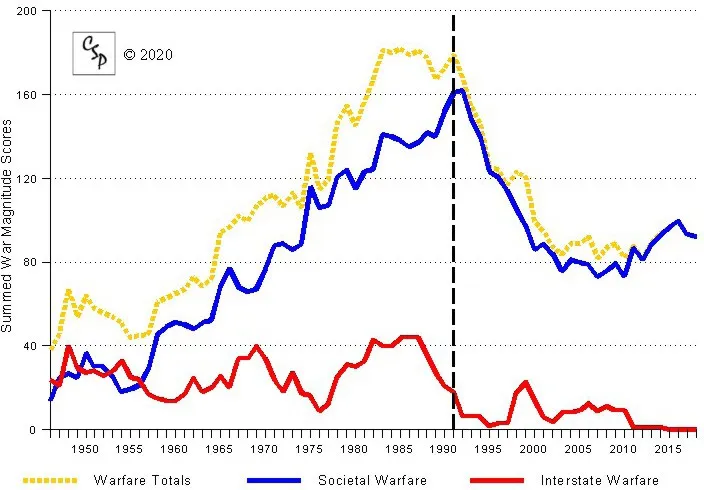
939940Trends of key variables
941 Charts or displays showing changes of key variables measurements over time can help in understanding the system under consideration. For example, Figure
942 11 shows the trend over time in armed conflict.45
943 Evaluation of trends should consider the causes and consequences of what is being seen. .
944945Figure 11. Global trends in armed conflict: 1946 - 2019
946Correlation
947 It may also be helpful to show the relationship between two variables, as in Figure 12, which shows how emissions of greenhouse gases per capita corresponds to income per capita across countries. It is important to remember that correlation is not
948 the same as causation; in the case of the variables
949 considered, a major objective of all countries party to the Paris Accord is to reduce the emissions per unit of gross domestic product.
95095145 Center for Systemic Peace, ‘‘Global Conflict Trends: Assessing the Qualities of Systemic Peace,’’ Center for Systemic Peace, 2020, https://www.
952systemicpeace.org/conflicttrends.html.
95352
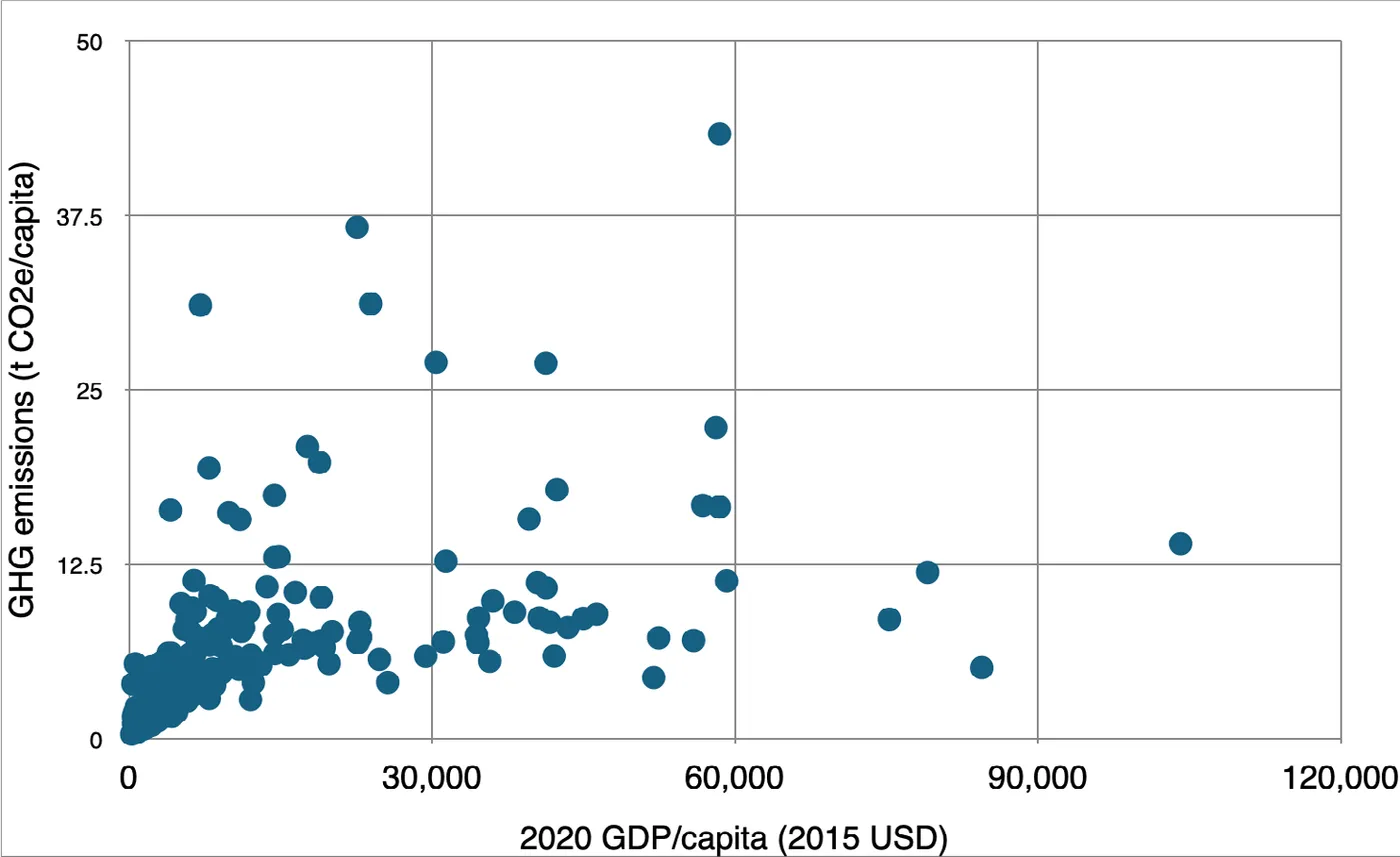
955956Figure 12. The relationship between per capita GDP and per capita emissions of greenhouse gases. Each dot represents a
957country. (World Bank data for 2020)
958959Mapping geographic data/location/distribution mapping
960 Data connected to geography may be displayed
961 on maps to demonstrate the shape, size, pattern or location of events and their relationship to the environment. This method permits recognition of special relationships that might not be visible in charts.
962 Maps covering the whole world have the challenge of displaying a sphere on a flat piece of paper, which inevitably introduces distortions. Different types of
963 maps for different purposes address this in different
964 ways. For example, where it is important that the data being displayed are on a map that shows the shape and size of continents that are close to their shape and relative size on Earth, Buckminster Fuller’s world projection is the most appropriate. It is the least distorted two-dimensional map of the whole Earth.46 (See Figure 13 and Figure 14.).
96596646 See https://www.bfi.org/about-fuller/big-ideas/dymaxion-map/for more information.
96753
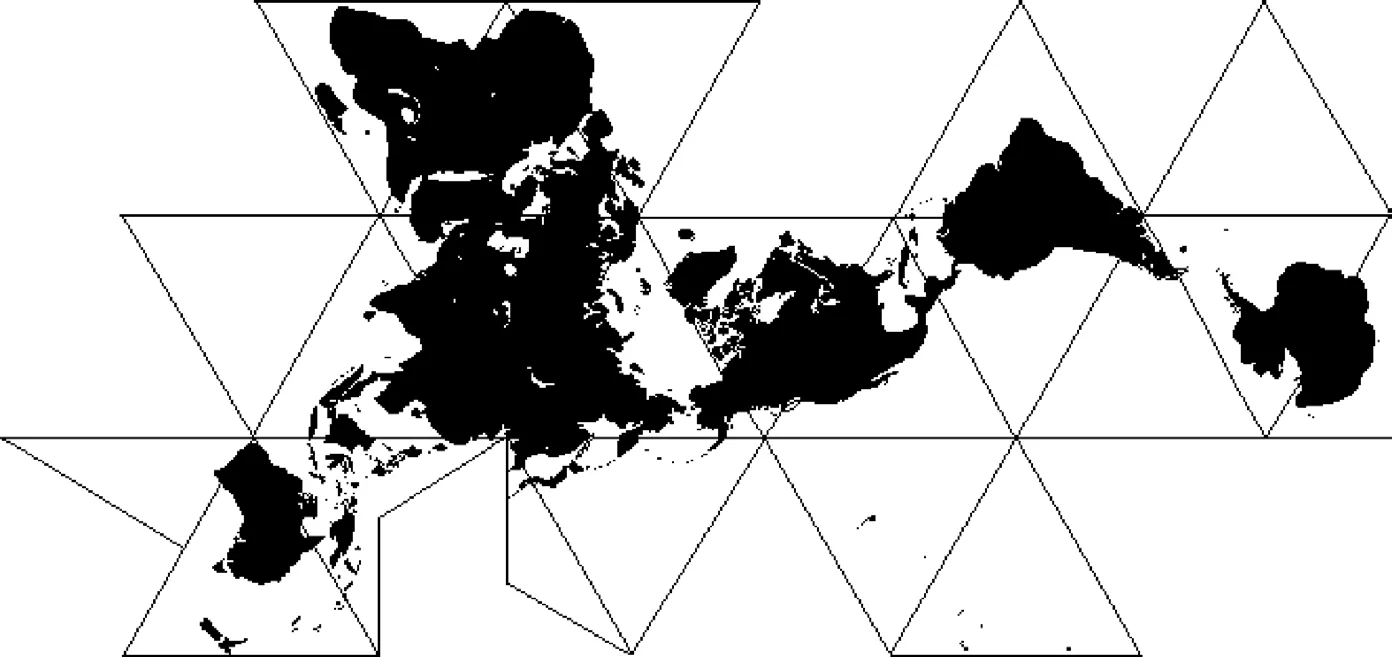
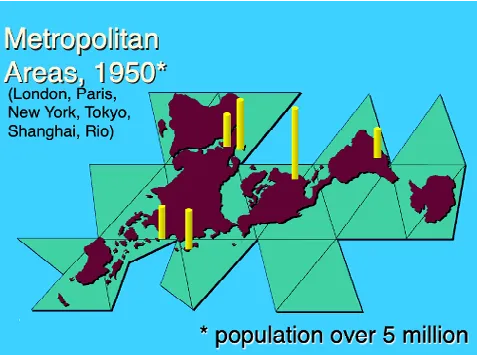
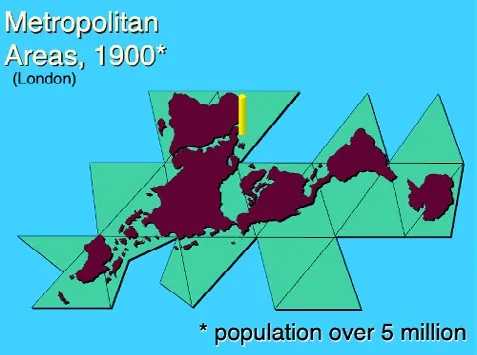
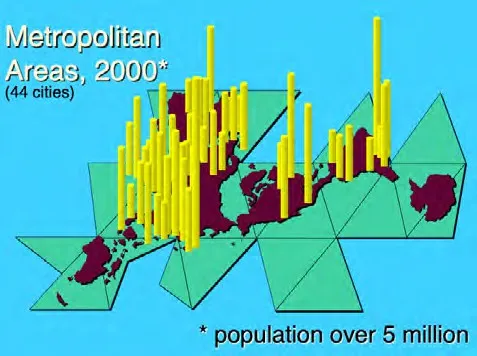
969Figure 13. Buckminster Fuller’s world map projection. Relative sizes and shapes of continents are more accurate in this
970projection than in other map projections.
971Figure 14. Growth in the number of metropolitan areas with populations over 5 million between 1900 and 2000 shown on the
972Fuller projection projection.
973974In other cases, it may be desirable to distort the
975 size of a geographic area in proportion to the variable being plotted. For example, in Figure 15, the size of geographic areas on the map are sized in proportion
976 to that region’s greenhouse gas emissions.47 As the
977 largest emitters, China and the United States are the largest areas on the map.
97897947 WorldMapper, ‘‘CO2 Emission in 2020,’’ WorldMapper, 2022, https://worldmapper.org/maps/co2-emissions-2020/.
98054
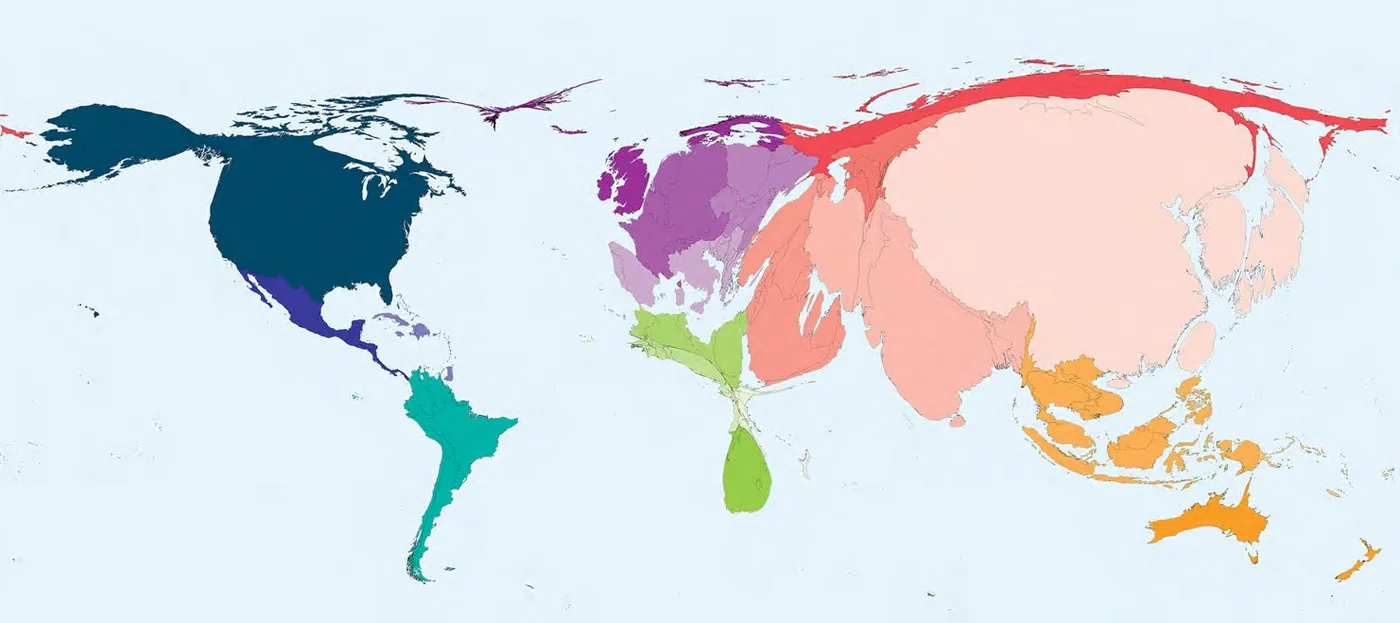
982Figure 15. Cartogram of greenhouse gas emissions in 2020. Geographic areas are scaled in proportion to their greenhouse gas
983emissions.
984985Many other projections are available and may be
986 suitable in some contexts.48
987 In addition to these relatively flat, non-dynamic displays of data, it is also possible to show changes in data over time as a movie. For example:
988 1. A movie on world population over time dramatically demonstrates the growth in population in recent
989 years. https://worldpopulationhistory.org/map/
990 2050/mercator/1/0/25/
991 Gapminder’s tool for animating data allows the user to see changes in multiple variables, by country over time. https://www.gapminder.org
992 2.
993994Modelling
995 Modelling is a technique for representing the state of a system and how its components interact. It is a simplified description of reality that is designed to yield hypotheses about the behavior of what is being modeled that can be tested.49 Some models
996 are ‘mental models’, which are mental frameworks
997 or representations of how something works. Other models may be represented in other mediums, such as physical or computer models.
- 48.
- Benjamin Hennig, ‘‘A Brief Look at Map Projections,’’ Views of the world, August 9, 2010, http://www.viewsoftheworld.net/?p=752.
- 49.
- Sam Ouliaris, ‘‘What Are Economic Models? How Economists Try to Simulate Reality,’’ International Monetary Fund, Back to Basics V48N2
998999(blog), June 2011, https://www.imf.org/external/pubs/ft/fandd/2011/06/basics.htm.
100055
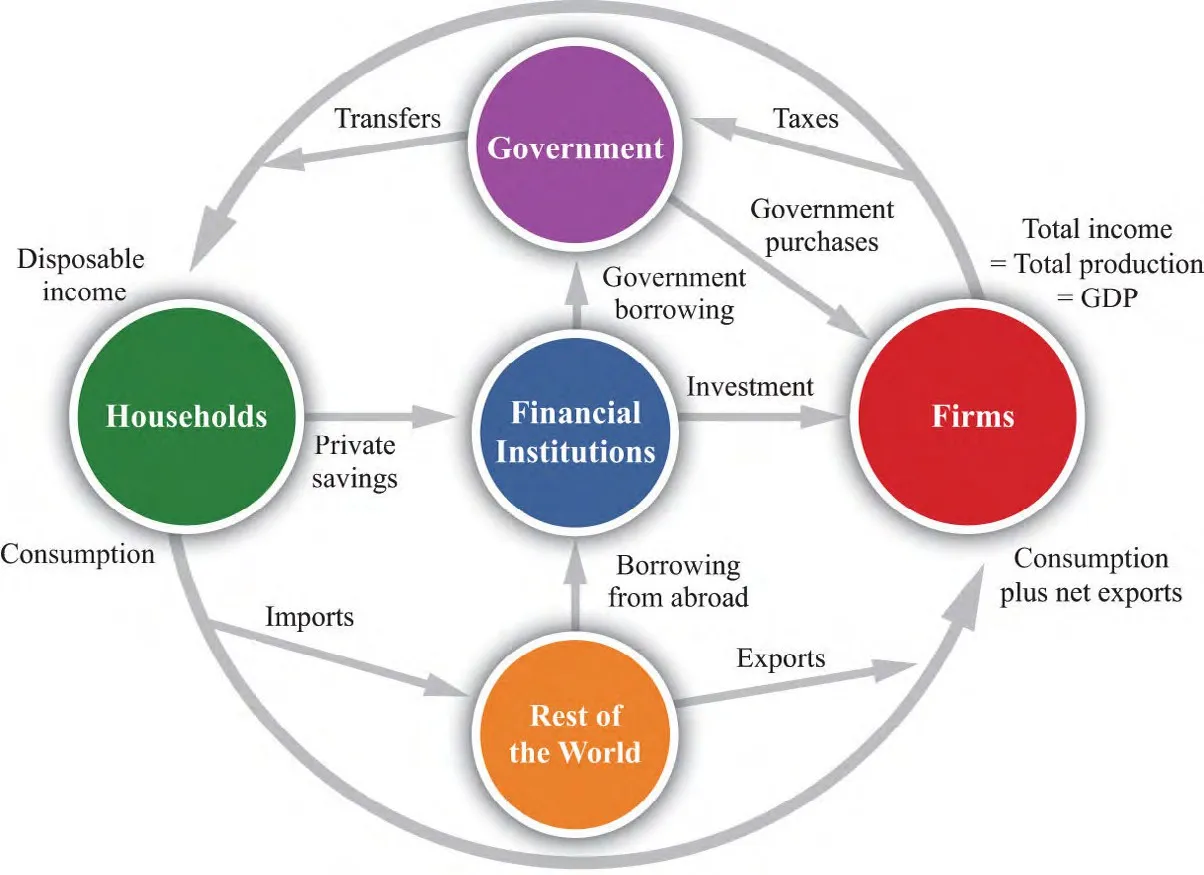
10021003A commonly used simple model is ‘trending’,
1004 which is plotting data about particular aspects of a system over time, allowing the design scientist to perceive patterns of change occurring too rapidly or too slowly to be evident by direct observation.
1005 Computer models can be manipulated to test the validity of the underlying variables which make up the model. Such models can be systematically explored, altered and tested against the real world
1006 until they are an accurate representation. They are
1007 most useful in exploring sensitivities to change and calculating the consequences of interactions over time.
1008 Computer models are also well suited for addressing complex systems and their interactions. These include economic models50 (see Figure
1009 16), global system models51 (See Figure 17 )
1010 ecosystem and energy models52 (See Figure 18).
1011 and
10121013Figure 16. Traditional economic model of an economy
- 50.
- Conspecte Team, ‘‘The Four Sectors of the Economy,’’ ConspecteCom, 2020, https://conspecte.com/en/Economics/the-four-sectors-of-the-
10141015economy.html.
- 51.
- Sandrine Dixson-Declève et al., Earth for All: A Survival Guide for Humanity, A Report to the Club of Rome (Gabriola Island, BC, Canada: New Society Publishers, 2022).
- 52.
- Howard T. Odum and Elisabeth C Odum, Modeling for All Scales: An Introduction to System Simulation (San Diego, CA: Academic Press, 2000).
1016101756
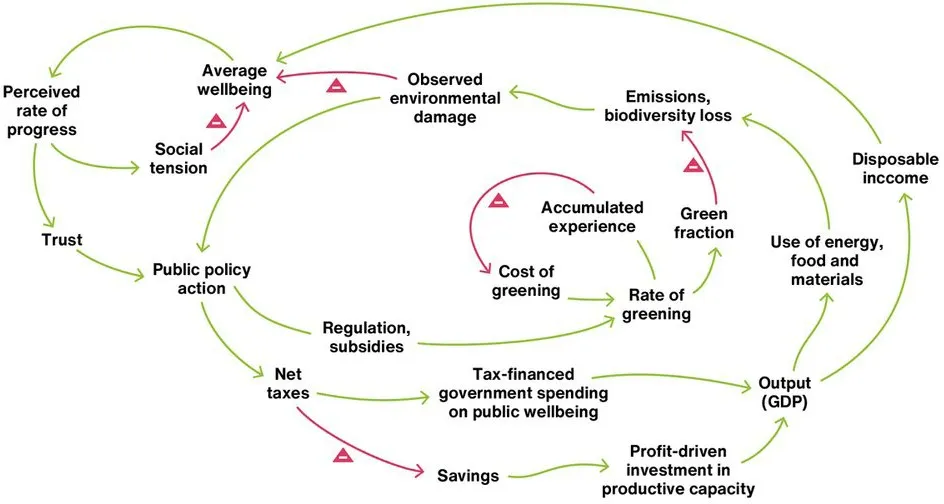
10191020Figure 17. Simplified version of the model used in Earth for All.
1021Figure 18. Model of production, consumption and recycling typical of ecosystems
102257
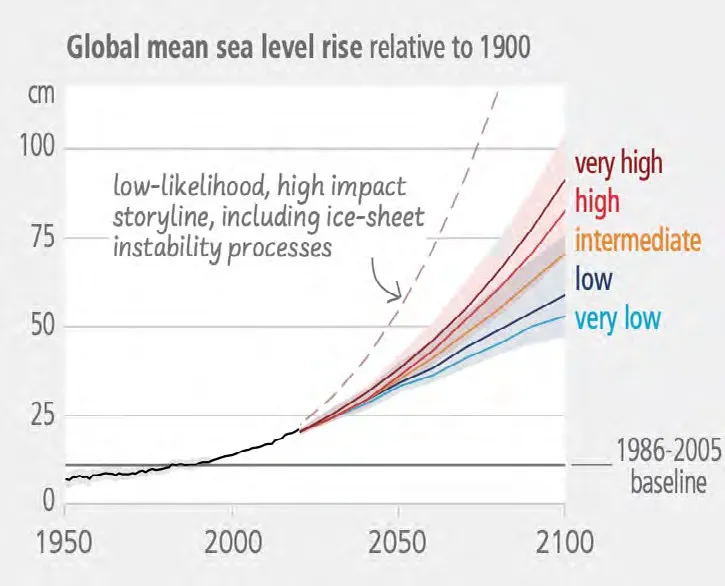
10241025scenarios
1026 Models are often used to generate ‘scenarios’. One definition of a scenario is that it is a logical sequence of events (a strategy) to show how, starting from the present, a future evolutionary condition might evolve step by step. It is a synergetic synoptic view of as many developments as can be grasped and as may appear relevant to an experimental simulation of a possible reality.
1027 Scenarios, in other words, are alternative descriptions of how the future might unfold. These may be based on alternative assumptions about key driving variables or may be the result of different actions that may be taken. The Present State may discuss or show the continuation of current trends as one scenario (sometimes called Business as Usual), and the design for the Preferred State may be another.
1028 These extrapolations from historic data may also be
1029 useful to show how the future cannot unfold, or that the existing trends are not desirable.
1030 Both mental models and computer models may be used to generate scenarios, or stories about how the system might develop or change over time.
1031 The further one goes out in time, the uncertainty increases. One strategy for considering this uncertainty is the use of scenarios. (See ‘‘The FutureCone’’ on page 9). Ideally, the preferred design will be able to accommodate any of the scenarios.
1032 It is often helpful to plot changes in key variables underlying scenarios as a graph or graphs. Some examples of scenarios are illustrated in Figure 19 and Figure 20.
10331034World population (billions)
103516
103612
10378
10384
10390
10401900
10411950
10422000
10432050
10442100
1045Estimates
1046High variant
1047Medium variant
1048Low variant
1049Figure 20. Scenarios show sea level rise under a range of
1050assumptions on greenhouse gas emissions. Source: IPCC
1051(2023)
10521053Figure 19. World population trends and forecasts to 2100.
105458
1055Figure 19 shows the United Nations’ global
1056 population projections based on models of population parameters, include birth rates, death rates and population age pyramid. Figure 20 shows five scenarios for sea level rise based on climate models
1057 and different assumptions of future greenhouse gas
1058 emissions prepared by the IPCC.53
1059 Table 4 shows the policy interventions in one of the scenarios modeled in the model depicted in Figure 17.54
10601061Table 4. Overview of policy interventions in the Great Leap scenario in the Earth for All model
1062Hierarchical organizing
1063 Hierarchical organizing is the process of arranging data with respect to its leadership, size, shape, form, magnitude, complexity, or other quality it might possess. At the top or apex of a hierarchy is the unit, person, or organization that oversees, or is composed of all the other units or elements beneath.
1064 For example, Figure 21 shows the organizational
1065 structure of the United Nations Development Program, with the UNDP Administrator at the top of the hierarchy, and the country offices at the bottom.
- 53.
- IPCC, ‘‘Climate Change 2023: Synthesis Report. Contribution of Working Groups I, II and III to the Sixth Assessment Report of the
10661067Intergovernmental Panel on Climate Change’’ (Geneva, Switzerland: Intergovernmental Panel on Climate Change, 2023).
- 54.
- Dixson-Declève et al., Earth for All: A Survival Guide for Humanity.
1068106959
1070Poverty
1071Inequality
1072Empowerment
1073Food
1074Energy
10751076Expand the fiscal space of lower-in- come countries Transform the cur- rent global financial architecture to expe- dite debt relief and improve allocation of SDRs.
1077Transform global trade dependencies to reduce trade deficits in low-income countries
1078Improve access to knowledge, technolo- gy and leapfrogging Develop new eco- nomic indicators
1079Stronger progressive taxation on both income and wealth for individuals and corporations Strengthened labour rights and trade union negotiation power.
1080Safety nets and innovation nets to share prosperity and provide security, such as universal basic dividend.
1081Recognize that gender equality is es- sential for economic prosperity and social cohesion.
1082Massively scale up investment to meet 2030 education tar- gets and guarantee the right to education for women and girls. Ensure gender equality in leadership positions in public and private bodies. Guarantee universal social protection and adequate universal pension systems.
1083Remove perverse agricultural subsi- dies.
1084Food production must shift from industrial to sus- tainable and regen- erative agricultural practices.
1085Localised consump- tion, food sovereignty and farmworker rights must be priori- tized and protected. Efficiency must be improved across the supply chain.
1086Investment in renew- ables and efficiency must be tripled.
1087Climate financing must be provided as concessional grants, not as loans.
1088Make renewable energy affordable by redirecting fossil fuel subsidies.
1089Support a global price on carbon and guarantee access to clean, safe and affordable energy for all.
1090Administrator
1091Bureau for External Relations and Advocacy
1092Representation Offices
1093Associate
1094Administrator
1095Executive Office Chief of Staff
1096Bureau for Management Services
1097Global Services Solution Centres
1098Bureau for Policy & Programme Support
1099Regional Bureau for America and the Caribbean
1100Regional Bureau for Asia and the Pacific
1101Regional Bureau for Europe and the CIS
1102Regional Bureau for Africa
1103Regional Bureau for Arab States
1104Global Policy Centre
1105LatinAmerican & Caribbean Regional Hub
1106Africa Regional Hub
1107Asia Pacific Regional Hub
1108Arab States Regional Hub
1109Europe & CIS Regional Hub
1110Crisis Bureau
1111Addis Ababa
1112Bangkok
1113Amman
1114Istanbul
1115Panama
1116Country Offices
1117Source: https://www.undp.org/sites/g/files/zskgke326/files/2021-04/UNDP-OrgGlobal-April2021.jpg
1118Figure 21. The structure of the United Nations Development Program. An example of a hierarchy.
1119Metaphor
1120Metaphor or
1121comparison -- Metaphors or
1122 0.025% of the world’s water is drinkable, one might
1123 explain ‘‘If the world’s water were put into a gallon jug, humans would only be able to drink less than 20 drops of it. To explain that livestock are responsible
1124 comparisons aid in understanding by comparing
1125 something not well known or understood to things already known.55 For example, to understand that only
1126112755 Metaphors come with strings attached, for example, the metaphor ‘‘lifeboat,’’ when used to describe the condition of the world, (as in ‘‘lifeboat
1128ethic’’) suggests that if the lifeboat is seemingly ‘‘filled’’ then it is necessary to keep those in the water out of the lifeboat, or else one risks capsizing the boat, and all are lost. Seeing the world as a spaceship, rather than a lifeboat, means that if there is a leak in the starboard side, we all go down. One metaphor is a rationalization for genocide, the other for seeing how everyone’s fates are intertwined and for making sure everyone survives.
112960
1130for 14.5% of global greenhouse-gas emissions: If
1131 cows were a country, they would be the third-highest producer of greenhouse emissions among all nations. They produce more emissions than Saudi Arabia or
1132 Australia or India and surpass every country in the
1133 European Union combined. They lag behind only China and America.56
11341135input/output analysis
1136 I/O analysis is a chart or diagram that shows the inputs and outputs of a system. The ‘‘system’’ itself is simplified to a ‘‘black box’’ that has no parts. We can make an input/output diagram by outlining a system and listing what goes in and what comes out. This kind of chart is a good first step as it helps us get a feel for the connections the system we are looking
1137 at has with the larger system of which it is a part. One
1138 of the outputs should be what the system was built to produce—e.g., food if it is the global food system, electricity if it is a power plant, etc. These charts
1139 can also illustrate vulnerabilities,
1140 intervention points.
1141 complexity,
1142 and
11431144Figure 22. Inputs and outputs of the production stage of the food system
1145components/processes
1146 There are many types of diagrams that show how the different parts and processes of a system are related. Here, that ‘‘black box’’ from the Input/
1147 Output chart is divided into
1148 its component parts
1149 or systems. For example, your body is made up of
1150 different organs which function in different processes:
1151115256 These examples are from Chip Heath and Karla Starr, Making Numbers Count (New York: Avid Reader Press, 2022). This reference provides rules
1153for making numbers understandable, largely using comparison or metaphor.
115461
1155Outputs
1156Inputs Food
1157Sun Eroded soil
1158Land/Soil Fertilizer run-off
1159Seeds Fertilizers Present CO2, methane, etc.
1160Pesticides food Waste heat, materials, food People Used machinery
1161Know-how system Tired people
1162Tractors, harvesters, etc. Know-how
1163Money Money
1164etc. Carbon sequestration
1165etc.
1166your lungs are part of the respiratory system; the
1167 stomach is part of the digestive system; the heart is part of the circulatory system, etc.
1168 You can make a components and processes diagram by graphically representing the system and
1169 indicating the components and processes involved.
1170 This kind of diagram is useful for understanding how the system works, and possibly learn how it could or should work (or is useless) given the task of getting to the Preferred State.
11711172Figure 23. Process flow of wind energy from generation through to user
1173resources useD/neeDeD/availaBle
1174 The design scientist draws on multiple information sources that describe what material and other resources are used or needed to make and maintain the system being considered. This inventory could be from the Input/Output chart done earlier or from a listing of the materials needed for our strategic design and solution. Such an inventory can be used to help understand and identify any limits that might exist relative to available scarce resources for an alternative to the
1175 present system. For example,
1176 early work on the
1177 feasibility of an electric grid that interconnected the
1178 entire world disclosed that such a globe-spanning grid, if it merely extended then present-day technology of high-tension power lines, would use the entire world’s supply of copper and the annual output of the steel industry. Such limits do not eliminate our solution, they call for achieving our preferred state using more efficient technology.
1179118062
1181who
1182This
1183Does what—organizations/actors
1184 describes or lists the organizations or
1185 Agriculture Organization, the World Food Program,
1186 UNICEF, International Fund for Agricultural Development, Food First, Save the Children, IFOAM Organics International, World Resources Institute, Bread for the World, Heifer International, Feed The Children, Association for International Agriculture and Rural Development (AIARD), Mercy Corps—and others, including companies involved in food processing and distribution and other local organizations where our strategy is to be first implemented.
1187 groups that work in, govern, or are necessary to the
1188 functioning of systems that make up our chosen problem situation, or that are needed for achieving our solution. This kind of listing helps us understand the human and organizational resources being used by the present system, and what could be needed for a new alternative system.
1189 For example, if the problem situation being focused on is hunger and the global food system, then some of the organizations would be the UN Food and
11901191impacts anD interactions with other areas
1192Cross-impact analysis is a method to show
1193 relationships between events and variables. Although traditionally a quantitative method of estimating probability of certain events,57 the method has also been adapted as a qualitative tool for identifying key elements of a system, and discovering new impacts and interactions.58
11941195The method involves analyzing the interactions
1196 of forces, trends or decisions by constructing a two- dimensional matrix with the items being considered entered along both dimensions. The individual cells where the items meet show the relationship between each pair of forces, trends or decisions. The generic grid is shown in Table 5.
11971198Table 5. Basic structure of a cross impact matrix. Shaded cells are usually ignored.
1199 As an example, an initial brainstorming session on five trends might result in a matrix like that in Table 6.
- 57.
- Theodore Jay Gordon, ‘‘Cross-Impact Method,’’ in Futures Research Methodology, ed. Jerome C. Glenn and Theodore Jay Gordon, Version 3.0
12001201(Washington, D.C.: The Millenium Project, 2009), http://discoveryoursolutions.com/download_center/CROSSIMPACT.pdf.
- 58.
- John B. Mahaffie, ‘‘How to Use Cross Impact Analysis,’’ Foresight Culture (blog), March 9, 2018, https://foresightculture.com/2018/03/09/ how-to-use-cross-impact-analysis.
1202120363
1204Item A
1205Item B
1206Item C
12071208Item A
1209A’s influence on A
1210A’s influence on B
1211A’s influence on C
1212Item B
1213B’s influence on A
1214B’s influence on B
1215B’s influence on C
1216Item C
1217C’s influence on A
1218C’s influence on B
1219C’s influence on C
1220Table 6. Example of a completed, qualitative cross-impact matrix
1221simulation gaming
1222 Simulation gaming is another method that can be used to gain an understanding of a situation. In this method the group imagines that they are in a new role and faced with a particular situation that stresses the system being examined. How will we respond?
1223 One example of this method, used in the Global Solutions Lab, is the Spaceship Captain Game. This simulation has the group imagine that they are the captains of a spaceship that is in trouble. They do
1224 not know what is wrong, where their spacecraft is, or
12251226where it is going. The participants are asked, ‘‘What do you need to know in order to identify the problems and ensure the ship’s survival?’’
1227 The responses, in the form of questions, are listed on a flip chart or white board. This exercise is very useful when learning to recognize and define problems. It helps to determine what kinds of information are necessary for general problem solving.
1228122964
1230Growing urban population
1231Climate change
1232Pressure for alternative energy sources
1233Growing demand for food
1234Risk of pandem- ics
1235Growing urban population
1236Climate change
1237Need for denser development and more walkable communities
1238Pressure for alternative energy sources
1239More rooftop solar, wind energy
1240New energy supply to be met by carbon free sources; in- creased empha- sis on energy efficiency
1241Growing demand for food
1242Increase in urban food production or more transpor- tation
1243Need to reduce food waste, focus on carbon sequestration
1244Competition for land -- solar ver- sus production
1245Risk of pandem- ics
1246Concentrated population en- courages spread of viruses
1247Expanded habitat of species carry- ing diseases
1248Pandemic curbs investment in renewables
1249Increased em- phasis on food quality control. Elimination of wet markets
1250•
1251•
1252•
1253•
1254•
1255•
1256•
1257•
1258•
1259The following are sample responses generated by
1260 this exercise:
1261 Have these problems happened before?
1262 How successful were past solutions? What are the alternative solutions?
1263 How would we evaluate the proposed solution? How much time do we have to solve the problem? What happens if we do nothing?
1264 Where are we? Where are we going?
1265 Where do we want to be going?
12661267•
1268•
1269•
1270•
1271•
1272 How do we know there is a problem?
1273 What are the problems? How critical are they?
1274 Where do we find them?
1275 How many people do they
1276 degree?
1277 affect and to what
12781279•
1280 What resources are available to solve the problems?
12811282Decision making criteria
1283 Decision making criteria are the standards by which design and strategic alternatives are evaluated. There is an intimate connection between the Preferred State and the decision-making criteria. The decision-
1284 making criteria need to capture all of the elements of
1285 the Preferred State. The decision-making criteria are used for evaluating and determining which alternatives are best for achieving the Preferred State.
12861287Key indicators
1288Key indicators are quantitative measures that
1289 systems. The key indicators are useful for monitoring
1290 the health or ‘‘illness’’ of a given system within the Present State, as well as tracking progress (or the lack of progress) towards the Preferred State.
1291 Key indicators could appear on a dashboard for a quick assessment of the state of the system being tracked. As defined by Stephen Few: ‘‘A dashboard is a visual display of the most important information to achieve one or more objectives, consolidated and arranged on a single screen so the information can be monitored at a glance.’’59 Figure 24 is an example of a dashboard on progress towards the Sustainable Development Goal related to energy.60
1292 define the decision-making
1293 indicator provides a way of of the system against each
12941295criteria. Each key
1296 knowing the status particular criterion.
1297 You can invent new key indicators by measuring
1298 characteristics of a system that you think provide an indication of its relative health, performance, longevity, or efficiency. For example, temperature and blood pressure are among the key indicators of an individual’s health. Passenger distance travelled, available edible protein, energy use, population growth rate, unemployment rate, inflation rate, efficiency rating of tools are all examples of key indicators of various social and technological
- 59.
- Stephen Few, Information Dashboard Design: The Effective Visual Communication of Data (Sebastopol, California: O’Reilly Media, Inc., 2006).
- 60.
- United Nations, Department of Economic and Social Affairs (DESA), ‘‘The Sustainable Development Goals Report 2023: Special Edition
12991300- Towards a Rescue Plan for People and Planet’’ (New York, NY: United Nations, 2023), https://unstats.un.org/sdgs/report/2023/The- Sustainable-Development-Goals-Report-2023.pdf.
130165
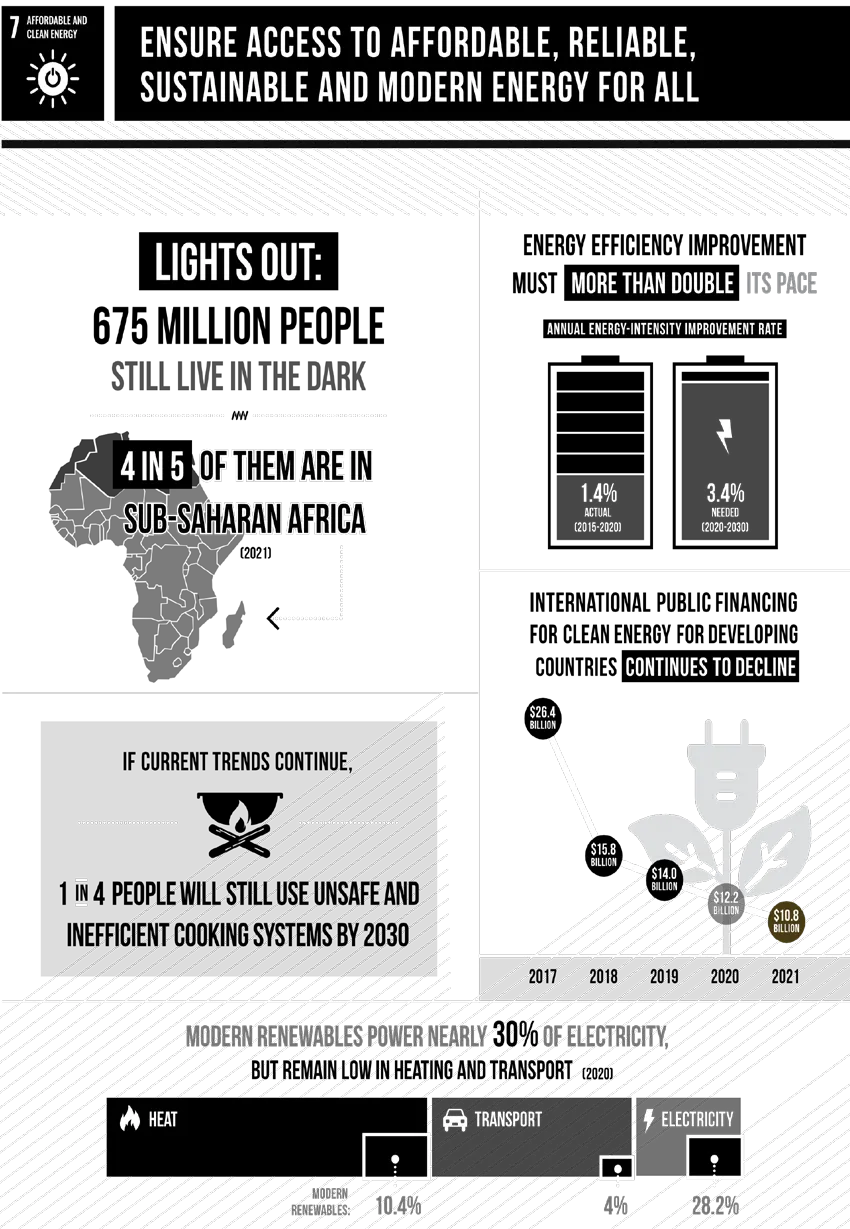
13031304the unquantifiaBle
1305There may be some elements of the
1306 system under consideration for which quantitative measures are not available, but which nevertheless are important to address. These can be addressed through qualitative discussions.
1307 What ‘‘counts’’ but isn’t easily quantified are your values, strategic directions, goals, what should be, differing assessments of the importance of new technology and options, side-effects, secondary and tertiary impacts,
1308 differing cultures and
1309 communities’
1310 response to change, environmental costs,
1311 true costs to the global and local economy, not just those costs counted by current economics, and that all-important (and unknown) ‘‘etc.’’.
13121313resources to Draw upon
1314 Researchers,
1315 authorities,
1316 and
1317 organizations is a listing of individuals and
1318 institutions presently engaged in research and development; the people we can contact for feedback or advice on our work; and organizations which influence decisions in
13191320Figure 24. Potential dashboard for the SDG related to energy
132166
1322‘‘Not everything that can be counted counts, and not everything
1323that counts can be counted.’’
1324—William Bruce Cameron
1325different areas related to our design—or who could
1326 take our work to the next level or implement it.
1327 Bibliography/reference is a listing of websites, links, PDFs, books, journals, articles, and other information sources dealing with the design on which we are working.
13281329Glossary is a listing and definition of terms
1330 important for understanding the system for which we are designing alternatives. This becomes increasingly relevant for our understanding as well as in later stages of the design science process when we are communicating our strategic designs to the larger system.
13311332iteration
1333 Iteration is the procedure by which we refine our design, making it better, stronger, more likely to reach our goal or Preferred State (see ‘‘Envisioningthe Preferred State’’ on page 82). It is a process where we look over what we have done and see if the things we learned later in the design science process will change any of the things we put together in the early stages. Similarly, we look over our earlier work, for example, our goals or Preferred State, and see if there are other things we want to add, and if our design gets us to where we want to be. This review and subsequent revisions lead to results successively closer to the desired Preferred State. The new information, feedback, and insight often lead to breakthroughs that make our design jump from good, to better, to revolutionary.
1334 Planning and design methodologies are most often portrayed as linear processes. For example, beginning with choosing the problem then following a sequence of steps to the ‘solution’ to the problem. In practice, each of those steps needs to be regularly revisited from time to time wherein we consider new information and understanding. Each iteration is intended to confirm or improve the earlier step, based on what has been learned in later steps.
13351336A caution: Although iteration and refinement are
1337 an important part of the planning process, we want to ensure that we do not become so enmeshed in planning that we never get to implementation. There will always be more data to collect, more experts to consult, and more analyses to be done. As design scientists, we need to decide when the information available is sufficient to move forward—when the design feels compelling.
1338 In the face of uncertainty, we must evaluate the best way to proceed. Are there small steps that can be taken as a probe, pilot, or proof-of-concept test? Or are the uncertainties or risks so large that further research and planning are required?
1339 Design science is about changing the world, and therefore about action. The paralysis of analysis is a trap to be avoided. We need to know when to stop planning and to start acting.
1340134167
1342taking the Design initiative
1343 organization to do what is right. The design scientist
1344 sees what needs to be done and does it. The design scientist considers all of humanity the client, not just the person with the most economic wherewithal.
1345 One of the tasks of the design scientist is to take the economic, technological, and moral initiative by designing regenerative, affordable solutions to society’s problems, demonstrate their practicality and need, and place them in the environment where they can be used.
1346 Design science brings about change through innovation—and therefore often upsets the status quo. Such disruptive innovations, or ‘‘creative trouble making’’ are the core of making the world’s resources meet the needs of 100% of humanity.
13471348A design scientist does not wait to be hired or
1349 receive a mandate from the status quo to develop solutions to problems. As a source of disruptive innovations, design science seeks to do what is needed, not what there is a job to do. Design science takes initiatives that set-in motion the changes needed to reach a preferred state.
1350 Design science, somewhat unlike traditional science that seeks to understand some facet of the universe, has as its ultimate goal the taking of action that solves a basic human need problem.
1351 The ‘‘design initiative’’ is the unsolicited taking on and solving of a global or local problem. Given the moral vision of design science, that is our responsibility as members of global society. To solve the problems of society, one does not wait to be hired by a government, corporation, or non-profit
13521353Being guiDeD By moral vision
1354Design science is no more about
1355 astronomy is about telescopes.
1356 design than
13571358At the core of design science is a set of values that
1359 say that it is unacceptable for some of the people of the world to die of starvation and all other ‘‘curable’’
1360136168
1362‘‘What is worthy and right is never impossible.’’
1363—Henry Ford
1364‘‘The young do not know enough to be prudent, and therefore they attempt the impossible—and achieve it, generation after generation.’’
1365—Pearl S. Buck
1366‘‘Never doubt that a small group of thoughtful, committed people can change the world. Indeed, it is the only thing that ever has.’’
1367—Margaret Mead
1368causes of sickness and death—and the rest of us are
1369 sentenced to watch this horror via our numerous communication links. This moral vision dictates that what is ‘‘right’’ from a perspective of enhancing the quality and length of life for all takes precedence over what is important monetarily for the few. Meeting the basic human needs of the world trumps the accumulation of ever-larger quantities of money and shareholder value for its own sake.61
1370 The moral vision of design science is based on the premises that all life on our planet is interconnected, that social and environmental justice is essential to the flourishing of humanity and our environment, and that each individual is better off when every individual is better off. It also posits that it is the responsibility of those who understand these principles to act on them.
13711372The design initiative described above is based on
1373 these premises. The moral vision of design science, plus its practical, pragmatic problem-solving methodology, seeks to make the world work for all, meeting the basic human needs and rights of 100% of humanity, while regenerating the environmental life-support systems that make our presence on our planet possible. In other words, it seeks to make the impossible possible, practical, and profitable.
13741375working in teams
1376 science process presented in this book—that are
1377 international, cross-cultural, multi-disciplinary, and intergenerational—developing more visionary, inclusive, comprehensive, and implementable designs and strategies than those of a less diverse team is very high. This is not saying that a team composed of just students (or engineers, poets, NGO staff, etc.) cannot do great things. It is saying that diverse teams are demonstratively better—bring more experiences to bear on the problem being focused upon, than non-diverse teams. Therefore, seek to maximize the team diversity.
13781379A team of people can do more than one person
1380 working alone. A team made up of diverse people can do more than a team made up of like-minded,
1381 aged, educated, and cultured people.
1382 is always more than the sum of its probability of Design Teams using
1383 The whole
13841385parts. The the design
138661 This is not a screed against capitalism or the market economy. Design science sees both as powerful tools for creating and distributing wealth. It is
1387rather a setting of moral priorities.
138869
1389‘‘No one can whistle a symphony. It takes a whole orchestra to play it.’’
1390—H.E. Luccock
1391‘‘In a country well governed, poverty is something to be ashamed of. In a country badly governed, wealth is something to be ashamed of.’’
1392—Confucius
1393It is important to make sure our design team has
1394 as much diversity of backgrounds and experience as possible. Designs for solutions and strategic plans for their implementation will be immeasurably better if the team developing them using the approach presented in this book is multi-disciplinary, cross-
1395 cultural, international, and inter-generational. The
1396 more people looking at the problem situation from different angles with differing perspectives, values, vision, and experiences the better will be the resulting design’s comprehensivity, clarity, appropriateness, and long-term viability.
13971398group methoDs for Developing solutions
1399Our defining and analyzing of the Present, Problem,
1400 and Preferred State will generate a series of questions that need to be answered. What, when, where, how, and how many are all likely to come up. We need to answer these questions, for in the answers lie potential solutions and the path to the Preferred State.
1401 In our group, ask one of the key questions that needs to be answered. After the question, brainstorm what information sources we would use to find the
1402 answer. How would we find the desired information if
1403 we couldn’t find it through Google or another search engine? What is the ultimate (or primary) source for the data we are seeking? Test the different sources and determine which ones lead to the answer most readily and in which we have the most trust. After running this exercise many times, it is possible to develop a good list of the best sources of data (or sources of sources of data) for use in design science research.
14041405group priority setting
1406 Group priority setting is a method of reducing the many views generated by a group by building consensus. Start this exercise by asking the participants to list what they think are the most important characteristics of the Problem State.
1407 Next, compile these lists to make a master list of
1408 all the responses. After this, the group can discuss the appropriateness and priority of each statement. Then, as a group, decide on the most important statements.
1409141070
1411DATA ACQUISITION GAME is a method for learning where to find sources of various data. How it works: Each member of a team asks a question about a specific data point. For example: How many bicy- cles are there in Australia? How much milk is consumed in Mexico? Where do date palm trees grow? The idea is to stump the other members of the team.
1412ai as a tool for Defining the proBlem anD Developing
1413solutions
1414Large language models (LLMs) are a relatively
1415 new type of artificial intelligence (AI) and are now available to everyone with Internet access. They are a general purpose and powerful tool that can assist in nearly all facets of the design science process. One way of viewing these tools is to see AI as another member of your team.
1416 AI works well as a generator of ideas and options. It is good at volume. Not necessarily good ideas but lots of them—and buried within the many might be a good to very good idea, or one that will trigger a new idea in your mind, or some ideas that working together will be great combinations.
1417 There are things LLMs is not going to be good at—your personal values and sense of what is important. Your personal background, experiences, values, feelings, and understandings determine what problems about which you feel strongly and decide to work on—and what the goals or preferred state should be for the problem you are addressing. Your values will be broader, more inclusive, diverse, and ‘‘out-of- the-box’’ of established thinking and the literature on which the AI has been trained. Therefore, we want to start the process with your team’s perspectives and values, and then supplement this with the spectrum of literature on which the LLM has been trained.
1418 The key ingredient, at this point in LLMs development, is to ask the right questions, to pose the best ‘‘prompts’’, that will shed light on what
1419 we are looking for. Each stage of the design science
1420 process needs different prompts to elicit the most useful results. Example AI prompts are interspersed throughout the Tools for Changing the World where they may be helpful.
1421 Users of these systems find it is helpful to start with general prompts, and then make them more specific, for example by specifying the writing tone or prospective audience (e.g., respond using an academic tone, or using vocabulary that will be understandable to a certain reading level), the length (e.g., make it five paragraphs long), whether to include references, and whether these should be limited to references in the past five years, or other suggestions for narrowing or broadening the answer to better meet your needs. 62
1422 Users of these models quickly learn how to improve the results they generate with modest practice.
14231424Alerts:
1425 1.
1426 Sources for answers requiring the most up-to-
1427 date statistical data might not be available. It will depend on when the model was last updated. If this is the case, settle for what is available and then go to the latest statistical document. A good starting place is to check the Tools for Changing the World’s Appendix 2: Global statistical data sources and data analysis tools. These will take you to the latest available data.
1428 The current state of LLMs is evolving rapidly. Whatever is written here needs to be viewed in
1429 2.
1430143162 Ethan Mollick, ‘‘A Prosthesis for Imagination: Using AI to Boost Your Creativity,’’ One Useful Thing (blog), January 28, 2023, https://www.
1432oneusefulthing.org/p/a-prosthesis-for-imagination-using.
143371
1434 this context—it most likely will be at least a bit
1435 out-of-date by the time you are reading this. Nevertheless, this introductory overview should be helpful as a place to start.
1436 Remember that each question/prompt for the LLM is an exploration. If you don’t get an answer that is helpful, prompt in a different way. Invest
14371438some time in ‘‘prompt engineering’’—editing and
1439playing with prompts to come up with the results you want.63
1440 The next part of Tools for Changing the World, the methodology section, is intended to help you take the design initiative. It is a step-by-step guide to the design science process.
1441 3.
1442144363
1444Ethan Mollick, ‘‘How to Use AI to Do Practical Stuff: A New Guide,’’ One Useful Thing (blog), March 29, 2023, https://www.oneusefulthing.
1445org/p/how-to-use-ai-to-do-practical-stuff.
144672
1447PA R T
14483
1449THE DESIGN SCIENCE PLANNING
1450PROCESS
1451Part 3 Design is not a book, or a set of
1452 procedures. It is, at its core, a creative act. It is this action -- what you do to attain a desired goal that this document is all about. Given that, this section of the Tools for Changing the World includes activities for you or your team to do.
1453145473
1455’’A revolution is not a dinner party, or writing an essay, or doing embroidery; it cannot be so refined, so leisurely and gentle, so temperate, kind, courteous, restrained and magnanimous.’’
1456—Mao Zedong, 1927
145774
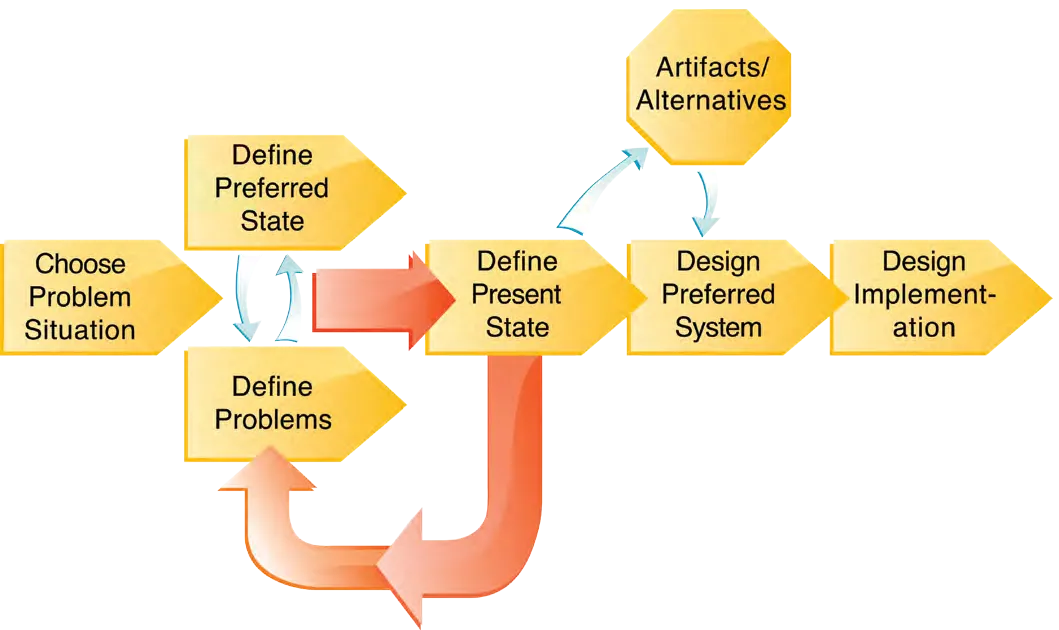
14591460The design science planning process is a method
1461by which individuals or small groups can solve complex real-world problems. It facilitates the development of alternative solutions to problems, and strategic designs and plans for implementing those solutions. It identifies what needs to be done, when it needs to be done, by whom, and in what sequence, as well as identify what resources are needed to implement the design. And it does this within the conceptual framework presented in the preceding section of this book.
1462The flow-diagrams on the first two pages of this
1463 section outline the design science process. It takes the design scientist from problem recognition through a systematic and comprehensive design process in which the goal or target (the Preferred State) that the designer is aiming for is clarified, made explicit, and used as the guiding force in developing the overall strategic design and plan that gets us to the Preferred State.
14641465Figure 25. Overview of the design science planning methodology
146675
1467Methodology: 1. The system of principles, pro- cedures, and practices applied to a particular branch of knowledge; 2. a manner or means of procedure, especially a systematic and regular way of accomplish- ing a given task
1468What should we focus on and where in that great buzz- ing confusion of the world will it be most efficient for us to apply our energy, intellect, time, and passion so that we have the most impact?
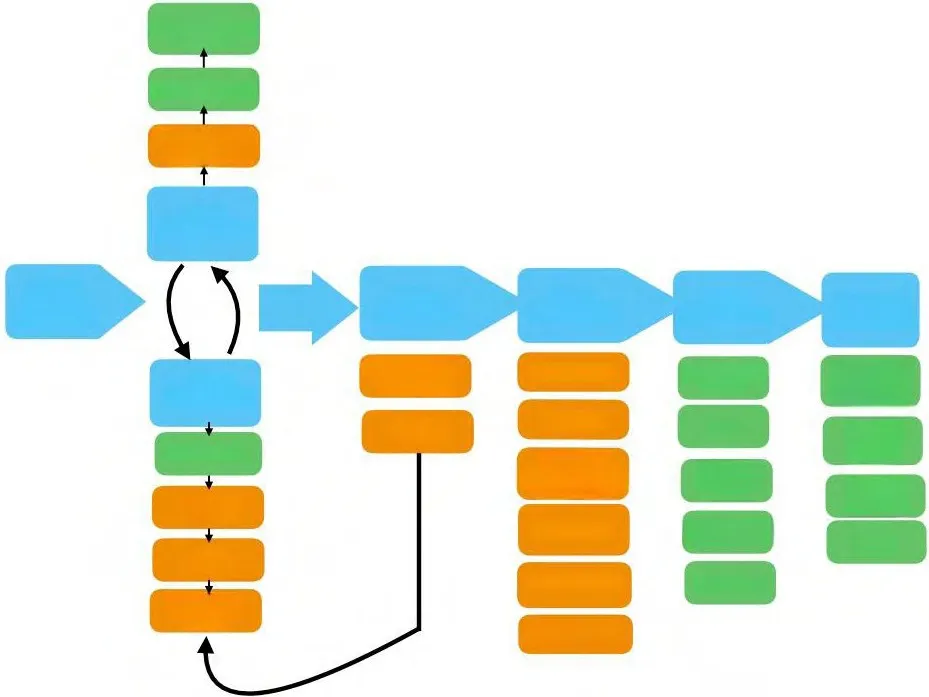
1470 And yet more specifically:
147114722. Assume current system
1473Is destroyed
1474Technologically feasible
14751. What we want-- in 10-20 years. (Not what
1476we don’t want)
1477Define
1478Preferred State
14791480Choose Problem & Problem Area
1481Define
1482Present State
14831484Next Steps/ Prep for Scale
1485Design Preferred State
1486Design implementation
1487Start with the whole
1488Prototype/ Proof of Concept
1489Document Results/ Communicate to Potential Partners, Sponsors, Funders
1490Problem State Context
1491/ Systems Analysis / Related Systems
1492Define Problem
1493State
14941495Performance
1496Determine Alternatives
1497Where
1498Prototype 1: Assignments Schedules, Monitoring
1499Systems analysis
1500What is done to reach Preferred State: Action, Projects, Progams, Policies, Technology
1501Who: Partners, Collaborators, Funders
1502Test Results
1503/ Prototype
1504modifications
1505Where & Who: Distribution
1506What is being tested, & evaluation criteria,
1507Evaluation criteria
1508Scale for impact
1509What: Performance
1510When/ timeline
1511Evaluate alternatives
1512Social, Economic, Environmental impacts
1513Social, Economic, Environmental impacts
1514Figure 26. Elaboration of
1515the Design Science Planning Method’’
151676
1517Define
1518Preferred State
15191520Choose Problem & Problem Area
1521Next Steps/ Prep for Scale
1522Define
1523Present State
15241525Design Preferred State
1526Design implementation
1527Define Problem
1528State
15291530recognizing the
1531situation/
1532proBlem
1533choosing the proBlem
1534 and political aspects or components.
1535 If we started with our concern or outrage that there are hungry people in the poorer parts of the world—of ‘‘hunger’’ as the problem, and its symptoms (how we know the problem exists), as 800+ million people in the world without access to enough food, or the number of people in the world starving, malnourished, threatened by starvation, going to bed hungry, etc., then backing up we see a bigger picture that can lead to causes of the symptoms we first noticed. Such as, in the hunger example, the problem involves the environment, including climate change, plus food production, distribution, waste, affordability, access to land, energy, water, technology, as well as social justice, gender equity, national policies, subsidies, incentives, and the global economy.
1536 It is likely that what we think of as a ‘‘problem’’ are likely symptoms of a set of interacting threats and opportunities. This general ‘‘problem situation’’ can be referred to as the ‘‘mess’’ for short.
15371538moving from proBlem
1539proBlem situation
1540The first step of the design science
1541to
1542 planning
1543 process is deciding what problems we as an individual
1544 or group will address. Here’s the simplified process:
1545 1. We start with our values, with what we see, and feel, as the problem we want to solve. 2. And then we back up.
1546 This leads us to a more comprehensive picture—the situation in which the problem is embedded. Most problem situations will have local and global environmental, technological, economic, cultural,
1547154877
1549‘‘It isn’t that they can’t see the solution. It is that they can’t see the problem.’’
1550—C. K. Chesterton
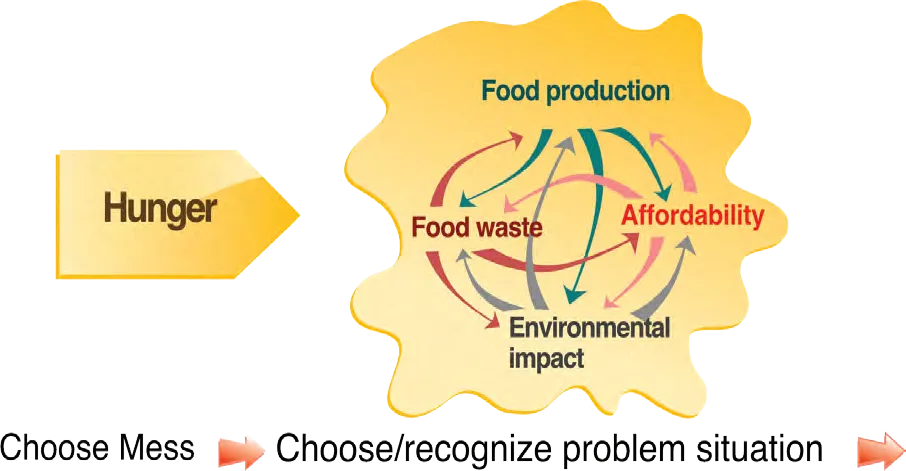
15521553What does hunger in a specific region of the world fit into? What is the larger system or mess of
1554which it is a part? We need to ask, what causes the symptoms that we think of as the problem?
1555Figure 27. Step one of the design science planning process: deciding what problem to focus on. What
1556we think of as a ‘‘problem’’, like ‘‘hunger’’, is usually part of a larger set of interacting threats and opportunities or what may be called the problem situation or ‘‘mess’’.
1557Deciding what problems we will pursue is not
1558 as easy as it appears. It is also critical to the success of our work. The values, perspective, interests, resources, and talents of the designers undertaking this initiative will help determine both what the problem or mess is (the design focus or project)—and its outcomes. Determining and clarifying these
1559 values is essential. Answering the questions above
1560 will help in this process.
15611562Determining the proBlem #2
1563 Part of the design process is working in a Design Team. Another part, after we have developed a solution to the problem (or getting to the Preferred State as the next sections will clarify), we most often need to expand our team by finding partners, sponsors, and collaborators that can help in implementing our strategic design and strategy.
15641565The same general principle can also apply to
1566 picking our problem area focus. For example, the UN’s Sustainable Development Goals are a list of 17 global problems that are of critical importance to making the world work for all. (See ‘‘Figure 2’’on page 8). A lot of work has gone into the definitions of what these problems are, the statistical
1567156878
1569Mess contains the problem
1570Start with the problem situation—the ‘‘mess’’—that the problem with which you are concerned is embedded within.
1571Look for the bigger picture.
1572descriptions of them, and other valuable information
1573 on the state of the world. This body of research is available online and can be of great help in the entire
1574 design science process. Appendices 2 and 3 have
1575 links to these resources.
15761577moving from mess to vision
1578We don’t start out with problems all neatly prearranged for us to solve. The real world is not arranged like a math textbook. Usually, a problem situation or ‘‘mess’’ confronts us. But there is more. Good problem solving does not start off with assuming we know what the problem or mess is.
1579 If we accept given prepackaged problems, we will be starting out with hidden, predetermined assumptions that can interfere with developing a creative response to the real problems causing the situation we are seeking to fix.
1580 Once we define what the ‘‘problem’’ and its enveloping ‘‘mess’’ is, we have bought into a lot of self-limiting and hidden assumptions that curtail the options we have. We need to take care to define the problem/mess, not its symptoms, from a context
1581 and perspective that will provide us with the options
1582 needed to reach the Preferred State.
1583 Recognizing only the apparent issue is part of the problem itself. If we select a problem without considering its context, our thinking becomes restricted, and we may miss potential solutions. To simplify the design process, one approach is to reconsider the ‘‘problem’’ by determining the ideal outcome for the situation it is part of. Imagine how the situation should ideally be, based on our values. What should the system achieve? This activity helps shift our focus from the specifics of the ‘‘problem’’ (symptoms of systemic issues) to the overall behaviors of the entire system we want to alter, aligning them with the envisioned Preferred State.
15841585consiDerations in choosing the proBlem
1586 a larger system of which it is a part. The ‘‘problem
1587 situation’’ is what your values tell you are important (hungry people, illiteracy, lack of access to health care, environmental destruction, etc.). From this general area of concern we both zoom-in to a specific problem we want to address, and zoom-back to take a bigger picture view of the problem area. For example, we zoom-in to identify malnutrition in rural villages, and we zoom-out to the global food, economic, technological, and ecological systems.
1588 A general ‘‘problem situation’’—not a specific
1589 problem—is chosen. The context for a specific
1590 problem is the problem situation. Every problem has
1591159279
1593‘‘The only way of understanding a system is to understand the system it fits into.’’
1594—Howard Odum
1595There are many approaches a design science
1596 planning team can take in choosing a problem situation. The following are four that have been used by groups at previous design science planning sessions.
1597 3.
15981599Take one of the trans-boundary categories (such as
1600 climate change, urban areas or slums) and develop a solution to a basic human need in that category for a specific part of the world.
1601 Choose a problem that has been identified by others that resonates with your values, for example in the annual assessment of global risks,64 in the progress report on the UN Sustainable Development Goals,65 or in the analysis by The Fund for Peace66 or other credible international organizations.
1602 1.
16031604Focus on a specific functional area of human life-
1605support, such as food or shelter, and develop a strategy for meeting these needs at a chosen geographical scale (from global to individual dwelling) or at a trans-boundary level.
1606 Choose a particular geographical area, such as a neighborhood, region, or nation, and develop a strategy for that defined region which includes one or more of the functional life-support areas.
1607 4.
1608 2.
16091610Table 7. What are the dimensions of the problem we should address?
161164
1612Emilio Granados Franco et al., The Global Risks Report 2022 (Geneva: World Economic Forum, 2022), https://www3.weforum.org/docs/WEF_
1613The_Global_Risks_Report_2022.pdf.
- 65.
- Our World in Data Team, ‘‘SDG Tracker: Measuring Progress towards the Sustainable Development Goals,’’ Our World in Data, 2023, https://
16141615ourworldindata.org/sdgs.
- 66.
- The Fund for Peace, ‘‘Measuring Fragility: Risk and Vulnerability in 179 Countries.,’’ 2023, https://fragilestatesindex.org.
1616161780
1618Examples of areas of human needs
1619Examples of geographic scales for focus
1620Examples of Trans-boundary levels of focus
1621Food Water Shelter Sanitation
1622Health Care Education Energy Transportation Communications Materials Recreation Logistics Environment
1623Individual Dwelling unit
1624Neighborhood/Community City
1625State region State
1626National region Nation
1627Global region Global
1628Climatic region /bio-region/ water- shed
1629Economic status
1630Geographical and Economic status (urban slums, rural poverty)
1631Level of technology use
1632Religion or other cultural dynamic Market access
1633If we choose to work with an area of human needs,
1634 we need to define the geographic scale we want to
1635 focus on. If we are planning the development of a
1636 specific geographic region, then we need to decide
1637 which functional areas, at that level, on which we want to work.
16381639functional Definitions
1640 A next step is to develop working definitions of the functional area or areas with which we will be dealing. A functional definition describes what the system you are considering does—what its function is within the larger system of which it is a part. For example, each part of humanity’s external metabolic system (see ‘‘Technology as a living system’’ on page35) plays an essential role in the operation of that system just as each part of our internal metabolic system plays an essential role in the operations of our bodies (such as circulating blood/nutrients or transporting essential goods). This role is a specific
1641 function that needs to be performed for the rest of
1642 the system to work properly—to maintain itself and to continue to thrive and evolve.
1643 For example, if we are focusing on energy supply for Africa:
16441645What is the definition of energy? ‘‘The capacity
1646 to do work.’’
16471648What role does it perform in the system for which we are seeking to develop a solution? In supplying energy to rural areas of Africa, energy is used to power food production, water pumping, vehicles, lighting, and economic activities.
1649summary
1650 The first step in the Design Science methodology is choosing the problem area to focus on. The choice of the problem area is based on a combination of our values, knowledge and preliminary research. Our understanding
1651 of the problem will increase as we proceed through the
1652 methodology, considering not just the symptoms but its root causes—as well as where we see the problem situation should be—our Preferred State.
1653165481
1655Activities for you or your teAm to do —Questions
- 1.
- What problem or mess have you chosen to focus on?
- 2.
- What are the symptoms?
- 3.
- What causes those symptoms?
- 4.
- What are the dimensions of the problem?
- 5.
- What geographic area of the world are you most concerned about?
- 6.
- How is this problem related to everything else?
1656Define
1657Preferred State
16581659Choose Problem & Problem Area
1660Next Steps/ Prep for Scale
1661Define
1662Present State
16631664Design Preferred State
1665Design implementation
1666Define Problem
1667State
16681669envisioning the
1670preferreD
1671state
1672Defining
1673the
1674goal
1675 the problem situation.
16761677A Preferred State is the design of
1678 the system
1679 according to our values, vision, and perspective.
1680 Political and economic constraints are removed. Technology, operational viability, and environmental health are the constraints governing the design of the Preferred State—which needs to use present day technology and known resources. No magic wands.
1681 The Preferred State describes what we want, not what we think is probable or will be permitted. It is preference, not prediction. It is not what we think will or can happen. Rather, it is a bold statement of what we want to happen—what we wish the world looked like. It is often revolutionary and transformative, not evolutionary, or incremental. The Preferred State is in stark contrast to what politicians, bureaucrats, and the current economy will allow or think is practicable, expedient, or currently affordable. They are preoccupied with the problem, the ‘‘disease’’. Just as medicine’s first concern was with pathology and then progressed to figuring out what optimal health
1682 The chart
1683 below describes the next step of the
1684 design science process. Having chosen a general
1685 problem situation and a more specific problem within that area, we now determine its Preferred State. The Preferred State is sometimes referred to as an ‘‘Idealized Design’’ and relates to our goals and visions for a better world. We do this determination by listing the qualities of a state that is preferable to
1686168782
1688‘‘A pile of rocks ceases to be simply rock when somebody contemplates it with the idea of a cathedral in mind.’’
1689—Antoine de St. Exupery
1690‘‘The inability to envision a positive future is, in itself, a threat to survival.’’
1691—Russell Ackoff
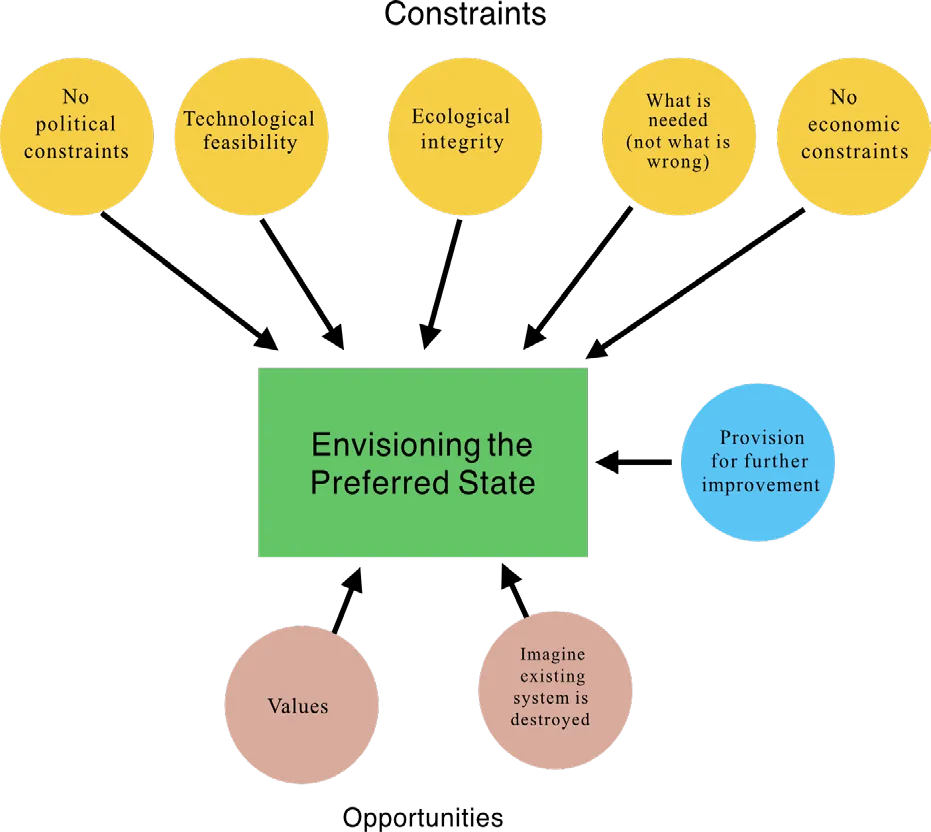
1693is all about, so too design science focuses primarily on
1694 the optimal health of the system that the problem or ‘‘disease’’ is contained within.
1695 The Preferred State is our definition of health, not pathology. It is our vision of what is possible, made real—in record time, sparing no expense, to universal accord (meaning no opposition).
16961697The Preferred State asks us to answer:
1698problem situation you have chosen) disappeared
1699 overnight, what would we want to replace it? What is the ideal or preferred state of the problem situation?
1700 What would the world look like with the problem solved? / What will the impacts be of a world where the problem situation is no longer?
17011702•
1703•
1704•
1705 What are the qualities
1706 What would it do?’’
1707 of
1708 the
1709 Preferred
1710 State?
17111712•
1713If the current system related to (insert the
1714Figure 28. The preferred state: key constraints and opportunities
171583
1716‘‘Our ability to solve problems is limited by our conception of what is feasible.’’
1717—Russell L. Ackoff
1718Another way of looking at the Preferred State is
1719 that it is an aspirational future. It is what we want or aspire to, not what we are afraid of. It is not a ‘‘needs assessments’’ but goal clarification. As such, it is a powerful tool for bringing about and managing change. What it is not, is wishful thinking. It is necessary for bringing about change. Yes, it is, by intention, visionary. But vision is powerful. Vision drives action, and money follows vision.
1720 There are many tools for trying to guess or predict the future, but the key tools for creating the future are aspirations and the development of a technologically possible Preferred State. With a clearly defined Preferred State comes a shared vision, core values, appropriate options, and a set of decision-making criteria that guide the entire design science process.
1721 As depicted in Figure 28, part of the process of developing the Preferred State is to suspend all constraints—including economic and political—except for those of technological feasibility, ecological integrity, and our values.
1722 In doing that, it is often helpful to imagine that the current system is completely destroyed. Ackoff
1723 sees this assumption as critically important because
1724 referring to the existing entity restrains designers from thinking about what they really want. Their minds tend to get caught up in the constraints inherent in the current entity and its environment.67 Elements of the current system may be included where they are deemed of value, but only where they’re wanted, and not just because they currently exist.
1725 In this exploration, we ask: How would we meet the need that the current problem area seeks to meet if there were no infrastructure in place? If we were starting from scratch, and had to meet the need for food, shelter, education, healthcare, etc.—whatever the problem area you are focused on—seeks to deliver.
1726 Defining the Preferred State forces us to make explicit what we want and where we want to go. This step involves developing a working hypothesis which we will test and document as we develop a complete strategy. For example, if our Preferred State includes providing adequate nutrition for every human on Earth, the plan we develop then becomes an experiment to test if the goal is possible and how it might be brought about.
17271728frames of reference
1729 Another way of viewing the Preferred State is to see it as a frame of reference to the present situation. This provides a perspective from which to view the difference between what is happening and what should be happening. A physician diagnoses a patient based on knowledge of a ‘‘healthy’’ or Preferred State functioning of the body. Problems can be better
1730 understood by referencing them against as clear as
1731 possible a notion of how the system should be working. Though humans rarely define a Preferred State for society and use this as a tool for understanding and resolving our problems, it is essential in order to plan for the future.
1732173367 Ackoff, Magidson, and Addison, Idealized Design: Creating an Organization’s Future, 41.
173484
1735Brainstorming
1736 Defining a Preferred State can be a simple brainstorming game. Extensive research and technical analysis are unnecessary for determining what we want. Everyone is an expert on what should be. Everyone has an equal right to contribute and help form the goals in the design science planning process. Brainstorming is a group method for generating ideas. This helps to produce many perspectives on
1737 what should be included in the preferred state.
1738 Start this activity by determining a period of time the activity will last. Ten to fifteen minutes is usually sufficient.
17391740Then ask the group to offer different ideas or views
1741 of what should be in the preferred state. During the
1742 brainstorming session, there is no criticism of ideas proposed, or analysis. Have a member of the group list the ideas on a whiteboard or flipchart as they are suggested without modifications or arranging. The important role of brainstorming is that it allows a diverse and wide-ranging set of responses to be generated without judgment. Brainstorming is not analytic and imposes no constraints on the listing of possible ideas.
1743 Brainstorming is likely to produce better results when it is done by a diverse design team, as discussed above under identifying the problem.
17441745refining the preferreD state
1746 After the brainstorming session, the preferred state can be refined, consolidating ideas that are similar, and organizing the items into categories, such as elements of the preferred state related to performance, scope, and environment. The preferred state will continue to be refined throughout the design science planning process, reflecting growing understanding of needs, opportunities, and challenges.
1747 Our descriptions of the Preferred State will change and evolve as we explore new ways of seeing problems and developing options for reaching the Preferred State. As our personal values, vision or perspective change, our Preferred State descriptions can change. It is very useful to repeat this Preferred State formulation step over again (and again) in order
1748 to clarify the common objectives of the planning
1749 team. Such an exercise functions as a reality check on the design science process.
1750 For example, Table 8 illustrates a Preferred State for the global food situation developed by a design science group focusing on that human need area. This Preferred State was developed by a team over weeks of work and incorporated all that they learned over that time. Their first draft began as four or five characteristics of an ideal food system and grew as their research led them to new nuances of the problem situation. The development of the Preferred State is an example of the value of a diverse design team and their creative interactions.
1751175285
1753Table 8. Example of a Preferred State for the global food situation
175486
1755Criterion
1756Feature
17571758Availability
1759An abundance of nutritious, delicious, culturally appropriate, and affordable supply of food for all of humanity’s healthful thriving and evolution is available on a regenerative basis.
1760The fear of an inadequate food supply is vanquished. Planning and management of the global and local systems are as comprehensive and anticipatory as possible to insure a guaranteed regenerative supply of food for everyone.
1761Diversity
1762The global food system allows for maximum individual flexibility in food types to encourage as
1763much cultural and culinary diversity as possible.
1764There is an optimum diversity of food crops and a diversity of different strains within each crop. There is an overall genetic bank increase.
1765Safety
1766The food system, as well as the food, is safe. For example, farm workers as well as food should not be exposed to dangerous chemicals.
1767Human rights
1768Food is a birthright, not an economic weapon of exploitation. There is no coerced human labor involved in the food system.
1769Environment
1770The global food system is regenerative; that is, it is not based on resources which are rapidly being depleted such as fossil fuels and it is not based on short-sighted practices such as poor soil management. The food system leaves the food system’s environmental support systems stronger, healthier after harvest than before.
1771The food system has the least possible negative environmental impacts and the most possible positive environmental impacts as possible, such as the build-up of poor soils into rich soils.
1772Resiliency
1773There is a minimal dependence on adverse fluctuations in natural cycles.
1774There is a built-in flexibility in the food system; there is a back-up storage system to ensure the maximum amount of nutritionally sound food to maximize the number of forward days for all of humanity.
1775The fear of an inadequate food supply is vanquished. Planning and management of the global and local systems are as comprehensive and anticipatory as possible to insure a guaranteed regenerative supply of food for everyone.
1776Efficiency
1777The global food system operates at maximum efficiency—minimizing the need for energy, mate- rials, land, and human time use in all stages of the food system.
1778There is a minimum of waste food. The amount of food lost to waste is continuingly reduced.
1779Information
1780The global food system is comprehensively monitored and feedback obtained for quality and quantity control.
1781Access to all accurate food information is readily available to everyone.
1782There is a maximum amount of research and development related to improving the food system.
1783envisioning the preferreD state with ai assistance
1784•
1785AI may help us to refine our description of the
1786 Preferred State.
1787 After our team envisions our Preferred State for the problem area by answering the questions described above, we can use our AI ‘‘team member’’ as a way of helping to flesh out the Preferred State. The additional perspective of AI can be of assistance to our team.
1788 The following prompts are examples of the types of queries that that may be productive:
- If all the problems associated with the global
17891790(insert your problem area) were eliminated, what would the global system look like?
1791 What will the world look like if there is no
1792 (e.g., hunger)?
1793 What would the impacts be if the global
1794 (e.g., hunger or food system) problems
1795 were eliminated?
17961797•
1798summary
1799 When we talk about the Preferred State, we empower people with a vision of what is possible-- a basis for hope anddeterminingwhattheycandotomakeitreal. Starting with a Preferred State builds consensus, agreement and inspires motivation and action. It involves everyone, as everyone is an expert on what they want.
18001801Developing a Preferred or ideal state provides:
1802•
1803 A set of decision-making criteria for deciding
1804 which alternatives are best.
1805 An ‘‘outside the box’’, big picture, expansive, larger system’s view of the problem situation and the number of possible intervention points and options. The behavior of the whole system, and many of its parts—by which the discovery of the remaining parts can be discovered.
1806 A way of developing solutions to a problem that go beyond ‘‘problem solving’’—that builds capacity and grows wealth, not just reduces poverty.
1807 A Preferred State supplies us with a first draft of
1808 our ‘‘Problem State’’ (see below).
18091810•
1811•
1812•
1813•
1814 A positive, visionary goal that builds consensus.
1815 A focus on what is needed, not what is deemed
18161817•
1818 feasible, expedient, or most profitable by
1819 status quo, politics, and current economics.
1820 the
18211822•
1823•
1824 An organizational framework for thinking about
1825 the future and defining the problem situation and
1826 alternatives.
1827 A definition of a healthy system; a definition of success; our goal. As such, it organizes the path to reach it.
18281829•
183087
1831‘‘When you talk about the problems, you tend to disempower people. You tend to make people feel that there is nothing they can do, that they are doomed, that there is no hope.’’
1832—Wangari Maathai
1833Define
1834Preferred State
18351836Choose Problem & Problem Area
1837Next Steps/ Prep for Scale
1838Define
1839Present State
1840Design Preferred State
1841Design implementation
1842Define Problem
1843State
18441845Defining the proBlem
1846state
1847 to all,’’ some of the components of a Problem State
1848 embedded within this Preferred State are:
18491850•
1851•
1852 Inadequate supplies of energy, not enough for all
1853 Current supplies of energy are not clean; they are derived from CO2-intensive fossil fuels
1854 Current supplies of energy are not affordable to
1855 many.
1856 Recognizing and defining problems is a difficult
18571858•
1859Simultaneously with the development of the
1860 Preferred State, we create a first draft of the Problem State. In this case, the initial, first draft Problem State is the inverse of the Preferred State.
1861 For example, if the Preferred State is ‘‘the provision of abundant supplies of clean and affordable energy
1862 and critical task. We are familiar with news reports
1863 and analyses of current events in the media. Usually what we call problems are really only symptoms
1864186588
1866‘‘The formulation of the problem is often more
1867essential than its solution.’’
18681869—Albert Einstein
1870Activities for you or your teAm to do —Questions
- 1.
- What does your preferred state say about resource usage?
- 2.
- Does your preferred state address all of humanity or some subset?
- 3.
- Describe how your preferred state draws from and enhances or impacts the natural environment?
- 4.
- Explain how your preferred state considers all stages of the system it is addressing, for example including production, transportation and distribution, usage, and post-usage.
- 5.
- Describe how your preferred system contributes to equity and human rights.
- 6.
- Describe how your preferred system respects different cultural and ethical values of different communities.
- 7.
- What education and information systems are part of your preferred system that empower making informed and responsible choices?
- 8.
- How does your preferred state interact or relate to other systems?
18711872of problems. Symptoms are the visible effects of a
1873problem, while the problems themselves are usually related to the functional or structural characteristics of a system. Distinguishing between symptoms and problems is important in making more accurate definitions of the problems we want to resolve—and in developing solutions that bring about the changes we want. Treating symptoms doesn’t solve problems. At best, it makes us feel like we are doing something, and comes up with a solution which is destined to fail slowly, and most often, results in another, equally or more serious problem.
1874Figure 29. Like an iceberg, there is typically much more
1875involved than consideration of the visible symptoms alone
1876would suggest.
18771878lenses anD yarDsticks
1879 The way we describe the problem depends on the lenses we use to see and the yardsticks we use to measure. The Problem State is what is not working in the system we want to change. Collaborative problem solving and strategic design and planning bring multiple perspectives to the recognition and definition of a problem. As more people come to grips with the complexity of a problem, the richness of its description increases. And, as this happens, more alternatives emerge that will get us to the Preferred State.
18801881Everyone brings his or her own frames of reference to
1882 the design science planning process. These perspectives are based on different political, economic, cultural, psychological, organizational, and religious values and experiences. It is important to understand when and how we use these perspectives and to see the degree to which our own cultural values influence the way we define problems. However useful these frames of reference may be in organizing our ideas of the problem, we must take care to see that they do not inhibit, limit, or predetermine our understanding of the problem.
18831884start with the larger system
1885It is important to remember that, at whatever
1886 level your focus, design science ‘‘problem solving’’ should move from the general to the specific—from the ‘‘whole’’ to the parts—from the generalized principle to the special case. In design science,
1887188889
1889‘‘If you can’t solve a problem, enlarge it.’’
1890—Dwight Eisenhower
1891problem/mess recognition starts at the global level
1892 and works in towards the local level, thus ensuring that all subsequent strategies or artifacts developed locally are compatible with global potentials and restraints.
18931894Expanding the scope of the problem, so it is not just a village or even the country that the village is located within, enlarges the number of options and the way we look at the problem. In the South Sudan village example, enlarging the problem from a lack of food in a poor African country to the global food, ecological, economic, and technological systems will allow us to see options that were not present in the smaller, more local system. From this perspective, solving the problem often becomes a question of what we can introduce from outside the local problem system that will bring about the changes we are seeking.
1895One way of looking at the hunger problem in, for
1896 example, the South Sudan, is to see it in the context of larger and interlocking geographical, geopolitical, cultural, ideological, and ecological systems. Whether it is the bioregion, a village or nation, every problem we address is part of larger systems.
1897 We always start with the larger system. (And remember, until we get to the Universe, there is always a larger system.) If we defined our problem as the lack of food in a village in South Sudan, we might find ourselves limited to the options available in the local food system. We would likely see a ‘‘solution’’ as a way of expanding the local food supply from local resources. And if this were to happen, we might have a solution that helped the problem situation in the short term, but we would miss over 50 to 90% of the available possible long - term and regenerative solutions to the problem. Thinking ‘‘outside the box’’ is thinking outside the system the problem is within.
18981899Dimensions of the proBlem
1900 In developing the description of the problem state, we need to consider multiple dimensions, or ways of looking at and defining the problem situation. These will include, for example:
- Impact: In what way are people impacted by the problem? How many people are impacted? (And who might be impacted positively by the status quo setup? Who is benefiting from the current system?)
- Geographic distribution: Where are the people who are impacted? Where are the resources and technology that are needed to reach the Preferred State?
19011902•
1903Demographic
1904distribution:
1905When
1906considering values that describe or affect
1907people it is important not to focus only on the average value but also the distribution. Average values may obscure important distinctions. For example, data on average income per person by country do not capture that there is poverty within countries with high average income and that there are wealthy individuals within countries with low average income.
1908Performance: What are the deficiencies or production shortages of the current problem situation? What are the limits of the problem
19091910•
191190
1912•
1913 situation in terms of its capacity to produce life-
1914 support goods and services?
19151916Maintenance and change: How is the problem
1917 situation changing? Is it getting worse, slowly better? How is the problem situation regulated, staffed, managed, maintained?
19181919•
1920Environmental
1921impacts:
1922What are the
1923environmental impacts of the problem, and
1924what are those impacts on people?
1925An example of a problem
1926 presented on Table 9.
1927 state
1928 description
1929 is
19301931Table 9. An example of a problem state for the global energy system
193291
1933Criterion
1934Feature
19351936Availability
1937Not enough energy available for 100% of humanity’s life-support, e.g., 1 billion people without access to electricity; ‘‘blackouts,’’ ‘‘brownouts’’ and fuel rationing; little or no industrial energy available to construct and further develop life-support systems.
1938Diversity
1939Low diversity and redundancy of energy sources and systems; e.g., most of our ‘‘eggs’’ are in one basket—fossil fuel.
1940Safety
1941Unsafe use of human physical labor (coal mining, oil refining, etc.).
1942Human rights
1943Inequitable distribution of energy; for example, the United States, with less than 5% of the world’s population, consumes over 20% of the world’s energy.
1944Environment
1945Negative environmental impact of energy production and use in the global energy system,
1946e.g. resource depletion, waste, pollution of air, water and land by unwanted chemicals, heat and noise; and disruption of ecological cycles through strip mining, waste and pollution; in short, an environment whose capacity to provide what we are demanding of it, and to absorb what we are injecting into it, is rapidly being overwhelmed.
1947Resiliency
1948Over-dependence on limited energy resources, such as fossil and nuclear fuels. Centralized and one-way energy systems; i.e., energy flows from monopolistic utilities and corporations to individual consumers, without the inverse option.
1949Efficiency
1950Low efficiency of energy conversion, such as appliances that waste electricity, cars that get low mileage per gallon of fuel, materials that require a lot of energy used in place of low-en- ergy-costing materials, uninsulated structures, etc. Present-day energy converters average 4--5% over-all thermal and mechanical efficiency. For every 100 barrels of oil produced, approximately 95, as far as doing productive work, go down the drain. An overall efficiency of at least 12-20% is feasible with present-day design and engineering know-how.
1951Defining the proBlem state with ai assistance
1952•
1953AI can help to define and clarify the Problem State.
1954 As discussed above in the section on AI (‘‘AI as a toolfor defining the problem and developing solutions’’ onpage 71), a key to effective use of AI relates to the prompts you use. Some possible prompts for a food/ hunger related problem might include:
1955 Give me an overview of the world food (or other)
1956 problem based on the latest UN reports.
1957 What is the most serious problem related to world hunger?
1958 What are the major parts of the global food system?
1959 Similar types of questions could be used for other
19601961•
1962•
1963•
1964 How many people are hungry in the world? What
1965 are the sources of the information provided.
1966 If there are multiple answers choose the ones that have the most recent source publication dates and are the most relevant to your interests. If you don’t get the information you need, ask different questions, such as the following:
1967 How many people are malnourished, starving, stunted, in danger of food shortages, etc. (plus sources for each question asked).
1968 problems.
1969 Consider adding additional detail to your prompts. For example, you might add: Write for a well-informed audience. Use an academic tone. Make it concise. Summarize at the end and provide references.
1970 Remember that most AI systems have a memory. They keep track of what you wrote. You can use/build on this memory in your revisions to your prompts.
19711972•
1973•
1974summary
1975 Developing a comprehensive provides:
19761977•
1978 Problem State
1979 A discovery of options—technologies, policies,
1980 and actions that can be developed, implemented, scaled that will reach the Preferred State.
1981 The discovery of additional factors that can or need to be added to our Preferred State.
1982 An additional organizational framework for thinking about and explaining to others the present, the desired future (Preferred State), and options for getting there.
1983 The definition of an unhealthy, diseased system,
1984 its impacts and future prognosis.
19851986•
1987 A whole system, big picture view and analysis of
1988 the problem situation we are working on, not just surface symptoms.
19891990•
1991•
1992•
1993 The discovery of
1994 unknown, often surprising,
1995 factors that can change our understanding of the
1996 problem situation, and our solution options.
1997 A set of possible intervention points for our solution to gain traction and achieve the Preferred State.
1998 The discovery of ‘‘trim tab’’ intervention points where the most positive results can happen with the least amount of effort, resources, and costs.
19992000•
2001•
2002•
200392
2004Define
2005Preferred State
20062007Choose Problem & Problem Area
2008Next Steps/ Prep for Scale
2009Define
2010Present State
20112012Design Preferred State
2013Design implementation
2014Define Problem
2015State
20162017Defining the present
2018state
201993
2020‘‘There is no such thing as a social, political or economic problem. There are just problems with social, economic and technological components.’’
2021—Russell Ackoff
2022‘‘We are continually faced with great opportunities which are brilliantly disguised as unsolvable problems.’’
2023—Margaret Mead
2024Activities for you or your teAm to do —Questions
- 1.
- What are the symptoms of the problem state? How are they distributed across geography and populations?
- 2.
- What are the root causes of the problems?
- 3.
- How does your problem state relate to other social or environmental issues?
- 4.
- What are the gaps and barriers in the current system?
- 5.
- Are there other aspects of your preferred system that aren’t being met by existing systems?
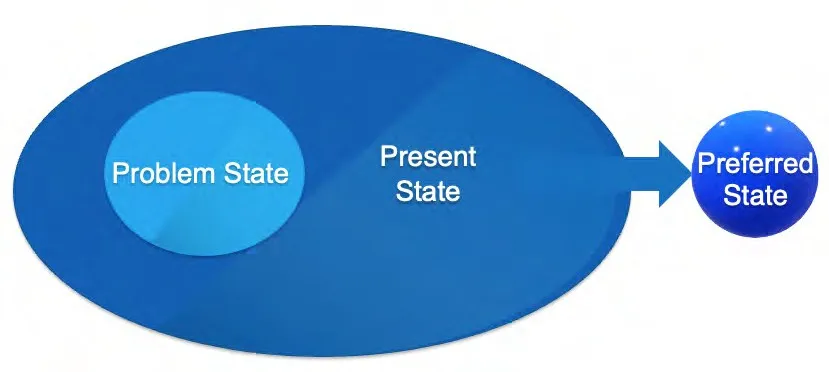
20262027context
2028 The Problem State is a part of the Present State. We need to define and understand the larger system, the Present State, to discover the causes of the problem
2029 situation and the alternatives that are available for
2030 achieving the Preferred State.
2031Figure 30. The Present State is the context of the Problem State.
2032And, the problem state is a part of the Present State.
20332034The Problem State and the alternatives to the
2035 Problem Situation are contained within the Present State—and what our team can invent or develop from the present-day, or soon-to-be-present, technology, policies, and actions.
2036 How can we describe the Present State? How is the present system operating? What do we need to know? In describing the Present State, we attempt to gain a comprehensive picture—a many-faceted analysis of the present situation. The purpose of this step is to clarify critical factors of the problem situation that will enable us to discover the most effective alternatives for achieving the Preferred State.
2037 Part of the conceptual environment of the Present State is knowing what the ‘‘business as usual’’ future will be. This is the linear extension of current trends into the
2038 future. In this future, the future looks like today, only
2039 bigger. In many cases, extrapolating present trends into the future breaks the system. For example, projecting present carbon-intensive energy use and growth into the future overwhelms the environment’s ability to absorb the waste products of such growth—and without any change in direction, changes our global climate such that life as we know it on Earth ends.
2040204194
2042‘‘If we don’t change our direction, we will end up where we are heading.’’
2043—Ancient Chinese proverb
2044alternatives
2045 Describing the Present State is not just about understanding the context of the Problem State, it is also about understanding what technologies and resources are available, and where things are working well already. Inventorying existing alternatives and developing new ones is a critical need of society and the task of the design scientist.
2046 It is important that the list of alternatives be comprehensive so that the range of choices is as inclusive as possible. To make as informed a decision as possible we need to be able to compare each alternative to determine which is the best for reaching the Preferred State as quickly as possible for the greatest number of people using the fewest resources.
2047 We need to have information about each alternative including: how it works, its impacts, the resources it needs, how readily available it is, and the particular situations to which it is best suited.
2048 Here are some reasons why we need to identify as many alternatives as possible:
- The technological and geographical availability of any alternatives reflects the degree of our freedom of choices. No freedom of choice can exist where
2049 there are no alternatives. The more alternatives a
2050 system has, the more viable that system will be. Inventorying existing alternatives helps us see what new alternatives are needed, and which new ones need to be developed. This is a critical need of society and the task of the design scientist.
2051 Seeing all the available alternatives can suggest new ones, or combinations of existing ones.
2052 A limited availability of alternatives can threaten the survival of a system. If an electrical circuit has only one pathway for electricity to flow and the wire is broken, the system ceases to function. In an urban electrical grid, as in your brain, there is redundancy. This means that if one cable or neuronal circuit breaks or becomes dysfunctional, there are other paths for electricity or signals to flow so that the whole system does not shut down. Living systems are able to grow in a changing environment because they are incredibly complex, having many alternative pathways for achieving any one goal.
2053 The more alternatives we have the more flexible, comprehensive, effective, and efficient can be our designs for achieving the Preferred State.
20542055•
2056•
2057•
2058•
2059•
206095
2061evaluating alternatives
2062Some of the questions we will want to consider in evaluating alternatives are shown on Table 10.
2063Table 10. Considerations for evaluating alternatives
206496
2065About the alternative
2066The context
2067Development considerations
2068Operational considerations
2069What is it? What does it do? How does it do it? How is it used? How do we propose to use it?
2070What are its advan- tages/benefits? What are the positive im- pacts social, econom- ic, and ecological?
2071What resources does it need?
2072How efficient is it?
2073What environmental conditions does it need to operate in?
2074What are the inputs and outputs?
2075What are the dis- advantages/ costs? What are the negative impacts social, eco- nomic, and ecologi- cal?
2076How much does it cost? How will its costs be covered? Who owns it after it is implemented? Can it be owned, maintained, operated by the people it impacts?
2077What resources does it need to operate?
2078Capability: What can it produce? At what scale?
2079What is needed to prove the option is viable—performs as it is supposed to, can be scaled so it has the impact we want, is cost-effective and affordable given the alternatives (including doing nothing)?
2080How long will it last? What is its life expectancy/ useful life? What happens when its usefulness is over? How will it be recycled?
2081What kinds of personnel are needed to maintain and run it?
2082What are its best uses or applications?
2083What is it made of? What could it be made of?
2084How is it managed, regulated, and changed?
2085Where does it come from? What is its history?
2086What and who is needed to build or install it?
2087Where can we test it?
2088What kind of personnel are need- ed to install it?
2089Decision making criteria
2090 After all alternatives are discovered, the next step is to develop a set of evaluation criteria by which the alternatives can be assessed and the best ones
2091 determined—and, if possible, modified or combined
2092 for maximum synergetic impact. Table 11
2093 example criteria for the global energy system.
2094 shows
20952096Table 11. Example of evaluation criteria for an energy technology
2097gap analysis
2098 Once we have the Preferred State —our goal—and the Present State—where we are right now—we can measure the gap between the two.
2099 The identification of the gap between the two helps make evident design opportunities, as well as a clearer understanding of the problem.
2100 One way of describing the task, or challenge, of the design scientist is that it involves the development of designs that eliminate this gap. But before we can close or eliminate the gap, we first need to know what the gap is quantitively as that will shape our response, our designs.
21012102The following are some of the dimensions that can
2103 be used in defining the gap:
- How big is the gap between where we are and where we want to be?
21042105•
2106 Where is the gap? All over, or localized in specific
2107 places?
2108 How many people are impacted?
2109 What is the gap composed of? (Food, energy, water, health care, education, etc.?) What ‘‘material’’ will it take to close the gap?
2110 What is the nature of the gap? Is it technological, a knowledge gap, a skills gap, a communications gap, a political gap, or an environmental gap?
2111 What is the cost of the gap to the global and local economy? To the health and well-being of the people impacted.
21122113•
2114•
2115•
2116•
211797
2118Relationship to larger systems
2119Internal features
2120Deployment features
2121What is its capacity to meet energy needs?
2122Who owns it? Are ownership, operation and employment available to all?
2123Is it part of the circular economy? What are its environmental impacts?
2124Is it durable?
2125Is it safe over all stages of its life- cycle?
2126Is the energy produced stable and consistent?
2127Does it use materials efficiently? Does it provide feedback on its O&M?
2128Can it be deployed quickly? Is it sensitive to cultural differences?
2129Is it affordable (compared to the existing system and other alternatives)?
2130Is it easily integrated into the existing system?
2131Defining the present state with ai assistance
- What is the gap between the food present state and food preferred state? For this prompt you will need to insert the present state from the ‘‘Defining the problem’’ prompt and your vision of the preferred state.
2132 Again, it may be helpful to add additional detail to your prompts, both initially and when you see the first response from the LLM.
21332134Just as AI can help define the Problem State and
2135 the Preferred State, it can help to define and clarify the Present State. Some possible example prompts for a food/hunger related Present State might include:
- What are the major parts of the global food system (insert your chosen problem area)?
- What influences the state of the
21362137system?
2138 global food
21392140summary
2141Developing a comprehensive Present State provides:
2142 of opportunities.
2143 It provides a way of seeing what alternatives or options do not yet exist, but which we can bring about through the combination of existing technologies.
2144 It includes determination of the gap between the Present and Preferred States, and provides a way to determine at what scale our solution needs to be implemented.
21452146•
2147•
2148•
2149 A description of how things currently are.
2150 It includes the Problem State and its context, and also aspects of today’s systems that are working.
21512152•
2153 It includes identifying
2154 today that might help Preferred State. These
21552156alternatives that exist
2157 move us towards the opportunities may be
21582159•
2160 technologies, policies, programs, organizations,
2161 ways of organizing things, actions or other types
2162216398
2164Activities for you or your teAm to do —Questions
- 1.
- What are the components of the present state and how do they interact?
- 2.
- What proportion of your target audience is currently experiencing each aspect of your preferred state?
- 3.
- How are the positive and negative aspects of the current system distributed? Geographically? Socially? Is the current distribution fair?
- 4.
- What are the environmental and social impacts of the current system, and how do they affect natural resources, biodiversity, climate and human well-being?
- 5.
- What are the existing policies and interventions that aim to improve your preferred state system, and how effective and equitable are they?
- 6.
- What are the drivers or enablers of change?
- 7.
- What resources are available to understand the current state of your system? Organizations, people, publications,
21652166databases?
- 8.
- What is missing in the current understanding of the current state? In the availability of information, tools, or technology?
2167Define
2168Preferred State
21692170Choose Problem & Problem Area
2171Next Steps/ Prep for Scale
2172Define
2173Present State
21742175Design Preferred State
2176Design implementation
2177Define Problem
2178State
21792180Designing
2181state
2182strategy for achieving the preferreD
2183the
2184solution anD strategy Development: what, how, who, where,
2185when, cost, funDing
2186 The focus of our design is on achieving
2187 the
2188 Preferred State. The vision of the Preferred State, our
2189 understanding of the problem, its causes, underlying structure, and the larger system it fits into, plus the list of alternatives for achieving the Preferred State, makes it possible to develop an innovative and sustainable strategic design that builds the capacity of the whole system in such ways that the initial problem we started with dissolves. It is replaced by a new option that makes the existing system obsolete. The solution, the strategy for achieving the Preferred State, starts with our vision of the Preferred State. It then details how it is achieved—what is done, how it works, its cost and (in the design for the Implementation of our strategic solution), where it will be tested and implemented. It is a detailed strategic
21902191What does your solution or strategy for achieving
2192 the Preferred State look like? What does it do? How does it work? What are its parts? Who does it impact? Who is involved in implementing it? Where is it implemented? What does it cost? Who funds it? What are the results and impacts it has? What is the proof- of-concept—that verifies that our solution works as claimed?
2193219499
2195‘‘To oppose something is to maintain it. You must go somewhere else; you
2196must have another goal; then we walk a different road.’’
2197—Ursula K. Le Guin
2198•
2199 design and plan, or blueprint, for getting to our ideal
2200 system. It is a design that organizes the parts of our solution so that, when implemented, it achieves the Preferred State.
2201 We design the strategy for achieving the Preferred State by:
2202 Selecting the alternatives that achieve the
2203 Preferred State, that are in-tune with our values (and our Decision-Making Criteria),
2204 Designing an integration of the alternatives we have selected into a system that achieves the Preferred State, and
2205 Documenting the results of the above. The strategic design and implementation plan (see next section) needs to be put into a form that can be used to communicate with others that our plan has identified as potential partners for the crucial real-world Implementation Stage of our design.
22062207•
2208•
2209•
2210 Using the values, goals and measurable targets
2211 expressed in the Preferred State,
2212 Considering the Present, Problem, and Preferred States as a whole, not just their individual components,
22132214•
2215alternative selection
2216 Selecting the appropriate alternatives and integrating them into a solution that gets us to the Preferred State involves three steps:
2217 creatively recognize the new, the possible, to
2218 bring them out, to make them real.
22192220Determine which of the alternatives are appropriate to our plan by matching the Preferred State needs and environmental, social, economic, and cultural conditions required by each to the existing areas we are focusing on. For example, for an energy strategy, a wind- powered generator would be appropriate in a mildly windy area while a small-river hydro power plant would be inappropriate in an area where there are no appropriate streams or rivers. If it is apparent that there are few, if any, appropriate alternatives that would contribute to the resolution of the problem situation and achieving the Preferred State, we need to develop a set of performance characteristics for several new and ideal alternatives. These design specs can then be used for developing new alternatives and artifacts.
22212.
2222 Determine
2223 which
2224 alternatives
2225 in
2226 our
222722281.
2229 alternatives inventory would be part of a system
2230 that achieves the Preferred State and meets the requirements or specifications of our evaluation criteria. If there is no single alternative, which combination of alternatives will achieve the Preferred State? And if no appropriate alternative exists, what needs to be ‘invented’ using present-day knowledge for achieving the Preferred State? Often this ‘‘missing ingredient’’ is the key to the synergetic power and impact of the design and strategy. We must always keep our eyes on the lookout for these often ‘‘outside-the-box’’ options. They could be just about anywhere. And bear in mind that they might not yet exist—that they need us to
22312232100
22333. Integrate the appropriate alternatives into
2234a working system where all of the parts are functionally interconnected and coordinated—and the synergy of the whole is capable of achieving the Preferred State. This step usually involves experimenting with different combinations of alternatives until a workable and optimal solution is achieved.
2235 Efficiently running systems can have parts that if tested separately would perform inefficiently. (This understanding is implicit in the definition of synergy: the behavior of a system unpredicted by the sum of its parts. Another way of looking at synergy: you are more than just the sum of your brain, heart, stomach, and other body parts.) The implications of this phenomena for solution design are that we need to remember that we are designing a ‘whole system’—
2236 and it is the behavior and performance of that system
2237 on which we need to focus, not its parts.
22382239what
2240anD plan?
2241makes a compelling Design
2242 1.
2243 7.
2244 Our Preferred State is comprehensive, robust
2245 and compelling and our design is consistent with the Preferred State.
2246 Our design uses present day technology. Our design draws on known resources.
2247 The
2248 more
2249 sustainable,
2250 equitable,
2251 regenerative, resilient, and the more people
2252 positively impacted, the better.
2253 Risks are manageable and uncertainties have been addressed.
2254 What else? (This question is at the end of every list. It is a reflection of our humility in face of complexity, the ever-changing world, and our abilities to learn new things.)
2255 2.
2256 3.
2257 4.
2258 8.
2259 9.
2260 Our
2261 design
2262 and
2263 implementation
2264 are
2265 ‘‘affordable.’’ The more affordable the better.
2266 The more people who ‘‘win,’’ the better. Winning for 100% of humanity is the standard, obvious, and best goal.
2267 The more understandable our design, the better.
2268 5.
2269 6.
2270227168 Paul Hawken, Amory Lovins, and Hunter Lovins, Natural Capitalism: Creating the next Industrial Revolution (New York, NY: Hatchette Book
2272Group, 1999). .
2273101
2274‘‘Integrative design optimizes an entire system as a whole, rather than its parts in isolation. Optimizing components in isolation tends to pessimize the whole system—and hence the bottom line. You can actually make a system less efficient while making each of its parts more efficient, simply by not properly linking up those components. If they’re not designed to work with one another, they’ll tend to work against one another. … [W]hole-system thinking reveals and exploits connections between parts.’’
2275—Paul Hawken,
2276Amory Lovins and Hunter Lovins68
2277iDentifying the resources requireD to implement our strategy
2278 Developing the design for achieving the preferred state will require resources, and these can be of numerous types:
22792280Physical resources
- Physical resources -- materials and energy. Are these from our ‘capital’, or from ‘income’ sources? Renewable or non-renewable?
22812282•
2283 What technology, tools and artifacts will be
2284 needed to implement each phase of the strategic plan?
2285 Spatial—what kind of spatial needs does our solution require?
22862287•
2288Human resources
2289•
2290•
2291•
2292 Human resources -- workers and organizations
2293 Who will be the in-country/on-ground partners,
2294 How can the various groups of people who
2295 will benefit or be impacted by our strategic design and plan support and participate in the implementation and refinement of the strategy, be a part of our strategy? This important step should be further developed at this point. Increasing the awareness and participation among those people who will be affected by the plan needs to be integrated into the entire process from beginning to end. For example, illustrating the benefits of alternatives to the present non-Preferred State system will increase receptivity to our design.
2296 hosts
2297 and sponsors/funders? What
2298 new
2299 organizations will be required? For example,
2300 there is a proposal in Energy Earth and Everyone to create a Global Energy Utility that would be charged with the responsibility for developing global energy sources and systems located in the global commons, or outside of any single nation’s jurisdiction.
2301 Who will implement each stage of our strategic plan?
2302 How can these people and groups be mobilized?
23032304•
2305•
2306Financial/legal resources
2307•
2308•
2309 Financial
2310 resources--getting
2311 access
2312 to
2313 or
2314 Who will invest the money? Who can we partner
2315 with that could invest the needed financial
2316 resources?
2317 developing the resources listed above.
2318 How much money will be required to implement the solution/strategy? How much will be needed when, and for each stage of the implementation?
23192320•
2321•
2322 What
2323 legal
2324 or
2325 administrative
2326 resources--
2327 programs, policies or laws—are needed to assist
2328 our strategy’s implementation?
23292330102
2331financial resources anD whole system costs/Benefits
2332 Present-day
2333 accounting
2334 practices
2335 have
2336 fired power plant or a waste incinerator is sited, those
2337 living in the vicinity or downwind of those plants have to bear the health costs caused by the mercury and other dangerous pollutants escaping from the smokestacks of the plants.
2338 As our strategies move closer to being implemented, we have to find ways of ensuring that the economic analysis incorporates externalities, and that the system is designed in such a way that all parties are incented to ‘do the right thing’.
2339 Things that seem too expensive may only seem so because we haven’t dealt with these limitations of the accounting system.
2340 At some point in the design science process the real-world costs of our strategy run into the constraints of the so-called ‘‘real world’’ economy. This economy’s underlying structure
2341 limitations, often leading to erroneous conclusions
2342 about the magnitude of the benefits associated with achieving our Preferred State. One of these is they typically do not account for the economic value of all the moral, environmental and other values and vision that went into the development of our Preferred State. As a result, certain costs and benefits are excluded. Current economics is biased towards making profits, not meeting the needs of all.These exclusions are termed ‘‘externalities’’.
2343 Externalities
2344 commonly
2345 excluded from
2346 the
2347 ‘‘business-as-usual’’
2348 accounting
2349 framework
2350 include: long-term sustainability of our biological
2351 life-support systems, the services provided by these systems, the devasting impacts of climate change, loss of biodiversity, the meeting of basic human needs and rights of everyone in the world, the costs of illiteracy, sickness, premature death,
2352 and
2353 decision-making
2354 criteria—the
2355 economic
2356 accounting system—dictates which alternatives are
2357 ‘‘economical’’ or the most advantageous for making money from an investment. It is critical to keep in mind that this accounting system does not value much of what is important to our strategy, such as the above mentioned litany of environmental and human costs and impacts on long-term sustainability of our biological life-support systems, the services provided by these systems, the devasting impacts of climate change, loss of biodiversity, the meeting of basic human needs and rights of everyone in the world, the costs of illiteracy, sickness, premature death, sub-standard housing, poverty, unemployment, and injustice—to name some of
2358 sub-standard housing,
2359 and injustice.
23602361A second limitation
2362 poverty,
2363 unemployment,
2364 common
2365 to conventional
2366 accounting is ‘‘split incentives’’ which occur when
2367 the person bearing the costs is not the one who benefits. For example, if a tenant pays the energy bill, the landlord may have little incentive or motivation to upgrade the energy efficiency of the building.
2368 Yet another is ‘‘split impacts’’ which occur when the people or a segment of a society benefits from an investment and another segment of the society bears a significant cost. For example, when a coal-
23692370103
2371the vital metrics commonly left out of present-day
2372 economic accounting.69
2373 Current economic accounting often biases corporate investment towards making profits, not meeting basic human needs of all. A whole-systems accounting can address these limitations head on. It would include the costs of implementing our strategic design, including technology, materials, energy, space, and staffing. To make a more compelling case to potential funders, such a whole systems accounting would also include the costs of the strategy to the environment and well- being of people impacted by the strategy. It would include the costs of not implementing the strategy, by comparing it with the costs of doing nothing
2374 or more of the same. Ideally it would include the
2375 monetary benefits to the investors, PLUS the economic short- and long- term impacts on the local and global economy, health and well-being of all the people in the world and the environmental life-support systems.
2376 When all the costs and benefits of such a whole- systems economic analysis are done it will become clear that our design science strategy is less costly than doing nothing, doing more of the same, or just making incremental improvements. And most importantly, such a whole-systems cost/benefits accounting will be a solid foundation for taking our strategy to the next levels.
23772378initiating a larger planning process
2379This stage is related to the preceding outputs
2380 of the design science process in two ways. As pointed out, reducing a design idea to an artifact may involve more resources and skills than the individual or team possess. The strategy needs to be communicated to those who have the necessary industrial and organizational resources and capabilities to implement the strategic design and plan. Part of the design science process is to identify who these individuals, groups, organizations, and corporations are.
2381 The second way in which initiating a larger planning process relates to the other outputs is in furthering the implementation of the larger developmental strategy of which the artifact is
2382 only one part. In all planning it is crucial to involve
2383 the people who will benefit or be impacted by a particular plan. The purpose of a design science plan or strategy is primarily the testing of a hypothesis and the development of alternatives rather than planning for others. Once a new option or alternative has been developed it can then be widely disseminated and a larger planning process instituted.
2384 In this later process, those who the strategy would affect can become involved in the process. To a degree, this will be similar to the effort that the individual design scientist or team has already gone through. The people who will be affected by the plan need to know, need to find out for themselves
2385238669 And if these considerations are mentioned, it is often what is called ‘‘lip-service’’ or greenwashing. When it is not, we should acknowledge and
2387encourage such actions in every way possible.
2388104
2389(and not be told by ‘‘experts’’), just what are their
2390 collective goals and what are the limitations and possibilities in their specific situation. People should plan, not ‘‘be planned for’’ because one of the most beneficial aspects of planning is the educational process which takes place during the actual planning. Beyond this, for any complex development plan to succeed, it needs the full understanding and active participation of all the people involved in the plan.
2391 As stated before, the ultimate goal of the design science process is to bring about constructive
2392 change. It is to allow everyone on Earth the option
2393 of being a ‘‘have’’ rather than a ‘‘have not.’’ Sub- goals, or steps, along the way to this overall goal include the generation and testing of new options for humanity, the development of detailed strategies for the realization of new artifacts that are needed for a strategy, the initiation of a larger planning process, and the self-education of the design scientist.
23942395process summary
2396 When designing the system for achieving the Preferred State, consider the following factors:
23972398a test or proof-of-concept of the strategic design
2399and implementation plan?
- 9.
- How will the system differ from the present system?
- 10.
- How will the system be monitored so that evaluation of its performance can be made? How can it be improved?
- 11.
- How will the system increase the personal freedoms and number of learning opportunities for people?
- 12.
- How will the system adapt to further technological innovations and social change?
- 13.
- How will the system be used by a wide range of cultural systems?
- 14.
- What are the risks and uncertainties? What could go wrong?
- 15.
- What needs to happen first? In the first year? In the first five years?
2400 1.
2401 How will the system operate and function?
2402 What will it do and what will it look like?
2403 How will the system improve the lives and well- being of the people it impacts?
2404 What impacts will it have—both intended and positive, and unintended and possibly negative? How will the system be built, installed, managed, regulated, and funded? Who will do and be responsible for these actions?
2405 What are the steps to realize the system? What needs to be done first?
2406 2.
2407 3.
2408 4.
2409 5.
2410 6.
2411 How much will it cost
2412 implement at scale?
2413 to test, and then to
2414 7.
2415 What are the whole system costs and benefits of
2416 implementing our design? How are those costs and benefits distributed?
2417 How will the strategic design and plan be funded? Where will the funds come from to fund
2418 8.
24192420105
2421explaining our strategy
2422 The strategy for achieving the Preferred State can be described with many of the same tools we used to describe the Present State. This is important for communicating our strategy to potential collaborators, partners, funders, and the general public.
2423 For example, we might develop an Input/Output diagram showing the flows of energy, materials, information, and people through the system. We will also want to diagram the Components and Processes of the different parts and processes of the system. Scenarios could be developed to show how such a system would contribute to the conservation of natural resources or increase the
2424 levels of adequate distribution of essential goods
2425 and services.
2426 Following our original intentions, the design/ plan should specify the level of aggregation (global, regional, community or single dwelling unit for example) that we chose to focus on, but it should also describe the interrelationships of similar functional systems at other levels of aggregation. For example, a community food system could be related to the regional and global food systems or vice versa. Showing how your strategic design could scale—be replicated en masse—is also important for showing the global impacts of our strategy.
24272428Developing the strategy
2429ai assistance
2430AI works well as a generator of
2431for reaching the preferreD state with
2432 ideas and
2433 of the facets of our preferred state and insert
2434 it into the prompt. Tip #2: Tell the AI ‘‘You are an expert at strategic thinking, problem solving, design, and option generation. When asked to solve a problem you come up with creative, clever, interesting ideas. Our first task is to (e.g eliminate hunger from the world). Describe the details of each idea.70 What is needed to increase food production in
2435 (location where problem area is severest).
2436 Who is needed to do this (the above)?
24372438What resources are needed to make this happen? (to implement Increased food production)
2439 options. It is good at volume. Not necessarily good
2440 ideas but lots of them—and buried within the many might be a good to very good idea, or one that will trigger a new idea in your mind, or some ideas that working together could be great combinations. The following are some prompt examples to start with:
- What are the alternatives for (examples from food problem area: eliminating hunger in the world; increasing food production; increasing the amount of land being irrigated; reducing post-harvest food waste; making food affordable for everyone, etc.) Tip #1: Take one
24412442•
2443•
2444•
244570 For other techniques, see Ethan Mollick, ‘‘A prosthesis for imagination: Using AI to boost your creativity’’. https://www.oneusefulthing.org/p/a-
2446prosthesis-for-imagination-using
2447106
2448•
2449•
2450•
2451 What will it cost to do
2452 How much money would it cost to reach the ideal state/eliminate hunger, feed everyone in the world?
2453 Where could the money needed to do
2454 come from?
2455 What are possible outcomes of (e.g. eliminating hunger, implementing a particular strategy or solution).
24562457•
2458summary
2459 A design science plan should be grounded in our vision of an achievable Preferred State, not a speculative fantasy. It needs to show how, using present day technology and resources we can achieve the Preferred State. Our Preferred State, and the plan for reaching it should not be confined to present modes of thinking, political constraints, or projections of what is likely to happen. It should be based on what we want to make happen and our explicit design for making real our preferred vision. Design science deals with what is technologically possible but not necessarily with what is politically probable. The primary constraints on the plan are technological (is it possible given current know- how?) and ecological (is it compatible with and
2460 supportive of natural systems?).
2461 Can it be implemented, minimally, without ecological damage? And optimally, can its implementation help regenerate ecological systems? Does the implementation plan use what is currently available in resources, technology, and know-how? For example, nuclear fusion could not be included in an energy plan because fusion is presently not a technologically feasible energy option. (It could also have a number of other characteristics that are counter to our evaluation criteria.)
24622463A design science strategic design is based on
2464 what we want and what is possible. It shows how a system could be organized to fulfill our preferred values and goals. It becomes and is real to the extent that we can organize ourselves and the environment to realize the plan. In some ways, this planning stage can be likened to what an architect does in designing and specifying the elements of a new building or system of buildings. Resources, needs, wants, potentials, and constraints are all integrated into an image—a blueprint—of a preferred system. This part of the design science process is the development of our ‘‘blueprint.’’ Implementation takes the blueprint and gets it ‘‘built’’ in the real- world.
2465 A helpful exercise in developing a long-range strategy is to describe the preferred system and to work backward to the present describing the necessary steps that lead to our goal. As we work backward to the present, we will find it is helpful to frame the different steps in the prevailing social context so that the plan appears both logical and implementable. For example, we could identify actual institutions, organizations, agencies and individuals either engaging in or capable of engaging in implementing our strategy.
24662467107
2468108
2469Activities for you or your teAm to do —Questions
- 1.
- What artifacts (physical—technology—and metaphysical—policies) are available to move from the present to the preferred state?
- 2.
- For what geographic, climatic, and ecological conditions is our solution appropriate?
- 3.
- Does your strategy require the development of new artifacts?
- 4.
- What criteria are you using to evaluate artifacts or alternatives?
- 5.
- What are the indicators you have selected to measure progress towards the preferred state?
- 6.
- Have you identified any trim tabs/tipping points that might accelerate adoption of
24702471the strategy?
- 7.
- What synergies can be realized by your strategy? Where are there win-wins or winn- wins?
- 8.
- Who will the plan impact? How can these people, and their perspectives, needs, culture and economy be involved with the design of the plan?
- 9.
- How risky do you think the strategy is? What could go wrong?
24722473PA R T
24744
2475 IMPLEMENTATION—TAKING THE
24762477INITIATIVE
2478 Par t 4 Provides a method for making
2479 real your design, your
2480 solution to a
2481 problem, your
2482 Preferred State.
2483 path
2484 to
2485 achieving
2486 the
24872488109
2489‘‘The difficult I’ll do right now The impossible will take a little while.’’
2490—Bob Russell
2491110
2492Define
2493Preferred State
24942495Choose Problem & Problem Area
2496Next Steps/ Prep for Scale
2497Define
2498Present State
24992500Design implementation
2501Design Preferred State
2502Define Problem
2503State
25042505Design
2506implementation
2507 There are three ways for us to further develop our
2508 work and to help bring about positive change. We can:
250925101.
2511Develop the tools or artifacts called for by the
2512 design science strategy we have formulated (if they don’t already exist, as in the example Fuller provides above about the Wright Brothers). And if they do exist, in part or whole, we can test them out in the configurations we have designed to see if our design works as we intend.
2513Communicate the plan to those who could be involved, affected, or interested in getting involved as an NGO, government agency, funder, concerned community group, or as a business proposition or investment. In other words, whomever has values and interests that match the initiative we are seeking to start, and would benefit from its implementation.
2514Initiate a larger planning process that includes obtaining the participation, collaboration, or partnership of those who would be involved in implementing, funding, sponsoring, testing, or benefitting from the plan.
251525162.
2517Up to this point we have discussed the step-by-
2518 step method by which we can determine what needs to be done and how. Now comes the next steps in the design science process—those needed to start the implementation of the plan.
251925203.
2521111
2522‘‘The design scientist undertakes fundamental invention, self- underwriting, development and experimental proof of inventions, as demonstrated for instance by the Wright Brothers, wherein the design science professional will be equipped with all the economic, legal and technological knowledge necessary for reducing such inventions to on-going industrial practice. ‘‘
2523—Buckminster Fuller
2524Developing the artifact
2525 The design science process provides us with a rationale and a frame of reference for what is needed. ‘‘What is needed’’ can often be translated into a physical or ‘‘meta-physical’’ artifact that will get us to the Preferred State.71
2526 This is the first and most important output of the design science process. Since the implementation of our strategic design/plan will require developing artifacts that may not have yet been invented, tested, or configured in the manner which we are proposing, we need to compile a list of the artifacts that need to be ‘‘invented’’ (or put together) to make our strategic design real. Along with the artifact, we need to state the specifications for its performance and what it is to accomplish. These performance specifications (or design criteria) are specific guidelines for what the artifact is intended to do, as well as its impact on humans, materials and energy usage, safety, performance, ecological impact, efficiency, and adaptability.
2527 The global design science strategy formulated in the book Energy, Earth and Everyone72 is an example we will use to illustrate this process. It points to the need to harness Earth’s income or renewable energy sources to meet the energy needs of everyone in the world in a clean, abundant, and sustainable manner. One example from this book follows.
2528 After studying the energy flows and concentrations through the whole Earth system, the vast wind power potential of Antarctica emerged as a potential
2529 source of energy. Because of the unique and intense
2530 conditions in Antarctica, a special artifact is needed to harness these winds. Most windmills built to date have been primarily designed to harness low intensity winds of the planet—winds blowing from 11 to 40 km/h (7 to 25 mph). Winds above these limits may result in damage to the windmill, and they are therefore designed to shut down if the wind is too strong. Winds in parts of Antarctica average over 45 km/h (28 mph) for 340 days per year and often exceed 160 km/h (100 mph). To harness these winds, a wind turbine specifically designed for high-speed winds in very cold and hostile conditions is needed.
2531 Once an artifact, in this case a wind turbine capable of functioning in the Antarctic, has been identified, it can be built, tested, refined, and then utilized to meet the stated need. Designing, building, and testing the artifact involves a specific design science process. This process is a systematic outline for designing an artifact.
2532 In Figure 31, the box in the lower left, Artifact Development, is the area where the idea for the artifact is developed into a design and workable prototype. This first prototype is tested and refined into Prototypes 2 and 3. As preparation for this stage, the design scientist first searches for related or similar designs. If similar work has already been done, there is no reason to repeat it. We can learn from previous work and build on it.
- 71.
- ‘‘Meta-physical’’ artifact is a policy, a non-material arrangement or procedure that changes the systems with which we are working. Economic
25332534incentives or disincentives to instigate or stop certain actions that engender positive change towards our Preferred State are one example.
- 72.
- Medard Gabel, Energy, Earth and Everyone (New York, Doubleday; 1980)
25352536112
2537Identify Problem Area
2538Define Preferred State
2539Identify Trim Tab/Tipping Point Artifact
2540Artifact Development
2541Scaling Up
2542Regeneration
2543Prototype 1
2544Build, test, refine/modify
2545Prototype 2
2546Build, test, refine/modify
2547Prototype 3
2548Build, test, refine/modify
2549Tooling
2550Mass production Distribution Installation Maintenance
2551Replacement Removal Scrapping/Recycling Recirculation
2552Ongoing Evaluation
2553Figure 31. The design science process for artifact development
2554In the Antarctic wind energy example, we need
2555 to see if there is already a high strength windmill or a design for one that can be adapted. In addition, we will need to consider rotor design and construction, tower design and construction, specific weather and geographical conditions in Antarctica where is the best spot for a forest of windmills in the Antarctic from the point of view of the wind, from the point of view of construction, logistics, materials science (which materials are best suited to the Antarctic extremes), environmental impact, and getting the power produced to the places where it will be used.73
25562557The next step, after all the relevant information
2558 has been gathered, organized, and integrated, is to begin the actual design to be tested. As Donald Norman74 points out: ‘‘The testing should not start with completed, working objects because then it is too late to make changes. It can start with rough sketches (even on napkins). Then it can move on to diagrams, simple mock-ups using simple display programs for software and foam or cardboard constructions for physical products. Each iteration gets closer to the final version. These rules are true for complex physical devices, for software, for a procedure or checklist -- for everything’’.
2559 A first prototype is built. If parts for the artifact
2560 are available, they are integrated into the desired unit.
2561 Contact information for companies, agencies
2562 authorities with relevant technical expertise local knowledge needs to be assembled.
2563 and
2564 and
- 73.
- The strategy in Energy, Earth and Everyone coupled wind powered electricity generation with hydrogen production. Liquid and gaseous hydrogen
25652566was then transported from Antarctica.
- 74.
- Donald A. Norman, Design for a Better World: Meaningful, Sustainable, Humanity Centered (MIT Press, 2023).
25672568113
2569If an artifact is not available, then we need to begin
2570 to fabricate the artifact from ‘‘scratch.’’ What we are able to do ourselves is dependent on our unique background, training, skills, inclinations, demands of the design, and available resources. We may need funders or investors so we can hire the relevant expertise and skill sets to build and test prototypes where we cannot do that work ourselves.
2571 The design scientist is often a synthesizer, an integrator of already existing parts into new synergetic arrangements. Obviously, an individual cannot mine, refine and alloy the various metals needed for a windmill, nor should they be expected to have all the skills necessary to reduce a complex idea to a physical artifact. The design scientist needs to be skilled in knowing how to get anything that needs to be done, done. This entails knowing who can do what, and where, when, and how. One very beneficial side effect of this process is that the design scientist can obtain a comprehensive education by following his or her idea through to completion. Many skills and talents are brought into focus at one time or another in
2572 the process of reducing an idea to ongoing industrial
2573 practice.
2574 Once the first prototype is built, it is then tested and improved into a second prototype. It is necessary to repeat this cycle of prototyping, testing, and refining multiple times to work out any bugs and to continually improve the design.
2575 The prototyping of an idea, and the subsequent testing of that idea as a physical artifact (or meta- physical policy) to see whether it is a viable alternative, can be done by an individual or group. If possible, it will involve those who will be affected by the design. The next stage, if the strategic design calls for a physical artifact, is the actual industrial manufacture of the working prototype, the production design, tooling, production, and subsequent distribution, installation, maintenance, and service. Because these steps usually require more resources than an individual or small group could bring to bear, the active support of a much larger group, the other two outputs of the design science process, ‘‘communicating the plan’’ and ‘‘initiating a larger planning process’’ enter the picture.
25762577Developing the tools or artifacts—further Details
2578Once we have designed the strategic design and
2579 plan for reaching our preferred system the next questions to be resolved are:
2580 is an arrangement of all the steps that must be
2581 completed along a timeline showing the order in which they must be done. At the left end of Figure 32 is the present problem and at the right is the proposed preferred future. Along the timeline will be the ‘‘things which need to be done’’ to get to the Preferred State.
2582 The communications plan -- who needs to be informed, when, and what is needed from them? How do we track progress, and course correct when required?
258325841.
2585How do we get from here to there—from the
2586 Present to the Preferred State? What is our Implementation Design/Plan? How does it work? What does it do?
2587When will we get there, and are there intermediary goals along the path?
2588 What stages and levels of implementation do we have to consider? A strategic implementation plan
258925902.
2591 4.
2592 3.
2593 5.
25942595114
25962597partners, sponsors, people, money -- are required to achieve the preferred system?
- 7.
- How will progress on the implementation plan
25982599be monitored to ensure it is progressing and
2600achieving the Preferred State?
2601 8. How will the plan be amended or modified based
26022603on the results of the tasks completed to date?
2604Ac t ion 1
2605Ac t ion 2
2606Ac t ion 3 . . .
2607Problem St ate
2608Pre fer red
2609St ate
26102611Figure 32. A timeline shows the sequence of actions to go from the Problem State to the Preferred State
2612target Date for realizing the preferreD state
2613In designing the Preferred State, we imagined an
2614 ‘idealized’ design that did not have a date for when it would be realized. This was deliberate, in that we did not want to be constrained by the obstacles in getting there. Now that we have a design for the preferred
2615 system, our attention turns to how to achieve that, and
2616 when it can be realized, recognizing gestation rates (and our ability to influence those), stock turnover rates, resource availability, and the need to implement the preferred system design as quickly as possible.
26172618actions neeDeD to implement the strategy for achieving the
2619preferreD state
2620There are two major ways of dividing a strategy.
2621 The first is to separate the implementation steps into different aggregate levels such as individual, single dwelling unit, neighborhood, community, region and global. The next breakdown is to further subdivide each of these levels into the different
2622 functional areas. For example, we might want to
2623 divide the implementation steps of a regional food system into the following functional subsystems: food production, transportation, processing, storage, distribution, consumption, waste recycling, etc.
26242625test/proof-of-concept phase
2626 Part of the design science process is to test a prototype or proof-of-concept of the proposed solution, and that may be a near-term tasks. Doing this in the most relevant locations to the problem area
2627 we are focused on is important. After developing our
2628 strategic design and plan it is important to pick an area in the world -- a country, region, specific town, or spot where we want to test the solution and examine
26292630115
2631•
2632•
2633 the relevant environmental, social, economic, and
2634 cultural conditions of the geographic area for which the test/proof-of-concept is to be implemented. For example, if we are designing an energy system, we might list energy needs and for what (electricity, cooking, heating, cooling, etc.) solar intensity, climate, ecosystem type, available resources, etc.
- Where will the prototype, test, or proof-of-concept be done? What country, region, town/village?
2635 Who will be involved and impacted by the test?
2636 What will be tested? What are the expected and desired outcomes? What is needed to justify, to make a compelling case, for the scaling of the proposed strategic design and plan to the rest of the country and world?
2637 What are the results of the test? What did we learn? What can be improved?
26382639•
2640scale-up—the implementation timeline
2641Nearly every design science solution and
2642 strategy for implementation needs to go from idea to prototype/proof-of-design and testing to full- scale implementation. It needs to grow from a seed to a forest. To enable that, the design needs to find receptive and nurturing ‘‘soil’’ in which to be planted, the water and nutrients it needs to flourish, and ongoing care to make sure everything is going well, and to make ongoing adjustments to unanticipated events.
26432644This complicated, and often lengthy process
2645 is made increasingly possible and benefits from partners. These could include partners on the ground (such as local in-country NGOs where the prototype will happen), collaborators, sponsors, funders, and where and when needed, government officials. Scaling the solution is where the communication plan of the strategy/solution becomes critical.
26462647Table 12. Some of the questions that need to be dealt with in scaling our design
2648116
2649Design/solution is a physical artifact
2650Design/solution is a metaphysical artifact--a policy, organizational innovation, etc.
2651What are the material resources, tools, space, and skills needed to build and test our prototype? How will the strategic design and implementation plan be evalu- ated and improved?
2652Once positive test results of the prototype/proof-of-con- cept are in, what happens next? Who will implement the next stage, where, when? What are the resources needed to make that happen?
2653Who/what organization/agency/government can implement our design? Who is in charge of that organization? How will we determine and contact the relevant people who can implement our design?
2654Who influences policy at the organization? What is the larg- er system of which the organization is a part?
2655How can we communicate our design to the public and other constituencies?
2656How can our design be tested and a proof-of-concept be conducted?
2657Critical Path
2658 What stages of development must occur at what point during the overall implementation period? This kind of scheduling is ‘‘determining first things first’’ or critical path planning. For example, a hydrogen- powered transport vehicle and its fuel supply has to be prototyped, tested, and proven feasible before
2659 a transportation system using this vehicle can be
2660 designed and implemented.
2661 In developing a complex strategy, it may become clear that all the steps cannot be included on a single timeline. In this situation we need to divide the strategy into a number of timelines. These lines can be either parallel or overlapping.
26622663MEDIUM TERM (years 6-10)
2664PRESENT
2665SHORT TERM (years 2-5)
2666HOME
2667@ Small wind/H2 systems prototyped
2668Small wind/H2 units mass produced
2669Farms all over the world begin using existing 6-10 kW wind systems for electricity needs
2670@ Develop 6-10 kW wind systems for farms *
2671Mass produce advanced wind generator
2672COMMUNITY
2673@ Prototype & test wind systems for used on community level *
2674Mass production of community wind systems
2675Tool-up and mass produce 3, 10, 100 and 400 kW, 2 and 2.5 MW wind systems in auto factories
2676@ Prototype and test wind systems for industrial use
2677Mass production
2678REGIONAL
2679@ Build and tests 2, 2.5, and 3 MW wind systems * @ Build and test 5 and 10 MW wind systems
2680SUB-SYSTEM
2681@ Build and test 100 kW and 400 kW wind systems
2682@ Build and test 3 kW and 10 kW wind systems *
2683@ Build and test vortex wind systems
2684Build 1000 + MW wind system farms wherever appropriate
2685Conduct extensive wind resources inventory, determine ideal wind power locations in each region
2686GLOBAL SYSTEM
2687Wind Energy Info Clearinghouse Becomes part of Global Energy Information Clearinghouse
2688Global wind inventory: determine ideal locations for large wind systems e.g. Antarctica, Arctic, oceans, mountains, etc.
2689Small wind/hydrogen production system built in Antarctica
2690Large scale wind/hydrogen systems (1000 +MW) built in Antarctica and elsewhere
2691Wind R&D: wind/H2 units, wind/heat systems, high wind velocity power plants, home-size wind systems, industrial systems
2692Establish a World Wind Energy Research, Development and Training Institute
2693* Currently underway @ Artifact
2694Figure 33. Timeline for the wind energy component of a global energy strategy
2695117
2696Figure 33 is an example of a sub-strategy of a
2697 global energy development plan proposed in Energy, Earth and Everyone.75 The development of wind power is described at different aggregate levels along a ten-year timeline..
26982699In developing the timeline, it will be important to
2700 identify near-term tasks that are particularly critical for achieving the overall timetable. This helps ensure that progress on the goal is not postponed until the last moment.
27012702Documenting
2703the process/communicating the plan
2704Throughout the design science planning process,
2705 it is important to record our research progress and group sessions. This documentation provides the raw material to produce a publication that can communicate our work to a larger audience.
2706 While the objective of our group may not be to publish and distribute a finished foundation proposal, business plan or document at this time, recording the progress of the work is often the best way to ‘‘store’’ the generated information for future referral. A Google doc or similar group-accessible document platform is useful for this task—as well as throughout the design process.
2707The Global Solutions Lab76 has used a variety of tools to document the work of the Design Teams that comprise the Lab. One tool has been an online wiki that documents progress. Another is a Google doc. Both come with pre-loaded questions, the answers to which are the design science strategic design and plan. Another technique is a series of slides that contain the questions. The slides with the questions answered are used as part of a daily presentation by each Design Team. The purpose of this is so that the entire Lab knows what everyone is working on, plus the whole Lab can offer feedback, suggestions, and
2708 data sources they have come across in their work that
2709 might be helpful. It is a way for the entire Lab to work together on improving each of the strategies, as well as a way for Lab participants to practice presenting their work. At the end of the Lab these slide shows become the basis for presentations to a team of evaluators who provide feedback. (The questions used in the Global Solutions Lab, and elsewhere, are presented in Appendix 1.)
2710 The goal of the documentation process is to have what amounts to a business plan or collaborator/
2711 partner/sponsor/foundation
2712 proposal
2713 for
2714 collaboration or investment for the next stages of the
2715 design science process. Such a document needs to show, among other things, the need, what our strategy will do, and how much it will cost to take to the next stages. This recognizes the fact that there are not many people who are in a position to self-finance the development of a strategic design. At some point, the design scientist will likely need to seek resources that go beyond their financial wherewithal. Where this point is depends on what the overall strategy is, what artifacts are necessary to be developed and tested, the resources of the design scientist, and other factors.
- 75.
- Medard Gabel, Energy, Earth and Everyone (New York, NY: Doubleday, 1980).
- 76.
- https://designsciencelab.com
27162717118
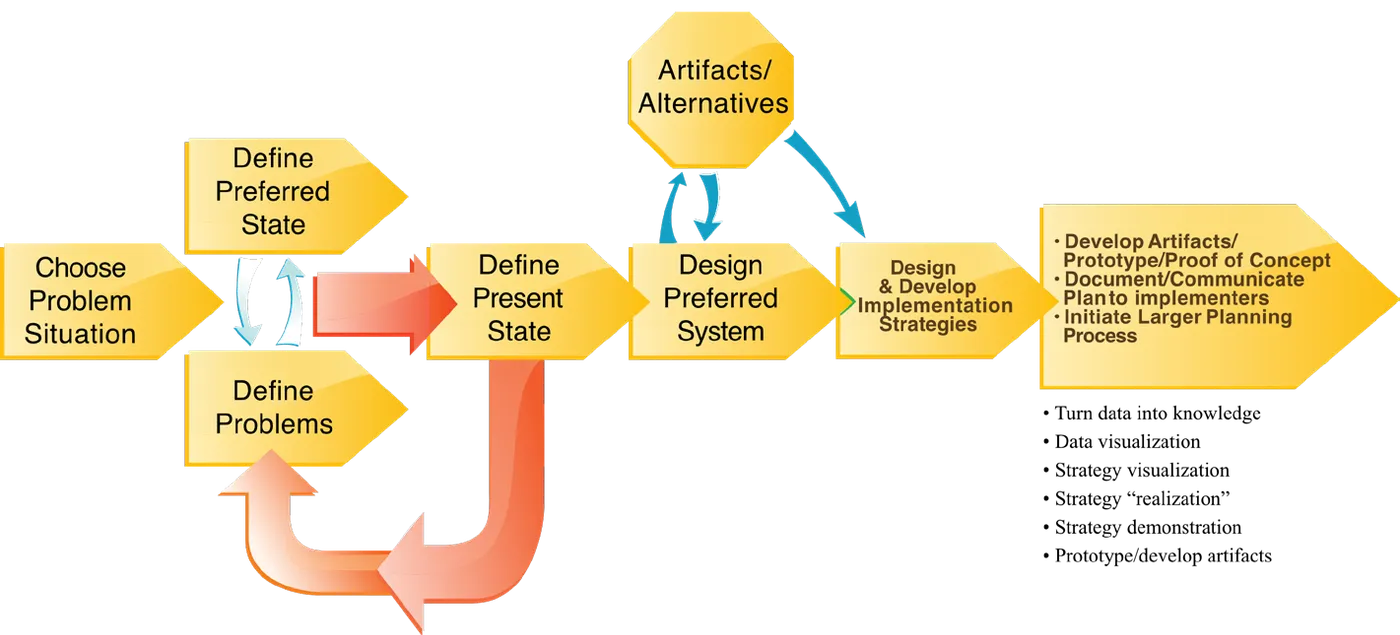

27192720The documentation stage is crucial to the entire
2721 process. Whether it is a business plan, foundation proposal, crowd-funding proposal, policy white paper, journal article, chapter in the Designs for World That Works for All or other book, part of the online Global Solutions Database, or all the above, the design scientist needs to be able to communicate their work to the larger system (that of society, investors, partners, hosts, etc.) so that the strategic design gets implemented. It does no one any good to have a brilliant strategy that can improve the world sitting on the shelf gathering dust.
2722 The work that we produce will also be useful to other groups that follow. The more thoroughly the
2723 entire process is documented the more valuable the
2724 report will be to us and to other groups.
2725 Design science teams need to document their work using all or a combination of the following tools:
27262727•
2728•
2729•
2730•
2731 Research reports
2732 Charts/graphs Drawings
2733 On-line presentations, TED Talks, YouTube presentations
2734 Physical models Photography Power Points Web sites Bibliographies.
27352736•
2737•
2738•
2739•
2740•
2741the
2742communications
2743plan
2744Figure 34. The final step in the design science methodology is implementation.
2745119
2746The design for achieving a Preferred State that
2747 we develop may be beyond the resources to which we have access. In these cases, we need collaborators, partners, sponsors, and funders. To achieve this we need to develop a powerful communications strategy that reaches the right individuals and organizations in terms that are appropriate to each. It can be put together as a business plan, foundation proposal, report or short video that can be sent out to others in the field and related individuals, groups, corporations, organizations, and government agencies that were identified during the planning process. It can be sent out for evaluative feedback or for seeking partners or funders. Another, more general document also needs to be written and distributed to the public to get as many people aware of our strategy as possible.
2748 The discussion needs to include all stakeholders, or the capacity building that is critical to any endeavor will not reach its potential.
2749 The nation state is no longer the only major player on the global stage. Global corporations, cities, nations, NGOs, and private citizens all need to work together on getting what the world wants.
2750 If the ‘‘problem’’ being addressed is to be solved (and stay solved), decision making at the local level and input from all sectors of local society are needed. This provides learning and growth opportunities for the larger system of which the problem is a part. Every development strategy is an opportunity to increase the knowledge and capacity of the society in which development is occurring.
27512752This task is a critical part of the design science
2753 process. We don’t want our designs to sit on a shelf, never seeing the light of day, never solving the problems that afflict those in need, never achieving our preferred state. The following are what needs to be considered when preparing such documents:
27542755•
2756 What needs to be communicated to potential
2757 collaborators? What is the essence of our design, and how does it overlap with the values, goals, and priorities of our potential partners?
2758 What parts of our design are the most newsworthy, that would garner the most attention of the general public?
2759 What needs to be communicated to people who will be part of the test site for the proof-of-concept of our design?
2760 Where and when appropriate, what government
27612762•
2763•
2764•
2765 agencies,
2766 local
2767 leaders,
2768 entrepreneurs,
27692770corporations, possible sponsors/funders/allies
2771should be alerted?
2772 The general format for documenting design science strategies that are developed in the Global Solutions Lab and which are published online in the
27732774Global Solutions Database77 and in the book Designs
2775for a World That Works for All78 are the following:79
2776•
2777•
2778•
2779•
2780•
2781•
2782 Title
2783 Authors (with their countries) Abstract
2784 Introduction/problem being addressed Preferred State
2785 Present State
- 77.
- https://designsciencelab.com/global-solutions-database/
- 78.
- Gabel and The Global Solutions Lab, ‘‘Designs for a World That Works for All: Solutions and Strategies for Meeting the World’s Needs.’’
- 79.
- If your work follows the above organizational criteria, you are welcome to submit it for consideration to be added to the online Global Solutions Database at https://designsciencelab.com/global-solutions-database/
27862787120
- Strategy and implementation of strategy
- What it is, how it works, impacts, needed resources to implement, test/proof-of-concept, • timeline of implementation, costs and benefits
2788 and their distribution, and where funds will come
2789 from Endnotes
27902791Developing the implementation plan
2792 Some examples of prompts you might consider to assist in developing the implementation plan (for
27932794with ai assistance
2795 for (one of the technologies from first
2796 prompt in this section)?
2797 Where is a good place to conduct this test?
2798 What is a plan for scaling the (technology from first prompt in this section)?
2799 Where do we go from here/next/what can I do with $100,000 to move this strategy forward?
2800 Where could we get $100,000 to
2801 (insert test of strategy)
28022803•
2804•
2805food/hunger related problem—insert your chosen
2806problem area) include:
2807•
2808 What technology is needed to (e.g eliminate
2809 hunger)?
2810 What policies or programs are needed to
2811 (e.g eliminate hunger)?
2812 Which technology is the most efficient, effective,
2813 cost-effective, sustainable? What is a good test
28142815•
2816•
2817•
2818•
2819Summary
2820 The more comprehensive and anticipatory a strategy, the better its chances of bringing about the most positive long-term change for humanity. In developing a comprehensive strategic design and implementation plan, all the variables that affect
2821 the attainment of the plan should be considered.
2822 In defining the Problem and Present States, these variables are explored for their effect on the problem situation and the prospects for achieving the Preferred State.
28232824121
2825122
2826Questions on your implementAtion strAtegy
- 1.
- What artifact needs to be developed? Is it a physical artifact or a ‘‘meta-physical’’ artifact?
- 2.
- What are the steps of your implementation plan? What items are on the critical path and need immediate attention? What in the short term? What in the medium term?
- 3.
- What resources are required to implement your plan?
- 4.
- Does your implementation plan address all aspects of your preferred state?
- 5.
- What industries, commercial services, countries, areas, organizations, partners/ allies, hosts, funders and people need to be involved in your strategy?
- 6.
- Who will support the plan? Who is likely to be opposed, and how can their concerns be addressed?
- 7.
- What resources have you developed to communicate with those who need to be involve?
- 8.
- What plan do you have to involve those who will be affected by strategy?
- 9.
- How will you monitor progress of the implementation?
- 10.
- What systems are in place to modify the plan in light of experience?
- 11.
- What form has your documentation of the strategy taken?
28272828C O N C L U S I O N
2829A N D
2830N E X T
2831S T E P S :
2832 TAKING THE INITIATIVE—WHERE WE
28332834GO FROM HERE
2835123
2836‘‘The world is in a race between education and catastrophe.’’
2837—H. G. Wells
2838A design scientist sees a problem, a situation that
2839 shouldn’t be, sees what could be, and decides to take the initiative and do something. A design, a strategic plan of action is developed that eliminates the problem. At the core of that design are one or more artifacts—technology, policies, and their implementation—that achieve a preferred state where the problem no longer is present.
2840 To verify and test the strategic design and plan the various artifacts are developed, prototyped, and tested, then mass produced and distributed, maintained, replaced, and recycled when there is an improvement available. This strategic solution is documented, made widely available, and feedback elicited. Where appropriate, a local planning process is instituted in the specific areas where the strategic design and plan has furnished new alternatives and can, when implemented, reach the Preferred State.
2841 Design science defines visionary goals, develops new options, and solves real-world problems. It involves a long-range perspective which includes the knowledge that everything has its own gestation rates. For a human baby, it is 9 months, for an elephant it is 21 months, for an artifact or comprehensive design strategy it can be considerably longer. The iPhone was initially conceived of in 2000,80 and came to market in 2017. The first fax machine was invented in 1843, but only became popular with consumers in the 1980s.81 design science seeks to accelerate the development of viable solutions to global and local problems.
2842 As in any long-distance voyage, periodical
2843 navigational fixes are taken, and subsequent course
2844 corrections are made in order to ‘‘stay on course.’’ The
2845 same applies to the long-range goals of design science. New information will alter the existing information; as goals are approached, they take on greater clarity and possible new goals emerge.
2846Tools for Changing the World is intended, as stated in Part 1, to provide a set of tools for changing the world. It is intended to provide perspective and a methodology for participating in the solution of problems that will help the world meet our needs using available technology (or inventing new alternatives), for winning that race between education and catastrophe.
2847 Hope is where values, vision and experience meet the future. Tools for Changing the World seeks to foster hope as it provides techniques for transforming values and vision into solutions to real-world problems—hope made real. It seeks to channel and organize imagination and science to develop innovative and viable solutions to critical real-world problems. Its success will be measured by what we do with the information contained in this document, plus our knowledge, experience, initiative, and dedication.
28482849It’s now up to you. We call on you to take the
2850 initiative.
- 80.
- National Institute for Research in Digital Science and Technology, ‘‘Jean-Marie Hullot, from Perforated Cards to the iPhone.’’ National Institute
28512852for Research in Digital Science and Technology.
- 81.
- Bellis, Mary. ‘‘History of the Fax Machine.’’ ThoughtCo. (blog), March 20, 2019. https://www.thoughtco.com/history-of-the-fax-machine-1991379.
28532854124
2855The world will not be destroyed by those who do evil, but by those who watch them without doing anything.
2856—Albert Einstein
2857Initiative is a natural, and often bold, response
2858 to a situation of which you, and perhaps only you, are aware. Your ability to respond transforms into responsibility by your awareness, values of what is right and wrong, and vision of what should and can be.
28592860You act.
2861 You take the initiative and solve the problem, resolve the situation. Make the world a better place. You taking the initiative is where it begins.
2862 We give the final words to Buckminster Fuller:
2863‘‘Initiative springs only from within the individual.
28642865Initiative can neither be created nor delegated. It can only be vacated. Initiative can only be taken by the individual on their own self-conviction of the necessity to overcome their conditioned reflexing which has accustomed them heretofore always to yield authority to the wisdom of others. Initiative is only innate and highly perishable.’’
2866125
2867126
2868APPENDICES
2869127
- 1.
- Global Solutions Lab design science questions
- 2.
- List of online statistical data sources
- 3.
- List of Solutions Libraries
- 4.
- Bibliography/Reference
28702871128
2872appenDix 1 gloBal solutions laB
2873The Global Solutions Lab82 uses design science to
2874 develop innovative and regenerative solutions to the critical problems facing humanity and for achieving one or more of the UN’s Sustainable Development Goals. Participants come from around the world and work together in cross-cultural, interdisciplinary, multi-generational Design Teams. The results of the Lab’s work are published online in the Global Solutions Database83 and in book form in Designs For A World That Works For All.84 The usual format of the Global Solutions Lab runs for two weeks. As such, it uses an abbreviated form of the design science process. This process is organized as a series of questions. The answers to the questions result in the first draft of a design science strategic design and implementation plan. These questions are below:
2875 1. What is the topic, issue or problem area being worked on?
2876 b. Who are the members of your Design Team?
28772878(List names and country of origin.)
2879 What is the Preferred/Ideal State for the problem area we are working on?
2880 3.
2881 a.
2882 The Preferred State for the global problem
2883 situations we have picked to work on is . . . (List the qualities of your Preferred State) Prompts: Who does it reach/impact? What does it do? What does it look like?
2884 What will the world look like if this problem is solved/the preferred state is achieved?
2885 How will your Preferred State be measured? (How will we measure success? List statistical indicators.)
2886 Prompts: What are 3 to 4 barriers to reaching the Preferred State?
2887 How will we know when we have reached the Preferred State?
2888 b.
2889 c.
2890 d.
2891 e.
2892 f.
2893 a.
2894 The general human or environmental need
2895 area our team is focusing on is …
2896 The specific problem situation we are working
2897 on is …
2898 4.
2899 What is the Problem State?
2900 a.
2901 The global problem state for (our problem
2902 area) is . . .
2903 What are the visible symptoms of the problem? The quantitative description of the problem is
2904 . . . (how many of what, etc.)
2905 How many people are impacted? Where are they, etc. See: https://sdg-tracker.org/
2906 b.
2907 b.
2908 c.
2909 The Sustainable Development
2910 seeking to achieve is . . .
2911 Goal
2912 we
2913 are
2914 2. Your Design Team
29152916a. What is the working title of your project and Design Team?
2917 c.
- 82.
- Global Solutions Lab, https.designsciencelab.com
- 83.
- https://designsciencelab.com/global-solutions-database/
- 84.
- https://designsciencelab.com/resources-ii/
29182919129
2920 d.
29212922How can we measure the severity of the
2923 problem? See: https://sdg-tracker.org/ ) What is the cost of the problem —in terms of money, life expectancy, health, environmental harm, impact on local and global economy, etc.?
2924 What happens if nothing is done?
2925 What is the direction the problem is moving in? (What are the trends?)
2926 What are the implications of the problem—how does it impact other areas and systems?
2927 What are its interconnections with other problems? (This problem impacts the food [shelter, health, education, transportation, economic, environmental] system in the following ways:
2928 What does the problem look like? What images, graphics, charts and maps can describe the problem? What is the human face of the problem?
2929 It is most severe in . . .
2930 The problem is most severe in . . .
2931 c. This is the gap between the two:
2932 What are the alternatives/options for reaching the Preferred State?
2933 7.
2934 a.
2935 What present day technology or policies can
2936 be used that will get us to the Preferred State? What input/outputs can be modified? What components/processes can be changed? What new technology is needed?
2937 What artifacts/technology, if scaled up/mass produced/disseminated could get us to the Preferred State?
2938 What present day technology can be scaled up to have the impact needed to reach the Preferred State?
2939 What organizations are needed?
2940 How is the needed technology organized/ used/deployed?
2941 How many of what will be needed? What could we get a patent on?
2942 e.
2943 f.
2944 b.
2945 g.
2946 c.
2947 h.
2948 d.
2949 e.
2950 f.
2951 i.
2952 g.
2953 h.
2954 j.
2955 k.
2956 l.
2957 8.
2958 What is the design/plan for reaching the Preferred
2959 State?
2960 What is the geographic distribution
2961 problem? Map the problem.
2962 of the
2963 a.
2964 b.
2965 What happens?
2966 The Preferred State for the (problem area/ situation) we are working on is:
2967 This is how we will get to the Preferred State: How will we do that? ( . . . and how will we do that? Keep asking ‘‘how’’ until we reach something very specific, something that we and your colleagues could do, with funding or partners.)
2968 When, what year, will your design/plan get us to the Preferred State? We will reach this Preferred State in the year 2 .
2969 m. What is the cause of the cause we
29702971above?
2972 named
2973 c.
2974 d.
2975 5.
2976 What is the Present State? (The Problem State is
2977 a part of the Present State-- what does the larger system, the Present State, look like?)
- a.
- What are the components and processes of the Present State?
- b.
- What are the inputs and outputs of the Present State?
2978 Problem, Preferred, Present State Summary
- a.
- This is where we are:
- b.
- This is where we want to be:
2979 e.
2980 6.
29812982130
2983 f.
2984 In the next 6 months the design/plan we need
2985 to do the following to get us to the Preferred State:
2986 In the next year we need to do the following to get us to the Preferred State:
2987 In the next 5 years we need to do the following to get us to the Preferred State:
2988 What impacts will this strategy have?
2989 What will the world (or region we are focused on) look life if this problem is solved using your design/plan?
2990 How will we measure success? How will we know when we reach the Preferred State?
2991 We will know we have achieved the Preferred State when . . .
29922993o
2994 What impacts will this strategy have on
2995 other areas?
2996 What are the expected and measurable outcomes of this strategy?
29972998o
2999 g.
3000 e.
3001 Plan —Resources
3002 h.
3003 What material resources does this plan
3004 need?
3005 What human resources does this plan need?
3006 Who will implement your design/plan? Who is needed for its success?
3007 The strategy needs the following material resources:
3008 The strategy needs the following human resources (Who will implement the strategy? Who is needed for the strategy’s success?)
3009 Where are they? How do we get them? What technology is needed? How do we get it?
30103011o
3012 i.
3013 j.
30143015o
3016o
3017o o
3018 k.
3019 l.
30203021o
3022 9.
3023 More
3024 Details/Specifics/Summary
3025 for
3026 your
30273028design/plan: What is the Plan for implementation
3029 of your solution?
3030 a. Plan —Artifacts
30313032o
3033o
3034o
3035 What artifacts will the plan use to reach
3036 the Preferred State?
3037 The strategy will use the following artifacts to reach the Preferred State:
3038 How many?
3039 f.
3040 Plan—Cost
30413042o
3043o
3044 How much will our strategy cost? The
3045 strategy will cost approximately …
3046 Where will this money come from/how
3047 will this strategy be financed?
3048 The money will come from …
30493050o
3051o
- b.
- Plan—Proof-of-concept What is the proof-
30523053of-concept (what is needed to justify scaling your design/strategy up)?
- c.
- Plan —Timeline
- What do we do in the next six months to reach the Preferred State? In the next six months we will …
- What needs to be done over the next year,
3054 five years?
- d.
- Plan—Impacts
30553056o
3057 g.
3058 Plan—Who can do it? How do we start? Who
3059 does what?
30603061What could government do to get your
3062 strategy implemented?
3063 What could a business do to get your strategy implemented? Is there a business opportunity in your strategy for meeting one or more of the SDGs?
30643065o
3066o
3067131
3068o
3069What could an international organization,
3070 such as the UN, do to get your strategy implemented?
30713072What could an non-governmental organization (Save the Children, Greenpeace, Project Drawdown, etc.) do? What could a philanthropic organization do to get your strategy implemented?
3073What can individuals do?
3074 Plan —You
3075 h.
3076 What could you do to get your strategy
3077 implemented?
3078 What can you do to make this strategy real?
3079 What could you do with $100,000 to move this strategy to the next level?
30803081o
3082o
3083o
3084o
3085o
3086o
3087132
3088appenDix 2 gloBal statistical Data sources anD
3089Data analysis tools
3090(The below listing is available online, with links at the Global Solutions Lab website: https:// designsciencelab.com/global-data/)
3091uniteD nations
3092SDG Global Database
3093https://unstats.un.org/sdgs/unsdg
3094Data on more than 210 SDG indicators for countries across the globe by indicator, country, region or time period
3095ESCAP Data Centre
3096http://www.unescap.org/stat/data/
3097Statistical database of ESCAP (Economic and Social Commission for Asia and the Pacific). Includes population, health, education, labor,
3098 infrastructure,
3099 finance,
3100 trade,
3101 environment,
31023103AIDSinfo
3104http://www.unaids.org/en/dataanalysis/ datatools/aidsinfo/
3105 gender, and other statistics.
31063107FAO Statistics
3108http://www.fao.org/corp/statistics/en/
3109Links to various statistical databases of the Food and Agriculture Organization, including
3110Statistical resource
3111 worldwide.
3112 on
3113 AIDS
3114 and
3115 HIV
31163117DESA - Statistical Databases
3118https://www.un.org/en/desa/products/un-desa- databases
3119Collection of the UN Department of Economic and Social Affairs (DESA), Statistical Division databases, including commodity trade statistics, census knowledge, disability statistics, good practices, joint oil data, millennium data indicators, population, and social indicators.
3120 Agro-MAPS,
3121 AQUASTAT,
3122 CountrySTAT,
3123 FAOSTAT, Fishery and Aquaculture Statistics,
3124 Forestry Country Profiles, GLIPHA, PAAT
3125 Information Systems, and TERRASTAT.
31263127FPMATool (UN FAO)
3128https://fpma.fao.org/giews/fpmat4/#/ dashboard/home
3129An online database and analysis tool with easy access to consumer food price data in about
3130133
3131 86 countries and 81 benchmark international
31323133commodity series.
3134 legal status of any country, territory, city or area or
3135 of its authorities, or concerning the delimitation of its frontiers or boundaries.
31363137ILO Statistics and Databases
3138http://www.ilo.org/global/statistics-and- databases/lang--en/index.htm
3139Collection of statistics and databases compiled by the International Labour Organization: core labour statistics, country-level data, child labour statistics, occupational health and safety, conventions and recommendations documents, reference literature, and labour legislation.
3140StatBase - Economic Commission for Africa
3141https://ecastats.uneca.org/data/
3142Browsable and searchable statistical database for ECA (Economic Commission for Africa).
3143UN Data
3144https://data.un.org
3145UNdata brings UN statistical databases within easy reach of users through a single-entry point. Users can now search and download a variety of statistical resources of the UN system from a wide range of departments and subject matter.
3146ICT-Eye
3148 ICT-Eye
3149 is
3150 an
3151 International
3152 Telecommunication Union (ITU) resource for
3153 information and communication technology indicators and statistics, regulatory and policy information, national tariff policies and costing practices, and more.
31543155UN COVID-19 Data Hub
3156https://covid-19-data.unstatshub.org/
3157Data relevant to COVID-19 response readily available as geospatial data web services, suitable for the production of maps and other data visualizations and analyses, and easy to download in multiple formats.
3158Standard Country or Area Codes for Statistical
3159Use
3160https://unstats.un.org/unsd/methodology/m49/ The list of countries or areas contains the names
3161of countries or areas in alphabetical order, their three-digit numerical codes used for statistical processing purposes by the Statistics Division of the UN Secretariat, and their three-digit alphabetical codes assigned by the International Organization for Standardization (ISO). The designations employed and the presentation of material at this site do not imply the expression of any opinion whatsoever on the part of the Secretariat of the United Nations concerning the
3162UN e-Government Knowledge Database
3163https://publicadministration.un.org/egovkbhttps://publicadministration.un.org/egovkb/en-us/Data-Center
3164E-Government Development Index at country, regional, city levels.
3165UN Global SDG Indicators Database
3166https://unstats.un.org/sdgs/indicators/ database/
3167To fully implement and monitor progress on the Sustainable Development Goals, decision
3168134
3169 makers everywhere need data and statistics that
31703171are accurate, timely, sufficiently disaggregated, relevant, accessible and easy to use. The Open SDG Data Hub promotes the exploration, analysis, and use of authoritative SDG data sources for evidence-based decision-making and advocacy. Its goal is to enable data providers, managers and users to discover, understand, and communicate
3172 supplementary
3173 graduation indicators
3174 (SGIs).
3175 These indicators describe vulnerabilities not
3176 fully captured by the LDC criteria and other factors relevant for graduation. The SGI dataset, including a visualization of the latest available data can be downloaded. More information on the dataset can be found in the explanatory note.
31773178UN World Population Prospects
3179https://population.un.org/wpp/
3180This database is the core of the latest Revision of World Population Prospects, the United Nations estimations and projections of population for all countries of the world, covering the period 1950-2100. It incorporates the findings of the most recent national population censuses and of numerous specialized population surveys carried out around the world. The latest Revision provides the demographic data and indicators to assess trends at the global, regional and national levels and to calculate many other key indicators commonly used by the United Nations system.
3181 patterns and interrelationships in the wealth
3182 SDG data and statistics that are now available.
3183 of
31843185UN LDC Data
3186https://www.un.org/development/desa/dpad/ least-developed-country-category/ldc-data- retrieval.html
3187The Committee for Development Policy (CDP), a subsidiary body of the Economic and Social Council (ECOSOC), advises the Council on a wide range of issues that are relevant for the implementation of the 2030 Agenda for Sustainable Development. The CDP uses three criteria to identify countries as least developed and reviews the list of LDCs every three years. Official data used in these triennial reviews of the LDC category since 2000 can be downloaded in Excel format.
3188The CDP Secretariat has also produced time series estimates of the LDC criteria providing information of countries’ progress towards the LDC criteria from 2000 onwards. The dataset differs from the official triennial review dataset due to data revisions, changes in data sources, methodological changes and most notable, changes in composition of the composite indices HAI and EVI.
3189The CDP decided in 2020 to enhance the graduation framework by introducing a set of
3190UN SDG Acceleration Action Database
3191https://sustainabledevelopment.un.org/ sdgactions
3192 The SDG Acceleration Actions online database is a tool to help inspire and mobilize actions around the world to promote the implementation of the SDGs, as well as build resilience and bring inclusive recovery in the context of new realities post COVID-19, so that the global economy, planet and people we serve could emerge stronger together from the crisis. Check the distribution of SDG Acceleration Actions around the globe in this data visualization
31933194135
3195 dashboard:
3196https://dsdg.maps.arcgis.com/apps/
3197 and Cultural Organization) contains over 1,000
3198 types of indicators and raw data on education, literacy, science and technology, culture and communication. Custom tables may be generated, and predefined tables are also available.
32003201UN System SDG Implementation Database
3202https://sdgs.un.org/UNSDGimplementation The UN System SDG Implementation online
3203database is the UN family’s repository of actions, initiatives and plans on the implementation of the 2030 Agenda and the sustainable development goals (SDGs). It contains information made available by UN system entities. It is searchable and is regularly updated. It serves as a useful reference tool for learning about what UN system entities have been doing in support of the implementation of the 2030 Agenda and the sustainable development goals (SDGs).
3204UNICEF - Country statistics
3205https://data.unicef.org/country/
3206Economic and social statistics provided by the UNICEF (United Nations Children’s Fund) on the countries and territories of the world, with particular reference to children’s well-being. The statistics are published annually in the organization’s flagship publication. It includes tables combining statistics for all countries.
3207UNWTO e-Library
3209Information source offering access to research and information in the area of tourism. The UNWTO e-library contains books, journals and statistical reports by country and by indicator.
3210UN Comtrade International Trade Statistics
3211Database
3212https://comtrade.un.org/
3213Free access to detailed global trade data. UN Comtrade is a repository of official international trade statistics and relevant analytical tables.
3214UPU Postal Statistics 2022
3215https://www.upu.int/en/publications/statistics/ postal-statistics-2022
3216The Universal Postal Union’s (UPU) statistical database provides a dynamic overview of postal development in each member country. It includes data for each member country, and summary tables by heading.
3217UNCTAD Statistics
3218https://unctad.org/statistics Collection of statistical databases
3219 offered
3220 by
3221 UNCTAD (United Nations Conference on Trade
3222 and Development), including commodity price statistics, foreign direct investment, information
3223 and communication technology
3224 trade control measures.
3225 statistics,
3226 and
32273228UN-Habitat Urban Data
3229https://data.unhabitat.org
3230Free and open access to data about countries and cities around the globe. Data available analyzed,
3231UNESCO - Institute for Statistics
3233 The Institute for Statistics Data Centre of
3234 UNESCO (United Nations Educational, Scientific
32353236136
3237 compiled and published by UN-Habitat’s Global
3238 Urban Observatory
3239 The Food and Agriculture database (FAO)
3240 provides
3241 production.
3242 information
3243 about
3244 agricultural
32453246WHO Global Health Observatory
3247https://www.who.int/data/gho/
3248The GHO data repository is WHO’s gateway to health-related statistics for its 194 Member States. It provides access to over 1000 indicators on priority health topics including mortality and burden of diseases, the Millennium Development Goals (child nutrition, child health, maternal and reproductive health, immunization, HIV/AIDS, tuberculosis, malaria, neglected diseases, water and sanitation), non-communicable diseases and risk factors, epidemic-prone diseases, health
3249FAO Food Price Monitoring and Analysis Tool
3250https://fpma.fao.org/giews/fpmat4/#/dashboard/home
3251The United Nations Food and Agriculture Organization provides information on agriculture and livestock prices around the world. For example, you can find information on the price of wheat in Sao Paulo, Brazil.
3252United Nations Conference on Trade and
3253Development
3254https://unctadstat.unctad.org/EN/Pci.html provides information on PCI (Productive
3255Capacities Index). PCI includes human capital, energy, transport, etc.
3256 systems, environmental health,
3257 injuries, equity among others.
3258 violence
3259 and
32603261Social Indicators database
3262https://unstats.un.org/unsd/demographic/products/socind/
3263The Social Indicators database includes
3264The MDG (Millennium Goal Indicators)
3265https://unstats.un.org/wiki/display/mdgs
3266The archive of the official MDG Indicators website. This site will present the official data, definitions, methodologies and sources for more than 60 indicators to measure progress towards the Millennium Development Goals.
3267 information relating to population,
3268 housing, education, and work.
3269 health,
32703272https://www.who.int/health-topics/mental-health
3273Data from the World Health Organization (WHO) that pertains to mental health. It includes the suicide rate, and several other statistics relating to mental health treatment.
3274UN Dag Hammarskjöld Library
3275https://www.un.org/library
32763277•
3278 Library services (reference and research
3279 assistance, training courses and resources) Library resources (information about various databases and journals we subscribe to) Links to useful research tools for UN documentation
32803281•
3283https://www.fao.org/faostat/en/\#data
3284•
3285137
3286•
3287 Single search box to discover and access UN
3288 materials in the UN Digital Library, as well as books in the library collections, e-books, e-journals, journal articles, and open access papers
3289 Access to our popular Ask DAG knowledge
3290 base and our research guides
3291 UN Member States on the Record UN Depository Library Programme Library News blog
32923293UN SDG: Learn
3294https://statistics.unsdglearn.org/learning/ Learning tools/syllabus on various statistics.
3295Data and statistics explained.
3296•
3297•
3298•
3299•
3300•
3301 Economic Statistics
3302 Demographic and social statistics Environment and multi-domain statistics Strategic and managerial issues Methodology and statistical processes
33033304•
3305•
3306•
3307•
3308worlD Bank
3309World Development Indicatorshttps://datacatalog.worldbank.org/search/dataset/0037712/World-Development-Indicators
3310The World Development Indicators (WDI) is the primary World Bank collection of development indicators, compiled from officially-recognized international sources. It presents the most current and accurate global development data available,
3311 An analysis and visualisation tool that contains
3312 collections of time series data on a variety of topics.
33133314Microdata Library
3315http://microdata.worldbank.org/
3316Provides access to data collected through
3317 sample
3318 surveys
3319 of
3320 households,
3321 business
3322 establishments or other facilities.
33233324Atlas of Sustainable Development Goals
3325https://datatopics.worldbank.org/sdgatlas/ Guides readers through the Sustainable
3326Development Goals using interactive storytelling and innovative data visualizations.
3327 and includes national,
3328 estimates.
3329 regional
3330 and
3331 global
33323333World Bank Open Data
3334https://data.worldbank.org/
3335International Debt Statistics
3336https://datatopics.worldbank.org/debt
3337Provides access to comprehensive annual statistics on external debt stocks and flows for 120 developing countries.
3338Open Data Catalog
3339http://datacatalog.worldbank.org/ Provides a listing of available
3340 World Bank
3341 datasets, including databases, pre-formatted
3342 tables, reports, and other resources.
33433344World Bank Group International Debt Statistics
3345https://openknowledge.worldbank.org/handle/10986/34588?deliveryName=DM91887
3346DataBank
3347http://databank.worldbank.org/data/home.aspx
3348138
3349The World Bank
3350 extensive database Statistics.
3351 Group has compiled an
33523353A one-stop source of data on household
3354 consumption patterns in developing countries.
3355 on
3356 International
3357 Debt
33583359Statistical Performance Indicators (SPI)
3360http://www.worldbank.org/spi
3361The indicators measure statistical performance across 174 countries. These are the data behind the World Development Report. The indicators are grouped into five dimensions, which capture whether foundations such as financing, skills, and governance needed for a strong statistical system are in place. Under each dimension is a set of indicators to measure performance providing a time series extending at least from 2016 to 2019 in all cases, with some indicators going back to 2004.
3362International Comparison Program
3363https://www.worldbank.org/en/programs/icp Explore purchasing power parities (PPPs),
3364price levels, economic data and the methodology behind the world’s largest statistical partnership.
3365Open Finances
3366https://finances.worldbank.org/
3367Explore raw data about the
3368 World Bank
3369 Group’s finances, including
3370 management of global funds.
3371 disbursements
3372 and
33733374Projects & Operations
3375https://projects.worldbank.org/
3376Provides access to basic information on all of the World Bank’s lending projects from 1947 to the present.
3377Global Data Regulation Survey
3378https://microdata.worldbank.org/index.php/catalog/3866
3379The Global Data Regulation diagnostic is a comprehensive assessment of laws and regulations on data governance. It covers both the enabler and safeguard regulatory practices in 80 countries. The questionnaire comprises 37 questions designed to determine if a country has adopted good regulatory practice on data governance.
3380Open Data Toolkit
3381https://opendatatoolkit.worldbank.org/en/data/opendatatoolkit/home
3382Provides an understanding of Open Data and how to get ‘‘up to speed’’ in planning and implementing an open data program.
3383Data Governance Indicators
3384https://databank.worldbank.org/source/worldwide-governance-indicators
3385Living Standards Measurement Study
3386http://www.worldbank.org/lsms
3387Supports countries in conducting multi-topic household surveys to generate high-quality data, improve survey methods and build capacity.
3388 Aggregate and
3389 individual governance
3390 indicators for six dimensions of governance:
3391 Voice and Accountability; Political Stability and Absence of Violence/Terrorism; Government Effectiveness; Regulatory Quality; Rule of Law; Control of Corruption.
33923393Global Consumption Database
3394http://datatopics.worldbank.org/consumption/
3395139
3396other international anD regional organizations
3397ECE - Statistical Database
3398http://w3.unece.org/pxweb/Dialog/
3399Statistical database of ECE, the Economic and Social Commission for Europe. Includes country
3401https://www.imf.org/en/Publications/WEO/ weo-database/2024/October
3402The World Economic Outlook database shows macroeconomic trends including GDP, inflation rate, employment, among others.
3403 overviews and statistics on economics,
3404 gender, transport, and other areas.
3405 forestry,
34063407ECLAC - CEPALSTAT
3408https://statistics.cepal.org/portal/cepalstat/ index.html?lang=en
3409 Statistical database of ECLAC, the Economic and Social Commission for Latin America and the Caribbean. Includes social, demographic, economic, environmental, and other statistics.
34103411WIPO IP Portal
3412https://ipportal.wipo.int/
3413 WIPO IP
3414 Portal includes
3415 the World
3416 Intellectual
3417 Property
3418 Organization’s
3419 global
3420 collections of searchable IP data with resources for
3421 patents, brands, domain name, designs, statistics, classifications, and standards. Includes WIPO- Lex, a collection of laws, treaties and judgements from WIPO member states.
34223423IMF - eLibrary -- Data
3424https://data.imf.org/
3425This database gives access
3426 to international
34273428Global Design Database
3429https://www.wipo.int/designdb/en/index.jsp The World Intellectual Property Organization
3430(WIPO) is the world’s most comprehensive source of data on the intellectual property (IP) system, as well as of empirical studies, reports and factual information on IP. Whether you are seeking statistical, legal or technical information, this page is a gateway to our unique collections of resources and reference material. We make all our publications and data collections freely available online.
3431 financial data and statistics collected by
3432 the
3433 the the
3434 International Monetary
3435 Fund
3436 (IMF),
3437 International Financial Statistics
3438 regional economic outlook.
3439 (IFS)
3440 and
34413442G20 Data Gaps Initiative
3443https://www.imf.org/en/News/Seminars/Conferences/g20-data-gaps-initiative
3444A Group of 20 (G-20) initiative to ensure regular collection and dissemination of reliable and timely statistics for policy use. Areas covered include: (i) climate change; (ii) household distributional information; (iii) Fintech and financial inclusion; and (iv) access to private sources of data and administrative data, and data sharing.
3445WTO Statistics Database
3447The World Trade Organization statistics database allows for retrieval of statistical
3448140
3449information through four presentations: Trade
3450 Profiles, Tariff Profiles, Services Profiles and the
3451 Time Series section.
3452
3454https://stats.oecd.org/Index.
3456 The Global Revenue Statistics database includes economic data for each country.
34573458other
3459World Inequality Database
3461Reference data to track economic inequality at the global level, within countries and over time. Based on the systematic combination of national accounts, survey and fiscal data. Open access data, easy-to-use visualization tools and transparent methodology for researchers, civil society, business and political communities. More than 100 top- level researchers involved, covering 70 countries over 5 continents. Entirely funded by public and non-profit actors.
3462 Provides analysis on which countries and
3463 regions have been most affected by climate change.
34643465Sedac (Socioeconomic Data and Applications
3466Center)
3467https://sedac.ciesin.columbia.edu/
3468provides information about food security, the environment and several other topics.
3469World Population Prospects
3470https://knoema.com/UNWPP2022/world-population-prospects-2022
3471This database analyzes population growth in different countries and regions. requires sign in
3472Statista
3474 Information on industries, companies, consumers, trends, countries, politics, and society covering the latest and most important issues in a condensed
34753476Inclusive Development Index
3477https://knoema.com/WEFTIDI2018Jan/inclusive-development-index
3478This database analyzes economic growth requires sign in and development with a variety of different measures and tools.
3479 format. Chart of the
3481 Day
34833484Nation Master
3485https://www.nationmaster.com/
3486Database provides 50,000 stats on industries including finance, manufacturing, services, and many other industries.
3487The Democracy Index 2022
3488https://www.eiu.com/n/wp-content/uploads/2023/02/Democracy-Index-2022_FV2.pdf
3489Gives an overview of how governments are functioning around the world. It assess
3490Global Climate Risk Index
3491https://www.germanwatch.org/en/cri
3492141
3493 how democratic or how
3494 governments are.
3495 authoritarian
3496 certain
34973498Global Edge
3499https://globaledge.msu.edu/global-resources/statistical-data-sources
3500An inventory of global statistical data sources.
3501Global Dietary Database
3502https://www.globaldietarydatabase.org/our-data/data-visualizations/country-comparisons
3503The Global Dietary database has information on the differences in diet between countries. It shows which type of foods certain countries eat a lot of or not so much.
3504Statistical Review of World Energy
3505https://www.energyinst.org/statistical-review The Energy Institute Statistical Review of
3506World Energy™ analyses data on world energy markets from the prior year.
3507Our World in Data
3508https://ourworldindata.org/
3509Research and data to make progress against the world’s largest problems. 3154 charts across 297 topics. All free: open access and open source
3510Energy Statistics Data Browser
3511https://www.iea.org/data-and-statistics International Energy Agency statistics with
3512charts and tables on 16 energy topics for over 170 countries and regions.
3513Our World in Data—Global Food Explorer
3514https://ourworldindata.org/explorers/global-food
3515The global food system from field to plate, for
3516all countries in the world.
3517Center for International Earth Science
3518Information Network (CIESIN)
3520 Center
3521 for
3522 International
3523 Earth
3524 Science
3525 Information Network (CIESIN) is an organization
3526 dedicated to making information available to researchers, policy makers, and the general public. The site focuses on the changing relationship between human beings and the environment. It includes their own research and statistics, as well as a gateway to some of World Bank’s data.
35273528SDG Tracker
3529https://sdg-tracker.org/ Measuring progress towards
3530 the Sustainable
3531 Development Goals; SDG Tracker presents data
3532 across all available indicators from the Our World in Data (https://ourworldindata.org/) database, using official statistics from the UN and other international
35333534Global Data Lab
3535https://globaldatalab.org/sdgs
3536Subnational SDG Dashboard (Beta) Data, Maps, etc.
3537 organizations. 232 indicators.
3538 Definitions
3539 of
3540 indicators are here: https://unstats.un.org/sdgs/
3541indicators/Global%20Indicator%20Framework%20
3542after%20refinement_Eng.pdf
35433544Global Indicators Database
3545https://www.pewresearch.org/global/database/
3546142
3547Pew Research Center. Contains data from
3548 nearly 600,000 interviews in 64 countries on subjects ranging from people’s assessments of their own lives to their views about the current state of the world and important issues of the day.
35493550Worldometer has the the goal of making world
3551 statistics available in a thought-provoking and time relevant format.
35523553WorldClock
3554https://www.timeanddate.com/worldclock/ Shows times and dates around the world.
3555NASA Data Pathfinders
3556https://earthdata.nasa.gov/learn/pathfinders Direct links to commonly used NASA Earth
3557science datasets, from greenhouse gases to sea level change.
3558Drawdown
3560Project Drawdown®
3561 is
3562 a nonprofit
3563 organization and coalition of scholars, scientists,
3564 entrepreneurs, and advocates from across the globe that is mapping, measuring, modeling, and communicating about a collective array of substantive solutions to global warming, with the goal of reaching drawdown. Drawdown is the point in time when the concentration of greenhouse gases in the Earth’s atmosphere begins to decline on a year-to-year basis. Project Drawdown has
35653566Global Hunger Index data
3567https://www.globalhungerindex.org/download/all.html
3568The Global Hunger Index is a peer-reviewed annual report, jointly published by Concern Worldwide and Welthungerhilfe, designed to comprehensively measure and track hunger at the global, regional, and country levels. The aim of the GHI is to trigger action to reduce hunger around the world.
3569 developed
3570 technical
3571 projecting
3572 realistic, solution-specific models,
3573 assessments,
3574 and
3575 policy
3576 memos
3577 the financial and climate impacts of
35783579Earth Dashboard
3581The Earth Dashboard presents a multifaceted perspective on the key indicators of the world. It does this through a series of real-time meters, gauges, trends, maps, maps in time series, viability thermometers, and alarms (among other data visualization techniques) that transform global
3582 existing solutions deployed at scale over the next
3583 thirty years.
35843585Fragile States Index
3586https://fragilestatesindex.org/
3587The Fragile States Index (FSI) produced by The Fund for Peace (FFP), is a critical tool in highlighting not only the normal pressures that all states experience, but also in identifying when those pressures are outweighing a states’ capacity to manage those pressures. By highlighting pertinent vulnerabilities which contribute to the risk of state fragility, the Index —and the social
3588 statistical information
3589 visualizations.
3590 into
3591 creative
3592 information
35933594Worldometers
3595https://www.worldometers.info
3596143
3597 science framework and the data analysis tools upon
3598 which it is built —makes political risk assessment and early warning of conflict accessible to policy- makers and the public at large.
3599 wind power generation virtually anywhere in the
3600 world, and perform preliminary calculations. This new tool facilitates online queries and provides freely downloadable datasets based on the latest input data and modeling methodologies. Users can additionally download high-resolution maps showing global, regional, and country wind resource potential in the Downloads section. Information on the datasets and methodology used to create the Global Wind Atlas can be found in the Methodology and Datasets sections.
36013602Global Infrastructure Hub
3603https://pipeline.gihub.org/ The Global Infrastructure
3604organization dedicated solely
3605 Hub is the only
36063607to infrastructure
3608 in both developed and emerging markets. We
3609 focus on collaborating with governments, the private sector, multilateral development banks and other international organizations to promote the enabling environment that will allow the identification and development of infrastructure projects that are high-quality, resilient, sustainable and needed, in a rapidly-evolving world.
36103611ISRIC Soil Geographic Databases
3612https://www.isric.org/explore/soil-geographic-databases
3613Providing information on the soils of the world is an enormous task and continuing challenge for ISRIC —World Soil information. ISRIC collects, harmonizes and publishes global soil geographic information, whereas many national, regional, local and NGO organizations provide soil information specific to their area and according to their procedures and standards.
3614Global Slavery Index
3615https://www.walkfree.org/global-slavery-index/ The Global Slavery Index provides a country
3616by country ranking of the number of people in modern slavery, as well as an analysis of the actions governments are taking to respond, and the factors that make people vulnerable. This year, so that we might better understand the problem, we have also included an analysis of trade flows and data on state imposed forced labour in North Korea, risk factors in the fishing industry, and the prevalence of forced labour in the cocoa sector.
3617State of Democracy
3618https://www.eiu.com/n/campaigns/democracy-index-2022/
3619The report published by Economist contains information on the state of democracy around the world. The report identifies strengths and weaknesses of different countries’ democracies.
3620Global Wind Atlas
3621https://globalwindatlas.info/
3622The Global Wind Atlas is a free, web-based application developed to help policymakers and investors identify potential high-wind areas for
3623144
3624economist intelligence unit (not
3625Worldwide Cost of Living 2023https://store.eiu.com/product/worldwide-cost-of-living-2023/
3626Assesses current and past trends impacting cost of living globally. The report draws upon a comprehensive data set of more than 200 products and services covering 173 cities worldwide.
3627free)
3628report contains in-depth and ongoing analysis and forecasts of political, policy and economic conditions in a country.
3629Country Risk Service
3630https://mkto-ab220141.com/
3631NzUzLVJJUS00MzgAAAGBd_s38Fq-QCS4N5
3632iHXNWmtSeAr5BsJXm0s8Itjk3CHiiVFAsxYo3
3633Tw3fpuFy_fUBuehEJoyY=
3634Receive trusted sovereign risk ratings and analysis for 131 countries. Includes short and medium-term economic and policy forecasts.
3635Country Forecast
3636https://store.eiu.com/product/country-forecast Understand the economic and political
3637developments shaping the business environment in a country for the next five years. Covering 82 countries, each report is updated monthly.
3638Country Data
3639https://store.eiu.com/product/countrydata
3640A comprehensive country-by-country data set containing more than 300 key economic indicators for a country, with data ranging from 1980 to 2050.
3641Country Report
3643 Examines
3644 and
3645 explains
3646 the
3647 important
3648 political and economic trends in a country. Each
36493650uniteD states government
3651CIA World Factbook
3652https://www.cia.gov/the-world-factbook/
3653The World Factbook provides basic intelligence on the history, people, government, economy, energy, geography, environment, communications,
3654provides informative maps across 95 locations
3655 all over the world.
36563657United States Census Bureau: World Population
3658Estimates and Projectionshttps://www.census.gov/programs-surveys/international-programs/about/idb.html
3659With the international database, you can view demographic measures of over 200 countries and areas with populations of 5,000 or more, and for
3660 transportation,
3661 military,
3662 terrorism,
3663 and
3664 transnational issues for 266 world entities.
36653666The CIA (Central Intelligence Agency)
3667https://www.cia.gov/resources/cia-maps/
3668145
3669 thousands of subnational areas (equivalent to U.S.
3670 states, counties, and townships in other countries).
36713672DARPA Open Catalog
3673https://www.darpa.mil/opencatalog
3674The DARPA Open Catalog contains citations of DARPA-sponsored software, peer-reviewed
3675United States Department of Agriculture:
3676International Macroeconomic Data Sethttps://catalog.data.gov/dataset/international-macroeconomic-data-set
3677The International Macroeconomic Data Set provides data from 1969 through 2030 for real (adjusted for inflation) gross domestic product (GDP), population, real exchange rates, and other variables for the 190 countries and 34 regions that are most important for U.S. agricultural trade.
3678 publications,
3679 and
3680 data.
3681 DARPA sponsors
3682 fundamental and applied research in a variety
3683 of areas that may lead to experimental results and reusable technology designed to benefit multiple government domains. DARPA has an open strategy to help increase the impact of government investments, as well as an interest in building communities around government-funded research.
36843685World Agricultural Production
3686https://catalog.data.gov/dataset/world-agricultural-production
3687Monthly report on crop acreage, yield production in major countries worldwide.
3688Minerals Commodity Summaries
3689https://www.usgs.gov/centers/nmic/mineral-commodity-summaries
3690Published on an annual basis by the United States Geological Survey, this report is the earliest Government publication to furnish estimates covering nonfuel mineral industry data. Data sheets contain information on the domestic industry structure, Government programs, tariffs, and 5-year salient statistics for over 90 individual minerals and materials.
3691 and
36923693IPCC Socio-Economic Baseline Dataset
3694https://catalog.data.gov/dataset/ipcc-socio-economic-baseline-dataset
3695The Intergovernmental Panel on Climate Change (IPCC) Socio-Economic Baseline Dataset consists of population, human development, economic, water resources, land cover, land use, agriculture, food, energy and biodiversity data.
3696146
3697Data analysis tools
3698Facets: Know Your Data.
3699https://pair-code.github.io/facets
3700‘‘Better data leads to better models’’
3701 systematic errors, and potential new signals for
3702 ranking. Facets is an open-source software toolkit developed by the People + AI Research (PAIR) team at Google Research. [HCL]
3703 is the
3704 motto of Facets, a toolkit for ‘‘understanding and
3705 analyzing machine learning datasets.’’ Facets offers two powerful data visualization tools. The first, Overview, gives users a quick visual analysis of the distribution of values across the features of one or more datasets. Overview provides users with summary statistics that give the general shape of each feature of their dataset and may help identify issues like unexpected values, missing values for a large number of observations, training/serving skew, and train/test/validation skew. The second tool, Dive, is an interactive interface for exploring large numbers of data points at once. Dive visualizes the relationships between data points across all different features of a dataset and allows a data point to be bucketed in multiple dimensions. The tool can help users identify classifier failure,
37063707SDG Tracker
3709SDG Tracker measures progress towards the Sustainable Development Goals; SDG Tracker presents data across all available indicators from the Our World in Data database (https:// ourworldindata.org/), using official statistics from the UN and other international organizations. 232 indicators. Definitions of Indicators are included.
3710Gapminder
3712 Gapminder provides data visualization of UN
3713 and other reliable data sources to fight devastating
3714 misconceptions
3715 and
3716 promote
3717 a
3718 fact-based
3719 worldview everyone can understand.
37203721147
3722148
3723appenDix 3 solutions liBraries
3724Global Solutions Lab
3725https://designsciencelab.com/global-solutions-database/
3726Global Solutions Database of solutions global problems and achieving the SDGs.
3727 multiple shifts work together, they can spur
3728 transformational change.
37293731https://www.solutionsjournalism.org/storytracker
3732Curated database of reporting on responses to social problems: 12,900 stories produced by 6,000 journalists and 1,600 news outlets from 187 countries, growing every day.
3733 to
37343735Project Drawdown
3736https://drawdown.org/solutions/table-of-solutions
3737Drawdown Solutions Library of climate change related strategies.
3738UN SDSN Global Climate Hub
3739https://unsdsn.globalclimatehub.org
3740Provides science-based recommendations for combating climate crisis and preventing further deterioration. Uses extensive data, knowledge, and technologies provided by experts in various fields to implement country-specific action plans. Nine focus areas of the SDSN GCH represent the stages that a country should go though in order to achieve the design and implementation of detailed climate neutrality and climate resilience pathways.
3741UNDP
3742https://www.undp.org/tag/solutions-mapping Accelerator Labs Network
3743Engineers for Change
3745 The Solutions Library is an
3746 and curated knowledge database
3747 open-access
3748 showcasing addressing in resource-
3749 technology-driven
3750 solutions
3751 sustainable development challenges
3752 constrained settings.
37533754Climate Solutions that Work
3755https://www.worldbank.org/en/news/immersive-story/2023/12/01/climate-solutions-that-work
3756The World Bank is the largest multilateral funder of climate investments in developing countries ($38.6 billion in 2023). This site identifies ‘gamechangers’-- climate investments that are
3757Systems Change Lab
3758https://systemschangelab.org/shifts
3759Systems Change Lab identifies more than 70 critical changes -- what they call shifts -- that can help deliver systemwide transformations. These shifts are changes within a system, and when
3760149
3761 radically transforming sectors and building more
3762 resilient communities.
37633764Ashoka Changemakers/Green Changemakers
3765Challengehttps://www.changemakers.com/en/challenge/ green-changemakers
37663767Evidence Bank (Health and net-zero solutions)
3768https://climatehealthevidence.org/case-studies Brings together evidence on climate mitigation
3769actions with the largest potential health benefits across sectors. Evidence bank highlights case studies of implemented solutions with measured climate and health benefits.
3770McKinsey & Company
3771Removing carbon, one solution at a time.https://www.mckinsey.com/featured-insights/sustainable-inclusive-growth/charts/removing-carbon-one-solution-at-a-time
3772UpLink Innovation Ecosystem
3773https://uplink.weforum.org/uplink/s/ (Open innovation platform of the
3774UN DESA UN System SDG Implementation
3775https://sdgs.un.org/partnerships/action- networks/acceleration-actions
3776SDG Acceleration Actions accelerate SDG implementation by governments and any other non-state actors - individually or in partnership.
3777 World
3778 Economic
3779 Forum,
3780 Innovation
3781 challenges)
3782 Entrepreneurs with innovative solutions.
37833784weADAPT
3786Up-to-date, dynamic
3787AI for Sustainable Development Goals
3788(AI4SDGs) Think Tank
3789https://www.ai-for-sdgs.academy/
3790A global collection of AI projects and proposals that impacts UN Sustainable Development Goals, both positively and negatively.
3791 space to accelerate
3792 urgently needed
3793 adaptations.
3794 action
3795 on
3796 climate
3797 change
37983799150
3800appenDix 4
3801BiBliography
3802 Ackoff, Russell. 1974. Redesigning the Future. New
38033804York: Wiley.
3805 Ackoff, Russell, Jason Magidson, and Herbert Addison. 2006. Idealized Design: Creating an Organization’s Future. Upper Saddle River, New Jersey: Prentice Hall.
3806 Ackoff, Russell, and Sheldon Rovin. 2003.
38073808Redesigning Society. Stanford, CA: Stanford Business Books.
3809 ———. 2005. Beating the System: Using Creativity to Outsmart Bureaucracies. Oakland, CA: Berrett-Koehler Publishers.
3810 Adobe Acrobat Team. 2022. ‘‘Fast-Forward —Comparing a 1980s Supercomputer to the Modern Smartphone.’’ Adobe Blog (blog). November 8, 2022. https://blog.adobe. com/en/publish/2022/11/08/fast-forward- comparing-1980s-supercomputer-to-modern- smartphone.
3811 Ahmad, Showkat, and P. Sakthivel. 2022. ‘‘Maslow’s Hierarchy of Needs Is Still Relevant in the 21st Century.’’ Journal of Learning and Educational Policy 2 (5): 1--9. https://doi. org/10.55529/jlep25.1.9.
3812 Alexander, Christopher. 1964. Notes on the Synthesis of Form. Cambridge, MA: Harvard University Press.
3813 An, Weihua. 2021. ‘‘Fear Not Scarcity but Inequality, Not Poverty but
38143815Instability.’’ Sociological Methods &
3816Research 50 (3): 939--43. https://doi.
3817org/10.1177/00491241211024295.
3818 Andrews, Kate. 2013. ‘‘Buckminster Fuller’s Dymaxion World Map Redesigned.’’ Dezeen (blog). 2013. https://www.dezeen. com/2013/08/07/buckminster-fuller- dymaxion-world-map-re-imagined/.
3819 Anonymous. 2003. ‘‘Opinion: Death Throes of a Crippler.’’ The New York Times, May 27, 2003.
3820 Armstrong McKay, David I., Arie Staal, Jesse
38213822F. Abrams, Ricarda Winkelmann, Boris Sakschewski, Sina Loriani, Ingo Fetzer, Sarah E. Cornell, Johan Rockström, and
3823Timothy M. Lenton. 2022. ‘‘Exceeding 1.5°C Global Warming Could Trigger Multiple Climate Tipping Points.’’ Science 377 (6611): eabn7950. https://doi.org/10.1126/science. abn7950.
3824 Ayres, Robert U. 1989. ‘‘Industrial Metabolism.’’ In Technology and Environment, edited by Jesse H. Ausubel and Hedy E. Sladovich. Washington, D.C.: National Academies Press. https://doi.org/10.17226/1407.
3825 Azevedo, Frederico A.C., Ludmila R.B. Carvalho, Lea T. Grinberg, José Marcelo Farfel, Renata
38263827E.L. Ferretti, Renata E.P. Leite, Wilson Jacob Filho, Roberto Lent, and Suzana Herculano- Houzel. 2009. ‘‘Equal Numbers of Neuronal and Nonneuronal Cells Make the Human
3828151
3829 Brain an Isometrically Scaled-up Primate
38303831Brain.’’ Journal of Comparative Neurology 513 (5): 532--41. https://doi.org/10.1002/ cne.21974.
3832 Barrett, Scott. 2013. ‘‘Economic Considerations for the Eradication Endgame.’’ Philosophical Transactions of the Royal Society 368 (1623): 20120149. https://doi.org/10.1098/ rstb.2012.0149.
3833 Baviskar, Jay. 2018. ‘‘What Are Turbines? Types of Turbines & Their Application.’’ MechStuff (blog). 2018. https://mechstuff.com/ turbines-types-of-turbines-applications-in- powerplant/.
3834 Beer, Stafford. 1974. Designing Freedom. Etobicoke, ON: Anansi Press Limited.
3835 ———. 1975. Platform for Change. New York: Wiley.
3836 Bellis, Mary. 2019. ‘‘History of the Fax Machine.’’ ThoughtCo. (blog). March 20, 2019. https:// www.thoughtco.com/history-of-the-fax- machine-1991379.
3837 Benyus, Janine. 2002. Biomimcry: Innovation Inspired by Nature. New York, NY: Harper Perennial.
3838 Boulding, Kenneth. 1985. The Meaning of the 20th Century: The Great Transition. New York, NY: HarperCollins.
3839 Brockman, John. 2002. The Next Fifty Years: Science in the First Half of the Twenty-First Century. Vancouver, WA: Vintage Books.
3840 Brown, Tim. 2019. Change by Design: How Design Thinking Transforms Organizations and Inspires Innovation. New York, NY: Harper Business.
3841 Brown, Tim, and Roger Martin. 2015. ‘‘Design for
38423843Action: How to Use Design Thinking to Make Great Things Actually Happen.’’ Harvard Business Review 93 (9): 57--64.
3844 Buchanan, Richard. 1992. ‘‘Wicked Problems in Design Thinking.’’ Design Issues 8 (2): 5--21.
3845 Capra, Fritjof. 2002. The Hidden Connections: Integrating the Biological, Cognitive, and Social Dimensions of Life Into a Science of Substainability. New York, NY: Doubleday.
3846 Castells, Manuel. 2009. The Rise of the Network Society. Hoboken, NJ: Wiley-Blackwell.
3847 Center for Systemic Peace. 2020. ‘‘Global Conflict Trends: Assessing the Qualities of Systemic Peace.’’ Center for Systemic Peace. 2020. https://www.systemicpeace.org/ conflicttrends.html.
3848 Chambers, Robert. 2005a. Ideas for Development.
38493850Abingdon, UK: Earthscan Publishers.
3851 ———. 2005b. Ideas for Development. New York, NY: Earthscan.
3852 Clayton, Philip, Kelli M. Archie, Jonah Sachs, and Evan Steiner, eds. 2021. The New Possible: Visions of Our World beyond Crisis. Eugene, OR: Cascade Books.
3853 Coates, Ta-Nehisi. 2015. Between the World and Me. Melbourne, Australia: Text Publishing.
3854 Collier, Paul. 2008. The Bottom Billion: Why the Poorest Countries Are Failing and What Can Be Done about It. Oxford, UK: Oxford University Press.
3855 Collste, David, Felix Barbour, Beniamino Callegari, Sarah Cornell, Owen Gaffney, Nathalie Spittler, and Per Espen Stoknes. 2023. ‘‘Modeling Human Wellbeing on a Finite
38563857152
3858 Planet towards 2100 with Earth4All.’’ https://
38593860doi.org/10.21203/rs.3.rs-3228512/v1.
3861 Cortés, Erika, and Aura Cruz. 2018. ‘‘Generative Design as Tool for Social Innovation: A Methodological Approach.’’ In Back to the Future. The Future in the Past: ICDHS 10th+ 1 Barcelona 2018: Conference Proceedings Book, 782--86. Edicions de la Universitat de Barcelona.
3862 Deshmukh, Anshool. 2021. ‘‘This Simple Chart Reveals the Distribution of Global Wealth.’’ Visual Capitalist (blog). 2021. https://www. visualcapitalist.com/distribution-of-global- wealth-chart/.
3863 Diamond, Jared. 2017. Guns, Germs and Steel. 20th Anniversary Edition. New York, NY: W W Norton.
3864 Dixson-Declève, Sandrine, Owen Gaffney, Jayati Ghosh, Jorgen Randers, Johan Rockström, and Per Espen Stoknes. 2022. Earth for All: A Survival Guide for Humanity. A Report to the Club of Rome. Gabriola Island, BC, Canada: New Society Publishers.
3865 Dolman, Antony J., ed. 1980. Global Planning and Resource Management. London, UK: Pergamon Press.
3866 Dubberly, Hugh. 2005. ‘‘How Do You Design? A Compendium of Models.’’ San Francisco, CA. http://www.dubberly.com/wp-content/ uploads/2008/06/ddo_designprocess.pdf.
3867 Dubberly, Hugh, and Paul Pangaro. 2023. ‘‘How Might We Help Designers Understand Systems?’’ The Future of Design Education: Rethinking Design Education for the
3868386921st Century 9 (2): 135--56. https://doi.
3870org/10.1016/j.sheji.2023.05.003.
3871 Easwaran, Eknath, trans. 1987. The Upanishads.
38723873Tomales, CA: Nilgiri Press.
3874 Eddington, Arthur. 2021. The Nature of the Physical World: The Gifford Lectures 1927. Immokalee, FL: Hythloday Press.
3875 Einstein, Albert. 2015. Out of My Later Years. New York, NY: Philosophical Library.
3876 Elkington, John. 2020. Green Swans: The Coming Boom In Regenerative Capitalism. New York, NY: Fast Company Press.
3877 Elkington, John, and Pamela Hartigan. 2008. The Power of Unreasonable People: How Social Entrepreneurs Create Markets That Change the World. Boston, MA: Harvard Business Review Press.
3878 Engler, Mark, and Paul Engler. 2016. This Is An Uprising: How Nonviolent Revolt Is Shaping the Twenty-First Century. New York, NY: Nation Books.
3879 Epstein, Marc J., and Adriana Rejc Buhovac. 2014. Making Sustainability Work: Best Practices in Managing and Measuring Corporate Social, Environmental, and Economic Impacts.
38803881Second Edition. San Francisco, CA: Berrett- Koehler Publishers.
3882 Evatt, G.W., A.R.D. Smedley, K.H. Joy, L. Hunter,
38833884W.H. Tey, I.D. Abrahams, and L. Gerrish. 2020. ‘‘The Spatial Flux of Earth’s Meteorite Falls Found via Antarctic Data.’’ Geology 48 (7): 683--87. https://doi.org/10.1130/ G46733.1.
3885 Everett, Melissa. 2007. Making a Living While Making a Difference: Conscious Careers in an
38863887153
3888Era of Interdependence. Gabriola Island, BC:
3889New Society Publishers.
3890 Fadell, Tony. 2022. Build: An Unorthodox Guide to Making Things Worth Making. New York: Harper Business.
3891 Fenner, P., D.A. Henderson, I. Arita, Z. Ježek, and I.D. Ladnyi. 1988. ‘‘Smallpox and Its Eradication.’’ Geneva: World Health Organization. http://apps.who.int/iris/
3892 bitstream/10665/39485/1/9241561106.pdf. Few, Stephen. 2006. Information Dashboard Design:
38933894The Effective Visual Communication of Data. Sebastopol, California: O’Reilly Media, Inc.
3895 Feynman, Richard. 2023. The Character of Physical Law. London, UK: Penguin Books Ltd.
3896 Florini, Ann. 1998. ‘‘The End of Secrecy.’’ Foreign Policy 111: 50--63.
3897 Franco, Emilio Granados, Melinda Kuritzky, Richard Lukacs, and Saadia Zahidi. 2022. The Global Risks Report 2022. Geneva: World Economic Forum. https://www3.weforum. org/docs/WEF_The_Global_Risks_ Report_2022.pdf.
3898 Friedman, Thomas L. 2006. The World Is Flat: A Brief History of the Twenty-First Century. New York, NY: FSG Adult.
3899 ———. 2012. The Lexus and the Olive Tree.
3900 Second. New York, NY: Picador.
3901 Friend, Graham, and Stefan Zehle. 2009. Guide to Business Planning. 2nd ed. New York, NY: Bloomberg Press.
3902 Fuller, R. Buckminster. 1962. No More Secondhand God. Carbondale, IL: Southern Illinois University Press.
3903 ———. 1969a. Operating Manual for Spaceship
3904 Earth. New York, NY: Simon & Schuster.
3905 ———. 1969b. Utopia or Oblivion: The Prospects for Humanity. New York: Bantam Books.
3906 ———. 1971. ‘‘Universal Requirements for a Dwelling Advantage.’’ In No More Secondhand God. Doubleday.
3907 ———. 1972. ‘‘Design Science Event Flow.’’ In Utopia or Oblivion. New York: Bantam Books.
3908 ———. 1973. Earth, Inc. New York, NY: Doubleday.
3909 ———. 1975. Synergetics: Explorations in the Geometry of Thinking. New York, NY: Macmillan Publishing Company.
3910 ———. 1979. Synergetics 2: Further Explorations in the Geometry of Thinking. New York, NY: Macmillan Publishing Company.
3911 ———. 1981. Critical Path. New York, NY: St Martin’s Press.
3912 ———. 1983. Grunch of Giants: Gross Universal Cash Heist. New York, NY: St Martin’s Press.
3913 Gabel, Medard. 1979. Ho-Ping: Food for Everyone.
39143915New York, NY: Doubleday.
3916 ———. 1980. Energy, Earth and Everyone. New York, NY: Doubleday.
3917 ———. 2001. ‘‘Buckminster Fuller and the Game of the World.’’ In Buckminster Fuller: Anthology for a New Millenium, edited by Thomas T.K. Zung. New York: St. Martin’s Press.
3918 ———. 2005. ‘‘Bigtime.’’ BigPictureSmallWorld. 2005. https://bigpicturesmallworld.com/ funstuff/bigtime.shtml.
39193920154
3921 Gabel, Medard, and Henry Bruner. 2003.
39223923Global Inc: An Atlas of the Multinational Corporation.
3924 Gabel, Medard and Design Science/Global Solutions Lab. 2010. Designing a World That Works for All: How the Youth of the World Are Creating Real-World Solutions for the UN Millenium Development Goals and Beyond.
3925 Gabel, Medard and The Global Solutions Lab.
392639272022. ‘‘Designs for a World That Works for All: Solutions and Strategies for Meeting the World’s Needs.’’ Vol III. Media, PA: BigPictureSmallWorld Inc. https:// designsciencelab.com/wordpress/wp- content/uploads/2022/12/2022-Designs- for-a-World-Vol-III-FINAL-FOR-WEB- DEC-12.pdf.
3928 Georgescu-Roegen, Nicholas. 1971. The Entropy Law and the Economic Process. Cambridge, MA: Harvard University Press.
3929 ———. 1976. Energy and Economic Myths. New York, NY: Pergamon.
3930 Gorbis, Marina. 2019. ‘‘5 Principles for Thinking Like a Futurist.’’ Educause Review,
39313932no. Winter. https://er.educause.edu/ articles/2019/3/five-principles-for-thinking- like-a-futurist.
3933 Gordon, Theodore Jay. 2009. ‘‘Cross-Impact Method.’’ In Futures Research Methodology, edited by Jerome C. Glenn and Theodore
39343935Jay Gordon, Version 3.0. Washington, D.C.: The Millenium Project. http:// discoveryoursolutions.com/download_ center/CROSSIMPACT.pdf.
3936 Haas, Willi, Fridolin Krausmann, Dominik
39373938Wiedenhofer, Christian Lauk, and Andreas Mayer. 2022. ‘‘Spaceship Earth’s Odyssey to a Circular Economy-a Century Long Perspective.’’ Resources, Conservation and Recycling 163 (December): 105076.
3939 Harari, Yuval Noah. 2015. Sapiens: A Brief History of Humankind. New York, NY: HarperCollins.
3940 Hart, Stuart. 2010. Capitalism at the Crossroads: Next Generation Business Strategies for a Post-Crisis World. Third. Upper Saddle River, NJ: Prentice Hall.
3941 Hawken, Paul, ed. 2017. Drawdown: The Most Comprehensive Plan Ever Proposed to Reverse Global Warming. London, UK: Penguin Books.
3942 Hawken, Paul, Amory Lovins, and Hunter Lovins.
394339441999. Natural Capitalism: Creating the next Industrial Revolution. New York, NY: Hatchette Book Group.
3945 Heath, Chip, and Karla Starr. 2022. Making Numbers Count. New York: Avid Reader Press.
3946 Helliwell, John F., Richard Layard, Jeffrey D. Sachs, Jan-Emmanuel De Neve, Lara B. Aknin,
39473948and Shun Wang. 2023. ‘‘World Happiness Report.’’ New York, NY: Sustainable Development Solutions Network. http:// worldhappiness.report/.
3949 Hennig, Benjamin. 2010. ‘‘A Brief Look at Map Projections.’’ Views of the World. August 9, 2010. http://www.viewsoftheworld. net/?p=752.
39503951155
3952 Hes, Dominique, and Chrisna Du Plessis.
395339542015. Designing for Hope: Pathways to Regenerative Sustainability. Abingdon-On- Thames: Routledge.
3955 H.G. Wells. 1920. The Outline of History: Being a Plain History of Life and Mankind. New York: The Macmillan Company. https:// www.gutenberg.org/files/45368/45368- h/45368-h.htm#Volume_II.
3956 Home-Dixon, Thomas F. 2020. Commanding Hope: The Power We Have to Renew a World in Peril. Toronto: Penguin Random House.
3957 IPCC. 2023. ‘‘Climate Change 2023: Synthesis Report. Contribution of Working Groups I, II and III to the Sixth Assessment Report of the Intergovernmental Panel on Climate Change.’’ Geneva, Switzerland: Intergovernmental Panel on Climate Change.
3958 Irwin, Terry. 2018. ‘‘The Emerging Transition Design Approach.’’ In Design as a Catalyst for Change - DRS International Conference, edited by C. Storni, K. Leahy, M. McMahon,
39593960P. LLoyd, and E. Bohemia. Limerick, Ireland. https://dl.designresearchsociety.org/cgi/ viewcontent.cgi?article=1589&context=drs- conference-papers.
3961 Jantsch, Erich. 1960. Perspectives of Planning. Paris: Organization for Economic Co-Operation and Development.
3962 ———. 1975. Design for Evolution. New York, NY: George Brazziler.
3963 Jervis, Robert. 1999. System Effects, Complexity in Political and Social Life. Princeton, NJ: Princeton University Press.
3964 Kahane, Adam. 2021. Facilitating Breakthrough:
39653966How to Remove Obstacles, Bridge Differences, and Move Forward Together. Oakland, CA: Berrett-Koehler Publishers.
3967 Kelly, Kevin. 1995. Out of Control: The New Biology of Machines, Social Systems, and the Economic World. New York, NY: Basic Books.
3968 ———. 2010. What Technology Wants. New York, NY: The Penguin Books.
3969 ———. 2016. The Inevitable: Understanding the 12 Technological Forces That Will Shape Our Future. New York, NY: The Penguin Books.
3970 Knoke, William. 1997. Bold New World: The Essential Road Map to the Twenty-First Century. New York, NY: Kodansha America.
3971 Kuhn, Thomas. 2012. The Structure of Scientific
39723973Revolutions. 50th Anniversary Edition. Chicago, IL: University of Chicago Press.
3974 Kurzwell, Ray. The Singularity is Nearer: When We Merge with AI. (New York, NY: Viking, 2024).
3975 Kvem, Erik. 2020. ‘‘How You Can Reverse Global Warming.’’ Erik Kvem (blog). 2020. https:// www.erikkvam.com/how-you-can-reverse- global-warming/.
3976 Lakey, George. 2016. Viking Economics: How the Scandinavians Got It Right-and How We Can, Too. New York, NY: Melville House Publishing.
3977 Lewrick, Michael, Patrick Link, and Larry Leifer.
397839792020. The Design Thinking Toolbox: A Guide to Mastering the Most Popular and Valuable Innovation Methods. Hoboken, NJ: Wiley.
3980156
3981 Lidwell, William, Kritina Holden, and Jill Butler.
398239832023. Universal Principles of Design. Third. Beverly, MA: Rockport Publishers.
3984 Lockton, Dan, Luke Nicholson, Rebecca Cain, and David Harrison. 2014. ‘‘Persuasive Technology for Sustainable Workplaces.’’ Interactions 21 (1): 58--61. https://doi. org/10.1145/2544170.
3985 Lockton, Dan, Devika Singh, Saloni Sabnis, and Michelle Chou. 2019. New Metaphors:
39863987A Creative Toolkit for Generating Ideas and Reframing Problems. Imaginaries Lab. https://ia802307.us.archive.org/19/ items/new-metaphors/New_Metaphors_ complete_300dpi.pdf.
3988 Lovins, Amory B., L. Hunter Lovins, and Paul Hawken. 2007. ‘‘A Road Map for Natural Capitalism.’’ Harvard Business Review 85 (7/8): 172.
3989 Mahaffie, John B. 2018. ‘‘How to Use Cross Impact Analysis.’’ Foresight Culture (blog). March 9, 2018. https://foresightculture.
39903991com/2018/03/09/how-to-use-cross-impact- analysis.
3992 Martin, Bella, and Bruce Hanington. 2019.
39933994Universal Methods of Design: 125 Ways to Resesarch Complex Problems, Develop Innovative Ideas, and Design Effective
3995Solutions. Beverly, MA: Rockport Publishers.
3996 Masters, Karen. 2015. ‘‘Does the Sun Move around the Milky Way?’’ Ask an Astronomer (blog). 2015. http://curious.astro.cornell.edu/about- us/55-our-solar-system/the-sun/the-sun-
39973998in-the-milky-way/208-does-the-sun-move- around-the-milky-way-intermediate.
3999 McGonigal, Jane. 2022. Imaginable. New York:
40004001Spiegel & Grau.
4002 McHarg, Ian. 1969. Design with Nature. Garden City, NY: Natural History Press.
4003 McKenzie, David, and Ghazi Balkiz. 2023. ‘‘The US Helped Prevent AIDS from Being a Death Sentence in Africa. Now the Epidemic Is at a Crossroads.’’ CNN. March 11, 2023. https:// www.cnn.com/2023/03/11/africa/aids- epidemic-crossroads-africa-intl-cmd/index. html.
4004 McQuaid, Heather, and David Bishop. 2001. ‘‘An Integrated Method for Evaluating Interfaces.’’ Usability Professionals’ Association 2001 Conference Proceedings. https://citeseerx.ist.psu.edu/viewdoc/
40054006download;jsessionid= 7BFEA9CE931E257F6 99AA5F9AA65EAA2?doi=
400710.1.1.22.6847&rep=rep1&type=pdf. Meadows, Donella H. 2008. Thinking in Systems. White River Junction, VT: Chelsea Green Publishing.
4008 Mehaffy, Michael W., and Nikos A. Salingaros.
40094010Design for a Living Planet. Portland, Oregon: Sustasis Press, 2014.
4011 Meldrum, Mark, Lloyd Pinnell, Katy Brennan, Mattia Romani, Simon Sharpe, and Tim Lenton. 2023. ‘‘The Breakthrough Effect: How to Trigger a Cascade of Tipping Points to Accelerate the Net Zero Transition.’’ Systemiq, University of Exeter, and Bezos Earth Fund. https://www.systemiq.earth/ wp-content/uploads/2023/01/The- Breakthrough-Effect.pdf.
40124013157
4014 Miller, James Grier. 1978. Living Systems. New
40154016York, NY: McGraw Hill.
4017Mitchell, Melanie. Complexity: A Guided Tour.
4018Oxford University Press, 2009.
4019 Mollick, Ethan. 2023a. ‘‘A Prosthesis for Imagination: Using AI to Boost Your Creativity.’’ One Useful Thing (blog). January 28, 2023. https://www.oneusefulthing. org/p/a-prosthesis-for-imagination-using.
4020 ———. 2023b. ‘‘How to Use AI to Do Practical Stuff: A New Guide.’’ One Useful Thing (blog). March 29, 2023. https://www. oneusefulthing.org/p/how-to-use-ai-to-do- practical-stuff.
4021 ———. 2023c. ‘‘Working with AI: Two Paths to Prompting.’’ One Useful Thing (blog). November 1, 2023. https://www.
40224023oneusefulthing.org/p/working-with-ai-two- paths-to-prompting.
4024 ———. 2024. Co-Intelligence: Living and Working with AI. New York, NY: Penguin Publishing Group.
4025 National Institute for Research in Digital Science and Technology. 2020. ‘‘Jean-Marie Hullot, from Perforated Cards to the iPhone.’’ Inria (blog). 2020. https://www.inria.fr/en/jean- marie-hullot-perforated-cards-iphone.
4026 Neihardt, John G. 2017. Black Elk Speaks. Lincoln, NE: University of Nebraska Press.
4027 Norberg, Johan. 2017. Progress: Ten Reasons to Look Forward to the Future. London, UK: OneWorld Publications.
4028 Norman, Donald A. 2023. Design for a Better World: Meaningful, Sustainable, Humanity Centered. Cambridge, MA: MIT Press.
4029 Ochmann, Sophie, and Hannah Ritchie. 2018.
40304031‘‘Smallpox Is the Only Human Disease to Be Eradicated - Here’s How the World Achieved It.’’ Our World in Data. 2018. https:// ourworldindata.org/smallpox-is-the-only- human-disease-to-be-eradicated-heres-how- the-world-achieved-it.
4032 Odum, Howard T. 2007. Environment, Power, and Society for the Twenty-First Century: The Hierarchy of Energy. New York, NY: Columbia University Press.
4033 Odum, Howard T., and Elisabeth C Odum. 2000. Modeling for All Scales: An Introduction to System Simulation. San Diego, CA: Academic Press.
4034 Omer, Haim, and Nahman Alon. 1994. ‘‘The Continuity Principle: A Unified Approach to Disaster and Trauma.’’ American Journal of Community Psychology 22 (2): 273--87. https://doi.org/10.1007/BF02506866.
4035 Ouliaris, Sam. 2011. ‘‘What Are Economic Models?
40364037How Economists Try to Simulate Reality.’’ International Monetary Fund. Back to Basics V48N2 (blog). June 2011. https://www.imf. org/external/pubs/ft/fandd/2011/06/basics. htm.
4038 Our World in Data Team. 2023. ‘‘SDG Tracker: Measuring Progress towards the Sustainable Development Goals.’’ Our World in Data. https://ourworldindata.org/sdgs.
4039 Pikitch, E. K., C. Santora, E. A. Babcock, A. Bakun, R. Bonfil, D. O. Conover, P. Dayton, et al. 2004. ‘‘Ecosystem-Based Fishery Management.’’ Science 305 (5682): 346--47. https://doi.org/10.1126/science.1098222.
40404041158
4042 Pink, Daniel H. 2005. A Whole New Mind: Why
40434044Right-Brainers Will Rule the World. New York, NY: Riverhead Books.
4045 Pinker, Steven. 2015. The Better Angels of Our Nature. New York, NY: Penguin Books.
4046 Prahalad, C.K. 2009. The Fortune at the Bottom of the Pyramid: Eradicating Poverty Through Profits. Revised and Updated 5th Anniversary Edition: Upper Saddle River, New Jersey: Wharton School Publishing.
4047 Preston, Richard. 1999. ‘‘The Demon in the Freezer: How Smallpox, a Disease Officially Eradicated Twenty Years Ago, Became the Biggest Bioterrorist Threat We Now Face.’’ The New Yorker, July 12, 1999. https://www. newyorker.com/magazine/1999/07/12/ smallpox-vaccination-the-demon-in-the- freezer.
4048 Primack, Joel P. and Abrams, Nancy Ellen. 2007. The View From the Center of the Universe: Discovering Our Extraordinary Place in the Cosmos. New York, NY: Penguin Publishing Group.
4049 Randers, Jorgen, and David Collste. 2022. ‘‘The Earth4All Model of Human Wellbeing on a Finite Planet towards 2100.’’ https:// eartharxiv.org/repository/object/5111/ download/10111/.
4050 Richardson, Katherine, Will Steffen, Wolfgang Lucht, Jørgen Bendtsen, Sarah E. Cornell, Jonathan F. Donges, Markus Drüke, et al.
40514052n.d. ‘‘Earth beyond Six of Nine Planetary Boundaries.’’ Science Advances 9 (37): eadh2458. https://doi.org/10.1126/sciadv. adh2458.
4053 Rischard, Jen-francois. 2003. High Noon: 20 Global
40544055Problems, 20 Years to Solve Them. New York, NY: Basic Books.
4056 Ritchie, Hannah. 2024. Not the End of the World: How We Cab Be the First Generation to Build a Sustainable Planet. Boston, MA: Little, Brown Spark.
4057 Robinson, Kim Stanley. 2020. The Ministry for the Future. New York, NY: Hachette Book Group.
4058 Rojas, J., J. Duprat, C. Engrand, E. Dartois, L. Delauche, M. Godard, M. Gounelle, J.D. Carrillo-Sánchez, P. Pokorný, and J.M.C. Plane. 2021. ‘‘The Micrometeorite Flux at Dome C (Antarctica), Monitoring the
40594060Accretion of Extraterrestrial Dust on Earth.’’ Earth and Planetary Science Letters 560 (April): 116794. https://doi.org/10.1016/j. epsl.2021.116794.
4061 Rösch, Sarah A., Davide F. Stramaccia, and Roland
40624063G. Benoit. 2022. ‘‘Promoting Farsighted Decisions via Episodic Future Thinking: A Meta-Analysis.’’ Journal of Experimental Psychology: General 151: 1606--35. https:// doi.org/10.1037/xge0001148.
4064 Rosensweig, Jeffery A. 2007. Winning the Global Game: A Strategy for Linking People and Profits. New York, NY: Free Press.
4065 Rosling, Hans, Ola Rosling, and Anna Rosling Ronnlund. 2018. Factfulness. New York: Flatiron Books.
4066 Rothschild, Michael. 1990. Bionomics: Economy as Ecosystem. New York, NY: Henry Holt & Company.
40674068159
4069 Sachs, Jeffrey D. 2015. The Age of Sustainable
40704071Development. New York, NY: Columbia University Press.
4072 ———. 2004. ‘‘Special Report: Doing the Sums on Africa - Developing Africa’s Economy.’’ The Economist, 2004, May 22 edition. https:// www.jeffsachs.org/newspaper-articles/ g2a4pdawbb2rhlh2r3jmcz2lc89ahc.
4073 ———. 2006. The End of Poverty. London, UK: Penguin Books.
4074 Saintonge, Amelie. 2016. ‘‘At What Speed Does the Earth Move around the Sun.’’ Ask an Astronomer (blog). 2016. http://curious. astro.cornell.edu/about-us/41-our-solar- system/the-earth/orbit/91-at-what-speed- does-the-earth-move-around-the-sun- beginner.
4075 Schrodinger, Erwin. 1992. What Is Life?: With Mind and Matter and Autobiographical Sketches. Cambridge, UK: Cambridge University Press.
40764077Senge, Peter M. The Fifth Discipline: The Art & Practice of the Learning Organization. Revised New York, NY: Currency, 2006
4078 Sharp, Gene. 2012. From Dictatorship to Democracy: A Conceptual Framework for Liberation. New York, NY: The New Press.
4079 Simon, Herbert. 2019. The Sciences of the Artificial.
40804081Third. Cambridge, MA: The MIT Press.
4082 Smith, Rolf. 2007. The 7 Levels of Change: Different Thinking for Different Results. Littleton, MA: Tapestry Press.
4083 Smith, Stephen C. 2005. Ending Global Poverty: A Guide to What Works. New York, NY: St. Martin’s Press.
4084 Smolin, Lee. 1997. The Life of the Cosmos. New
4085 York, NY: Oxford University Press.
4086 Steinacker, Christoph, David-Maximilian Storch, Marc Timme, and Malte Schröder. 2022. ‘‘Demand-Driven Design of Bicycle Infrastructure Networks for Improved Urban Bikeability.’’ Nature Computational Science 2 (10): 655--64. https://doi.org/10.1038/ s43588-022-00318-w.
4087 Stickdorn, Mark, Markus Hormess, Adam Lawrence, and Jakob Schneider. 2017. This Is Service Design Doing: Applying
40884089Service Dessign Thinking in the Real World. A Practitioners’ Handbook. Sebastopol, California: O’Reilly Media, Inc.
4090 Strand, Havard, and Hegre, Hàvard. 2021. ‘‘Trends in Armed Conflict, 1946 --2020.’’ Oslo: Peace Research Institute Oslo (PRIO). https:// www.prio.org/publications/12756
40914092Stroh, David Peter. Systems Thinking for Social Change: A Practical Guide to Solving Complex Problems, Avoiding Unintended Consequences, and Achieving Lasting Results. White River Junction, VT: Chelsea Green Publishing, 2015
4093 Tennent, John, and Graham Friend. 2011. Guide to Business Modelling. New York, NY: Wiley.
4094 Thackara, John. 2005. In the Bubble: Designing in a Complex World. Cambridge, MA: MIT Press.
4095 Thaler, Richard H., and Cass R. Sunstein. 2009.
40964097Nudge: Improving Decisions About Health, Wealth, and Happiness. Revised and Expanded. London, UK: Penguin Books.
4098160
4099 The Fund for Peace. 2023. ‘‘Measuring Fragility:
41004101Risk and Vulnerability in 179 Countries.’’ 2023. https://fragilestatesindex.org.
4102 Thomas, Lewis. 1978. The Lives of a Cell: Notes of a Biology Watcher. New York, NY: Penguin Books.
4103 Tufte, Edward R. 2001. The Visual Display of Quantitative Information. Second Edition. Cheshire, CT: Graphics Press.
4104 Tzu, Lao. 1997. Tao Teh King. Translated by Archie
41054106J. Baum. Fremont, CA: Jain Publishing Company.
4107UN General Assembly. Universal Declaration of Human Rights. Resolution 217. 10 Dec. 1948. https://www.un.org/sites/un2.un.org/ files/2021/03/udhr.pdf
4108 UNDP (United Nations Development Programme).
410941102022. ‘‘Human Development Report 2021-
411122.’’ UNDP (United Nations Development Programme). http://report.hdr.undp.org,.
4112 UNDP (United Nations Development Programme) and Oxford Poverty and Human Development Initiative. 2023. ‘‘2023 Global Multidimensional Poverty Index (MPI).’’ UNDP (United Nations Development Programme). https://hdr.undp.org/ content/2023-global-multidimensional- poverty-index-mpi#/indicies/MPI.
4113 United Nations Department of Economic and Social Affairs. 2023. ‘‘The 17 Goals.’’ United Nations. 2023. https://sdgs.un.org/goals.
4114 United Nations, Department of Economic and Social Affairs (DESA). 2023. ‘‘The Sustainable Development Goals Report 2023: Special Edition - Towards a Rescue Plan for People
41154116and Planet.’’ New York, NY: United Nations.
4117https://unstats.un.org/sdgs/report/2023/ The-Sustainable-Development-Goals- Report-2023.pdf.
4118 United Nations Institute for Training and Research, Africa Institute, and Institut Afriki (Akademiia nauk SSSR). 1980. Planning
41194120in Developing Countries: Theory and Methodology. UNITAR Study. Progress Publishers. https://books.google.ca/ books?id=ylUgi3rRijYC.
4121 VanderWeele, Tyler J. 2017. ‘‘On the Promotion of Human Flourishing.’’ Proceedings of the National Academy of Sciences 114
41224123(31): 8148--56. https://doi.org/10.1073/ pnas.1702996114.
4124 Victor, Peter A. 2023. Escape from Overshoot: Economics for a Planet in Peril. Vancouver, BC: New Society Publishers.
4125 Voros, Joseph. 2017. ‘‘The Futures Cone, Use and History.’’ The Voroscope: Exploring the Totality of Human Knowledge (blog). 2017. https://thevoroscope.com/2017/02/24/the- futures-cone-use-and-history/.
4126 Wagner, Cynthia G, ed. 2010. Strategies and Technologies for a Sustainable Future. Washington, D.C.: World Future Society.
4127 Wear, Andrew. 2020. Solved!: How Other Countries Have Cracked the World’s Biggest Problems and We Can Too. Collingwood, Australia: Black Inc Books.
4128 Weizsacker, Ernst U. von, Amory B. Lovins, and L. Hunter Lovins. 1997. Factor Four: Doubling Wealth, Having Resource Use. New York: Earthscan.
41294130161
4131 West, Geoffrey. 2007. Scale: The Universal Laws
41324133of Growth, Innovation, Sustainability, and the Pace of Life in Organizations, Cities, Economies, and Companies. New York, NY: Penguin Press.
4134 Wilson, Edward O. 1998. Consilience, The Unity of Knowledge. New York, NY: Vintage Books.
4135 World Bank. 2021. ‘‘Poverty and Shared Prosperity 2022: Correcting Course.’’ Washington, D.C.: World Bank. https:// openknowledge.worldbank.org/bitstream/ handle/10986/37739/9781464818936.pdf.
4136 ———. 2023. ‘‘World Development Report 2023: Migrants, Refugees and Societies.’’
41374138Washington, D.C.: World Bank. https://
4140 World Health Organization. 1999. ‘‘Removing Obstacles to Healthy Development.’’ Geneva: World Health Organization. https://apps. who.int/iris/handle/10665/65847.
4141 WorldMapper. 2022. ‘‘CO2 Emission in 2020.’’
41424143WorldMapper. 2022. <https://worldmapper. org/maps/co2-emissions-2020/>.
4144 Wright, Robert. 2001. Nonzero: The Logic of Human Destiny. New York, NY: Vintage Books.
41454146162
4148‘‘We are called to be the architects of the future, not its victims.’’
4149 —Buckminster Fuller